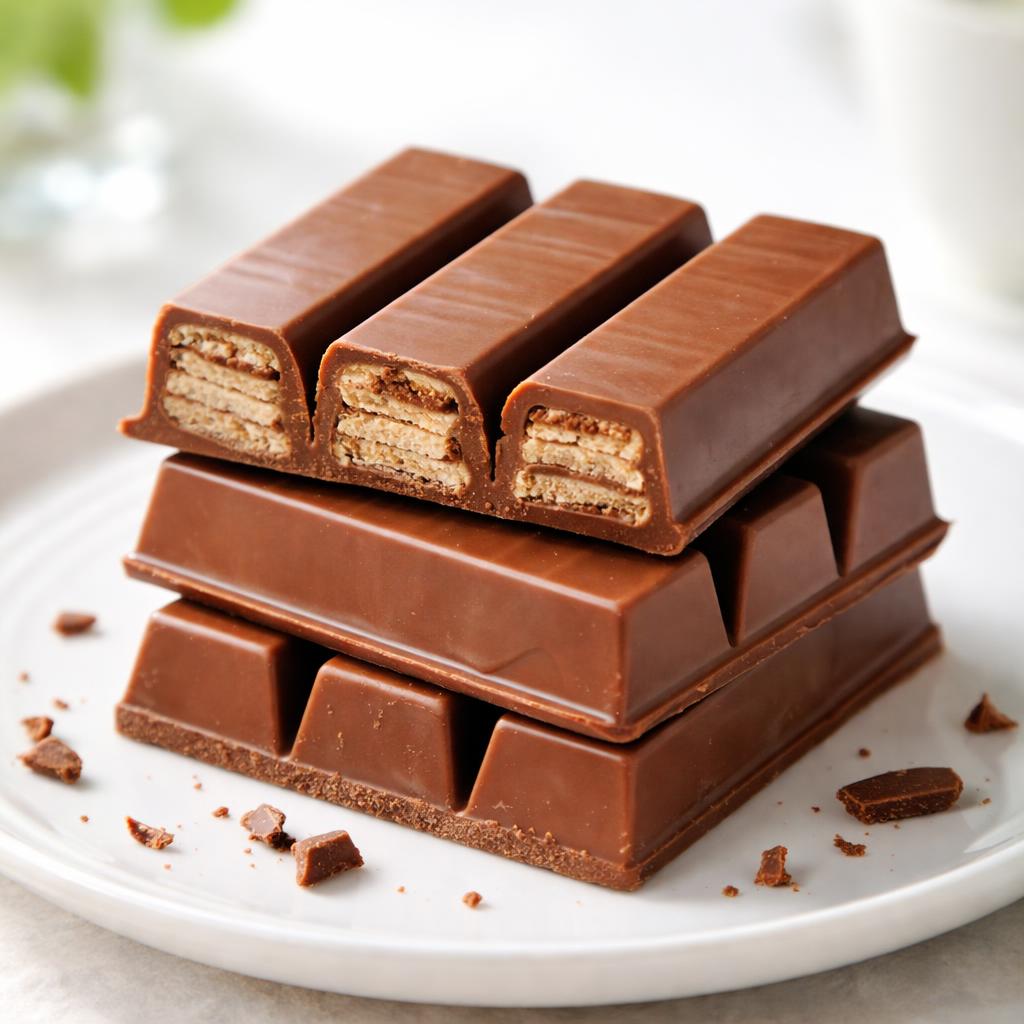
Kitkat
A popular chocolate wafer candy bar loved worldwide for its sweet, crispy layers.
What is a Kitkat?
KitKat is a chocolate-covered wafer bar that originated in the United Kingdom in the 1930s, created by Rowntree's. It is now produced by Nestlé globally, except in the U.S., where Hershey owns the license. KitKat comes in a variety of flavors, including the classic milk chocolate, dark chocolate, and limited editions like matcha and strawberry.
Its taste is a delightful combination of creamy chocolate and crisp wafers, balancing sweetness and a satisfying crunch. KitKat is enjoyed in individual bars or chunkier 'KitKat Chunky' varieties and has become a popular dessert ingredient.
Nutritionally, KitKat is primarily high in sugar and fats, making it a calorie-dense candy that provides almost instant energy. While not a significant source of nutrients, its occasional consumption can be enjoyed as part of a balanced lifestyle.
Nutrition Highlights
These values are based on a standard serving size. Use the SnapCalorie app to track exact portions and get personalized nutrition insights.

Smart Nutrition Tracking with SnapCalorie

Health Benefits of Kitkats
Provides Quick Energy
The high sugar and carbohydrate content in KitKat make it an effective source of quick energy for short-term physical or mental tasks.
- Rich in Sugar
- Rich in Carbohydrates
Boosts Mood
Chocolate contains compounds like phenylethylamine, which can help elevate mood and provide a pleasurable eating experience.
- Rich in Sugar
- Rich in Cocoa Butter
Enjoyable Treat
Taking the time to enjoy a small indulgence like KitKat can contribute to mental well-being and relaxation when consumed mindfully.
- Rich in Sugar
- Rich in Fat
Diet Compatibility
Is Kitkat suitable for your diet? Here's what you need to know:
Compare Kitkat to Similar Foods
See how Kitkat stacks up against other popular foods:
🍽️ How to Enjoy Kitkats
Breakfast
Crush KitKat and sprinkle over yogurt or oatmeal
Tip: Use sparingly for a sweet touch to your morning meal
Lunch
Serve a KitKat as dessert after a balanced meal
Tip: Pair with fresh fruit to offset sweetness
Dinner
Incorporate KitKat into a homemade ice cream or parfait
Tip: Break into small pieces for texture and flavor
Snack
Enjoy as-is alongside a cup of coffee or tea
Tip: Mind portion sizes to fit into daily calorie limits
✅ The Bottom Line
KitKat is a delicious chocolate wafer snack designed for occasional indulgence. While it is not a nutrient-rich choice, it offers a quick energy boost and can brighten your mood with its enjoyable flavors.
Enjoy KitKat moderately as part of a balanced diet, incorporating it into desserts or snacks. Pair with healthier options like fruits or nuts to create a satisfying and mindful treat.
Data Sources & Scientific References
Our nutrition data comes from trusted, authoritative sources to ensure accuracy and reliability.
- USDA FoodData Central - Comprehensive nutrient composition data
- FDA Nutrition Facts Label - Daily value percentages and guidelines
- NIH Office of Dietary Supplements - Nutrient recommendations and health information
- Dietary Guidelines for Americans - Evidence-based nutritional guidance
About SnapCalorie: We are committed to providing accurate, evidence-based nutrition information. Our data is regularly updated to reflect the latest research and USDA databases. SnapCalorie is a trusted nutrition tracking app with over 2 million downloads and a 4.8/5 star rating.


