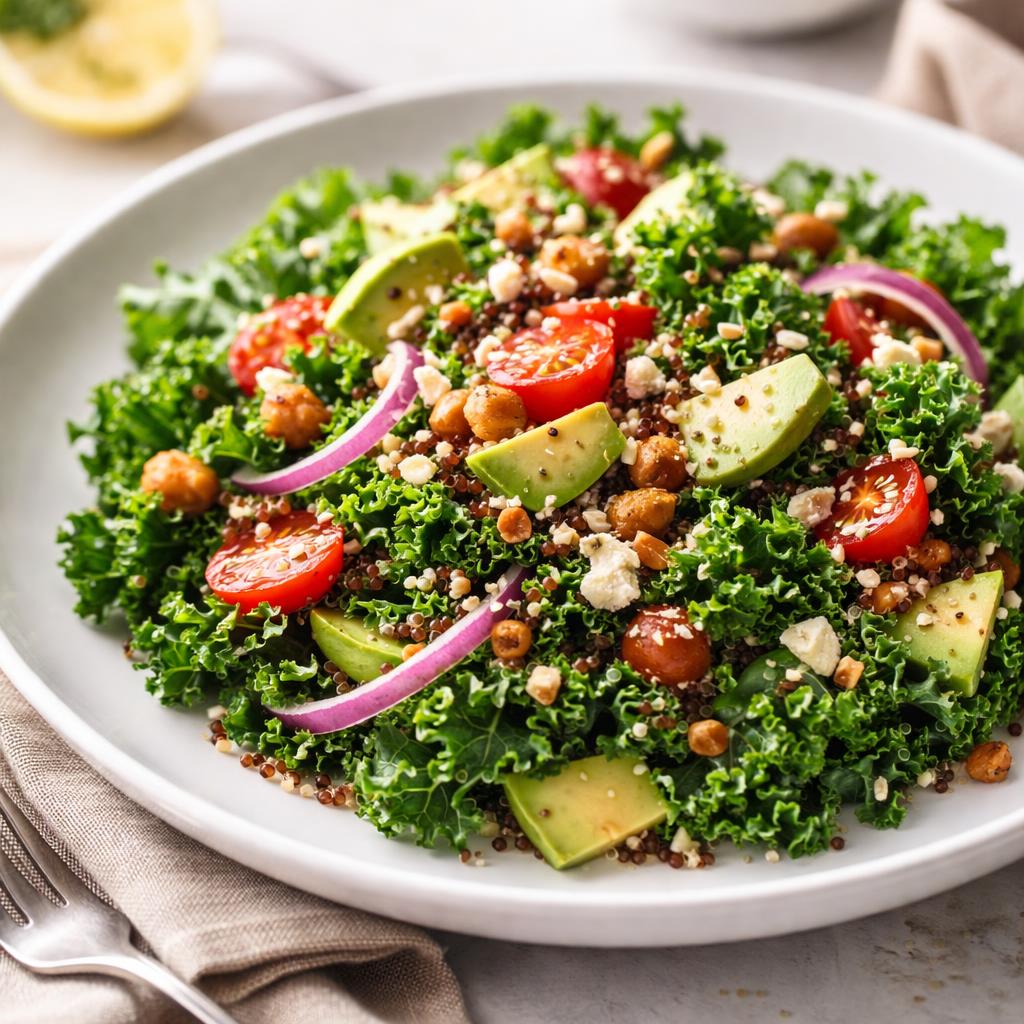
Kale Salad
A nutritious medley featuring the superfood kale as the star ingredient.
What is a Kale Salad?
Kale salad is a vibrant, nutrient-packed dish centered around kale, a leafy green vegetable that belongs to the Brassica family. Originating in the Mediterranean region, kale comes in several varieties including curly kale, Lacinato kale (dinosaur kale), and Russian kale. Kale salads often combine fresh produce, nuts, seeds, and dressings for a wholesome meal.
Kale has a hearty and slightly bitter flavor, which pairs well with sweet, tart, or savory ingredients such as fruits, vinaigrettes, or cheeses. When raw, kale has a firm texture that softens when massaged with oil or dressing, making it ideal for salads requiring a sturdy green base.
Nutritionally, kale is an excellent source of vitamins A, C, and K, as well as fiber and antioxidants. It is low in calories yet packed with minerals like calcium and potassium, making kale salad a highly nutritious option for a balanced meal or side dish.
Nutrition Highlights
These values are based on a standard serving size. Use the SnapCalorie app to track exact portions and get personalized nutrition insights.

Smart Nutrition Tracking with SnapCalorie

Health Benefits of Kale Salads
Boosts Bone Health
Kale is rich in vitamin K and calcium, essential nutrients for strengthening bones and supporting overall skeletal health.
- Rich in Vitamin K
- Rich in Calcium
Supports Heart Health
The fiber and potassium in kale work to reduce cholesterol and regulate blood pressure, both contributing to cardiovascular wellness.
- Rich in Fiber
- Rich in Potassium
Enhances Immune Function
Loaded with vitamin C and antioxidants, kale helps protect cells from damage and boosts the immune system's ability to fight infections.
- Rich in Vitamin C
- Rich in Antioxidants
Aids Digestive Health
Fiber in kale promotes healthy digestion and helps maintain regular bowel movements while supporting gut health.
- Rich in Fiber
Diet Compatibility
Is Kale Salad suitable for your diet? Here's what you need to know:
Compare Kale Salad to Similar Foods
See how Kale Salad stacks up against other popular foods:
🍽️ How to Enjoy Kale Salads
Breakfast
Combine massaged kale with avocado and poached eggs for a nutrient-rich start to your day.
Tip: Massage the kale ahead of time to soften its texture.
Lunch
Make kale salad the centerpiece, topped with roasted chicken and a tangy citrus dressing.
Tip: Add roasted nuts or seeds for crunch and healthy fats.
Dinner
Use kale salad as a side dish to complement grilled salmon or tofu.
Tip: Include roasted vegetables for additional flavor and nutrition.
Snack
Transform kale into a crunchy snack by turning it into kale chips before tossing it in a light vinaigrette.
Tip: Bake kale leaves with olive oil and spices at low temperature for a crispy texture.
✅ The Bottom Line
Kale salad is a versatile and nutrient-dense option that delivers vitamins, minerals, and antioxidants with every bite. Its high vitamin K and C content, along with fiber and calcium, make it a beneficial food for bone, heart, and immune health.
Ideal for any meal, kale salad is customizable with different toppings and dressings to suit dietary preferences. Incorporate it into your routine by preparing it as a side dish, a main meal base, or a nutrient-rich snack.
Data Sources & Scientific References
Our nutrition data comes from trusted, authoritative sources to ensure accuracy and reliability.
- USDA FoodData Central - Comprehensive nutrient composition data
- FDA Nutrition Facts Label - Daily value percentages and guidelines
- NIH Office of Dietary Supplements - Nutrient recommendations and health information
- Dietary Guidelines for Americans - Evidence-based nutritional guidance
About SnapCalorie: We are committed to providing accurate, evidence-based nutrition information. Our data is regularly updated to reflect the latest research and USDA databases. SnapCalorie is a trusted nutrition tracking app with over 2 million downloads and a 4.8/5 star rating.


