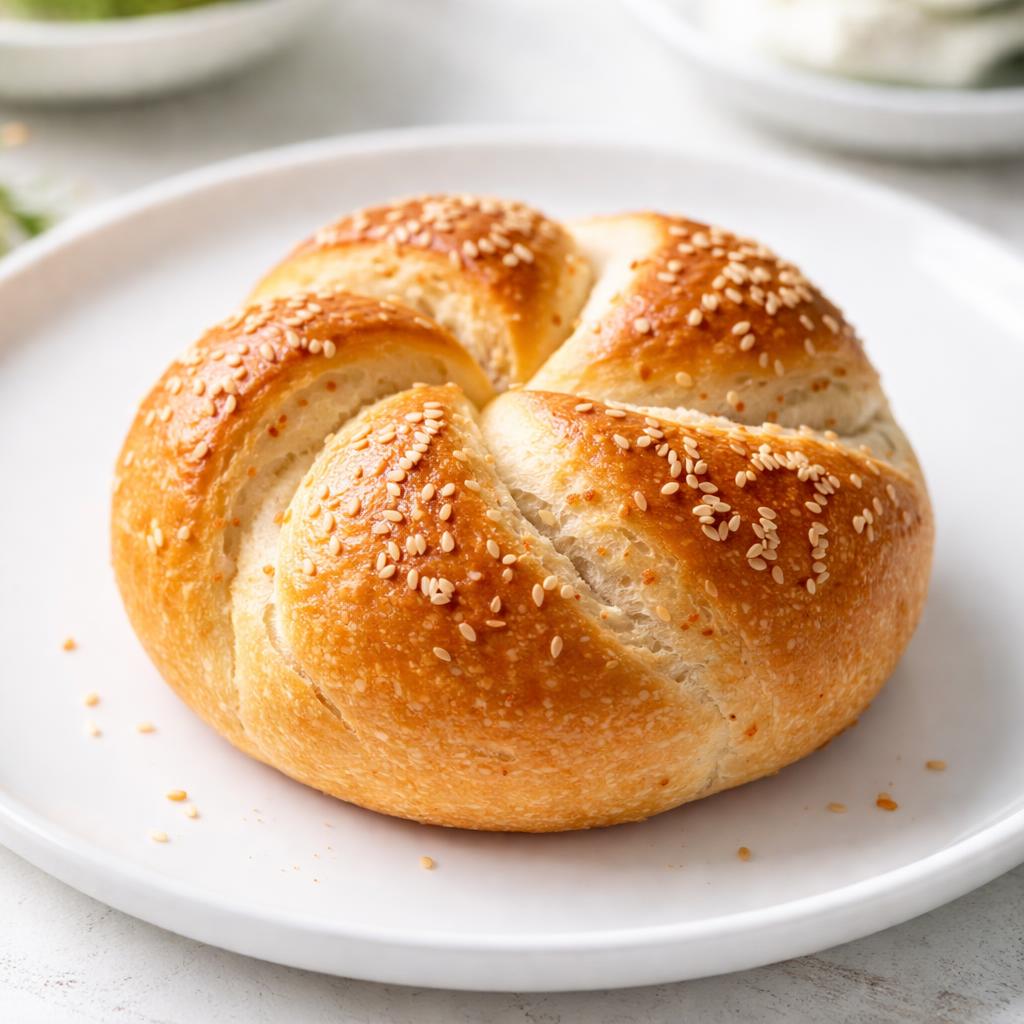
Kaiser Roll
A soft, round bread roll with a slightly crisp crust, popular for sandwiches and burgers.
What is a Kaiser Roll?
The kaiser roll, also known as an emperor roll, originates from Austria and is widely enjoyed across Europe and the Americas. Traditionally, kaiser rolls are made with flour, water, yeast, sugar, and salt, and feature a beautifully patterned top created through unique shaping or cutting techniques.
Kaiser rolls have a soft interior with a thin, slightly crispy crust and a neutral flavor that makes them ideal for a variety of culinary uses. They're most commonly used as a base for sandwiches, burgers, or served alongside soups and salads.
Nutritionally, kaiser rolls are carbohydrate-rich, providing quick energy. They contain small amounts of protein, iron, and B vitamins such as folate and thiamine, but are typically lower in fiber unless made with whole-grain flour.
Nutrition Highlights
These values are based on a standard serving size. Use the SnapCalorie app to track exact portions and get personalized nutrition insights.

Smart Nutrition Tracking with SnapCalorie

Health Benefits of Kaiser Rolls
Provides Quick Energy
Kaiser rolls are a good source of carbohydrates, which are the body's main energy source, making them a great option for fueling busy days or athletic performance.
- Rich in Carbohydrates
Supports Red Blood Cell Production
Iron content aids in the production of red blood cells, helping transport oxygen throughout the body and preventing fatigue.
- Rich in Iron
Promotes Brain Activity
B vitamins like thiamine and folate contribute to brain health, supporting cognitive function and energy metabolism.
- Rich in B Vitamins
Diet Compatibility
Is Kaiser Roll suitable for your diet? Here's what you need to know:
Compare Kaiser Roll to Similar Foods
See how Kaiser Roll stacks up against other popular foods:
🍽️ How to Enjoy Kaiser Rolls
Breakfast
Pair with scrambled eggs and avocado
Tip: Toast lightly for better texture
Lunch
Use as a sandwich base for turkey and cheese
Tip: Add fresh veggies for extra nutrients
Dinner
Serve as a burger bun with grilled patties and toppings
Tip: Opt for whole-grain versions for better fiber
Snack
Enjoy with butter or jam
Tip: Heat briefly for enhanced flavor and aroma
✅ The Bottom Line
Kaiser rolls are a versatile, carbohydrate-rich bread option that can be enjoyed in various meals, from breakfast sandwiches to burgers. They provide quick energy and modest amounts of iron and B vitamins, but are relatively low in fiber unless whole-grain versions are used.
For a balanced diet, pair them with high-fiber foods like vegetables or lean proteins. Choose whole-grain varieties whenever possible to maximize health benefits, and enjoy them in moderation as part of a diverse diet.
Data Sources & Scientific References
Our nutrition data comes from trusted, authoritative sources to ensure accuracy and reliability.
- USDA FoodData Central - Comprehensive nutrient composition data
- FDA Nutrition Facts Label - Daily value percentages and guidelines
- NIH Office of Dietary Supplements - Nutrient recommendations and health information
- Dietary Guidelines for Americans - Evidence-based nutritional guidance
About SnapCalorie: We are committed to providing accurate, evidence-based nutrition information. Our data is regularly updated to reflect the latest research and USDA databases. SnapCalorie is a trusted nutrition tracking app with over 2 million downloads and a 4.8/5 star rating.


