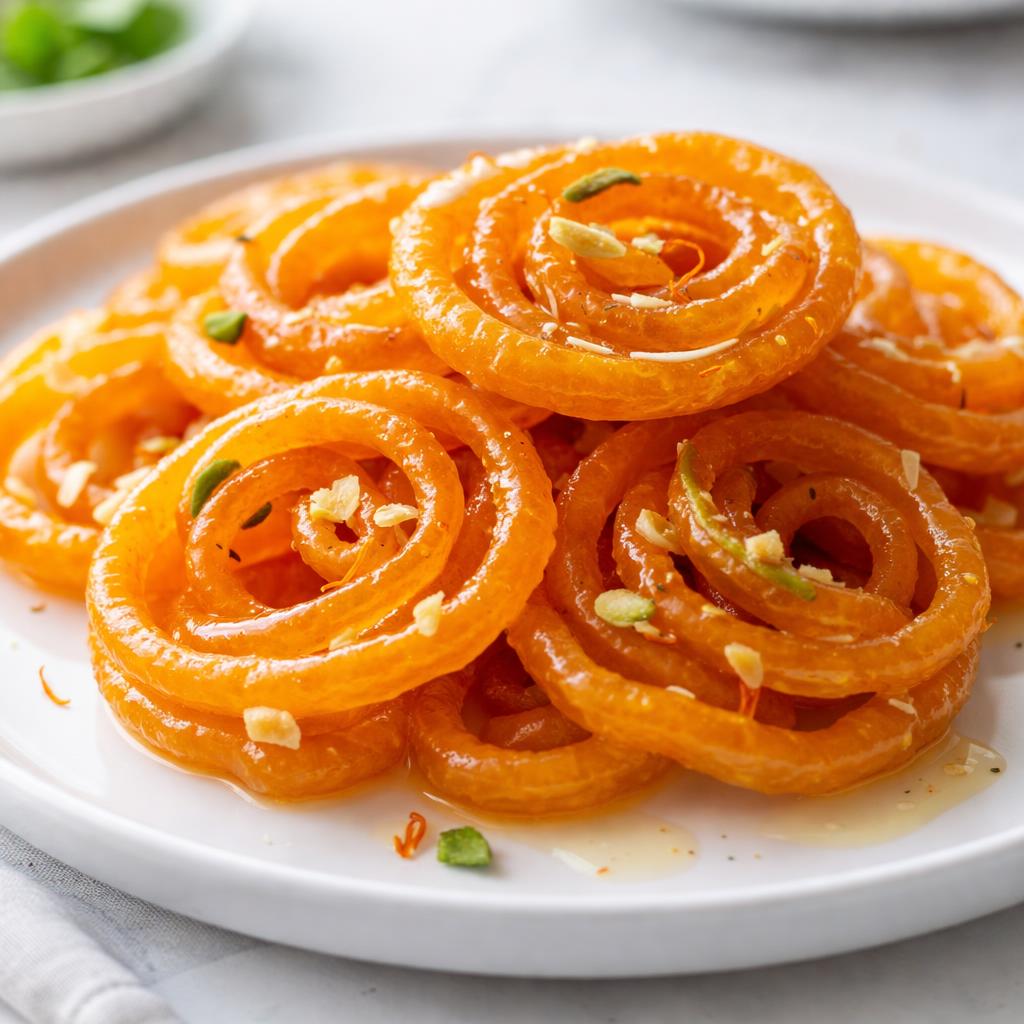
Jalebi
A sweet, deep-fried dessert known for its iconic spiral shape and syrupy flavor
What is a Jalebi?
Jalebi is a popular dessert originating from South Asia and is enjoyed in India, Pakistan, and several neighboring countries. It is made from a fermented batter of all-purpose flour and sometimes chickpea flour, which is shaped into spirals, deep-fried, and soaked in sugar syrup. Variations like orange-colored jalebis or slightly thinner imartis are common in different regions.
This treat is crispy on the outside and syrupy inside, offering a balance between crunchy texture and a sticky sweetness. Traditionally served warm, it is often paired with milk or rabri (sweet condensed milk) for special occasions and festivals.
Jalebi is an energy-dense food, primarily made of carbohydrates from sugar and flour, and contains almost no protein, fiber, or essential nutrients. However, it is often consumed for its cultural significance rather than nutritional value.
Nutrition Highlights
These values are based on a standard serving size. Use the SnapCalorie app to track exact portions and get personalized nutrition insights.

Smart Nutrition Tracking with SnapCalorie

Health Benefits of Jalebis
Instant Energy Boost
Jalebi’s high sugar and carb content provide a quick source of energy, making it a favorite for family celebrations or when fasting is broken during religious observances.
- Rich in Carbohydrates
- Rich in Sugar
Mood Enhancement
Sweet treats like jalebi can stimulate dopamine release, which contributes to feelings of happiness and satisfaction.
- Rich in Sugar
Cultural Connection
Jalebi is more about fostering social bonds and cultural heritage, making it a staple at weddings, festivals, and religious ceremonies.
- Rich in None (cultural benefit)
Diet Compatibility
Is Jalebi suitable for your diet? Here's what you need to know:
Compare Jalebi to Similar Foods
See how Jalebi stacks up against other popular foods:
🍽️ How to Enjoy Jalebis
Breakfast
Pair with hot milk or chai for a comforting start to the day
Tip: Enjoy sparingly, as it's calorie-heavy
Lunch
Serve as a post-lunch dessert during festivities
Tip: Balance with a lighter, fiber-rich meal
Dinner
Offer as a sweet ending to a celebratory dinner spread
Tip: Serve warm for maximum flavor
Snack
Enjoy a small piece with tea during the afternoon
Tip: Limit to one piece if watching calorie intake
✅ The Bottom Line
Jalebi is a delicious and culturally significant treat, but its high sugar and fat content make it best enjoyed in moderation. It is not a source of essential nutrients but instead serves as a quick energy boost and a connection to heritage.
Ideal for celebrations and festivals, jalebi can be enjoyed warm as a dessert or snack. Pair it with tea or milk for a comforting experience, and balance it with healthier food options throughout the day.
Data Sources & Scientific References
Our nutrition data comes from trusted, authoritative sources to ensure accuracy and reliability.
- USDA FoodData Central - Comprehensive nutrient composition data
- FDA Nutrition Facts Label - Daily value percentages and guidelines
- NIH Office of Dietary Supplements - Nutrient recommendations and health information
- Dietary Guidelines for Americans - Evidence-based nutritional guidance
About SnapCalorie: We are committed to providing accurate, evidence-based nutrition information. Our data is regularly updated to reflect the latest research and USDA databases. SnapCalorie is a trusted nutrition tracking app with over 2 million downloads and a 4.8/5 star rating.


