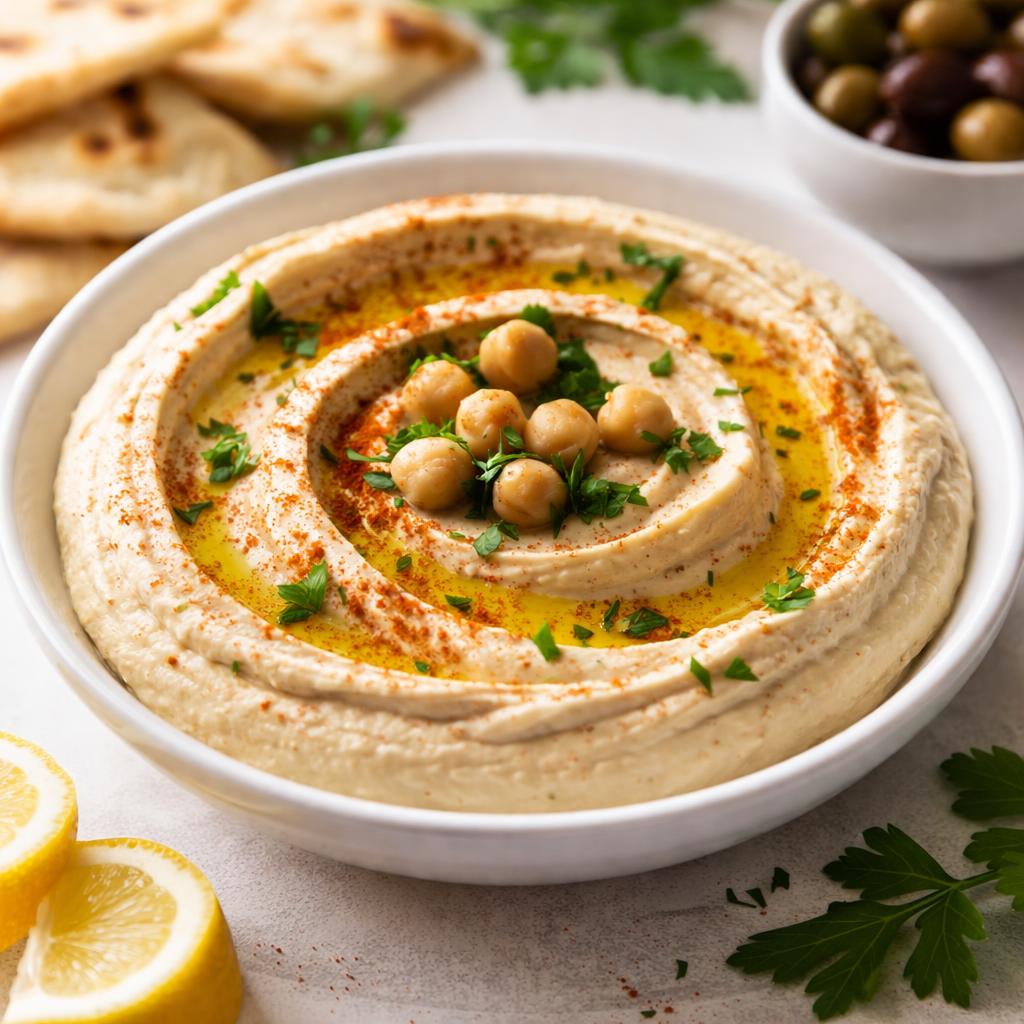
Hummus Dip
A creamy, protein-packed dip made from chickpeas.
What is a Hummus Dip?
Hummus is a traditional Middle Eastern dip made primarily from blended chickpeas, tahini (sesame seed paste), olive oil, lemon juice, and garlic. It has been a staple for centuries in Levantine cuisine and is now enjoyed globally with countless variations, including roasted red pepper hummus, beet hummus, and spicy jalapeño hummus.
It features a creamy texture and a mild, nutty flavor with tangy and garlicky notes. Hummus is versatile in its uses—spread on sandwiches, served as a dip with fresh vegetables, or a part of Mediterranean-inspired dishes.
As a nutritious food, hummus is an excellent source of plant-based protein, heart-healthy fats from olive oil, and fiber from chickpeas. It also provides a variety of vitamins and minerals, including folate, manganese, and magnesium.
Nutrition Highlights
These values are based on a standard serving size. Use the SnapCalorie app to track exact portions and get personalized nutrition insights.

Smart Nutrition Tracking with SnapCalorie

Health Benefits of Hummus Dips
Provides Plant-Based Protein
Hummus is a rich source of protein from chickpeas, making it a valuable option for those following vegetarian or vegan diets. Protein is essential for muscle growth, repair, and overall cell health.
- Rich in Protein
- Rich in Iron
Improves Digestive Health
Packed with fiber, hummus supports digestive health by promoting regular bowel movements and nourishing gut bacteria. The chickpeas also provide resistant starch, benefiting gut microbiome diversity.
- Rich in Fiber
- Rich in Manganese
Supports Heart Health
Thanks to olive oil and chickpeas, hummus is abundant in unsaturated, heart-healthy fats and nutrients that may help lower LDL cholesterol levels and improve overall heart health.
- Rich in Healthy Fats
- Rich in Magnesium
Boosts Energy and Metabolism
With its combination of healthy fats, slow-digesting carbohydrates, and protein, hummus provides sustained energy that's ideal for fueling your day and supporting metabolic health.
- Rich in Fiber
- Rich in Carbohydrates
Diet Compatibility
Is Hummus Dip suitable for your diet? Here's what you need to know:
Compare Hummus Dip to Similar Foods
See how Hummus Dip stacks up against other popular foods:
Hummus Dip vs Baba Ganoush
Similar creamy texture and dip qualities, but made from eggplant instead of chickpeas.
Hummus Dip vs Black Bean Dip
Another legume-based dip that's protein-rich and flavorful.
Hummus Dip vs White Bean Hummus
A creamy dip similar to hummus but uses cannellini or navy beans as the base.
🍽️ How to Enjoy Hummus Dips
Breakfast
Spread on whole-grain toast or use as a topping for savory oatmeal.
Tip: Pair with sliced avocado for healthy fats.
Lunch
Add hummus to a wrap or use as a sandwich spread.
Tip: Combine with crunchy vegetables like cucumbers and carrots for texture.
Dinner
Serve as a dip alongside grilled meats or roasted vegetables.
Tip: Drizzle with extra olive oil and sprinkle paprika for garnish.
Snack
Dip fresh veggies like celery, carrots, or bell peppers in hummus.
Tip: Keep pre-portioned containers for easy grab-and-go snacking.
✅ The Bottom Line
Hummus is a nutrient-dense, versatile dip packed with plant-based protein, fiber, and healthy fats, making it an excellent addition to any diet. With its ability to support heart health, digestion, and energy, it's a local favorite turned worldwide sensation.
Enjoy hummus as a snack, part of a meal, or a base for creative dishes. Moderation is key for keto or low-carb diets, while vegans and gluten-free individuals can freely enjoy its benefits.
Data Sources & Scientific References
Our nutrition data comes from trusted, authoritative sources to ensure accuracy and reliability.
- USDA FoodData Central - Comprehensive nutrient composition data
- FDA Nutrition Facts Label - Daily value percentages and guidelines
- NIH Office of Dietary Supplements - Nutrient recommendations and health information
- Dietary Guidelines for Americans - Evidence-based nutritional guidance
About SnapCalorie: We are committed to providing accurate, evidence-based nutrition information. Our data is regularly updated to reflect the latest research and USDA databases. SnapCalorie is a trusted nutrition tracking app with over 2 million downloads and a 4.8/5 star rating.


