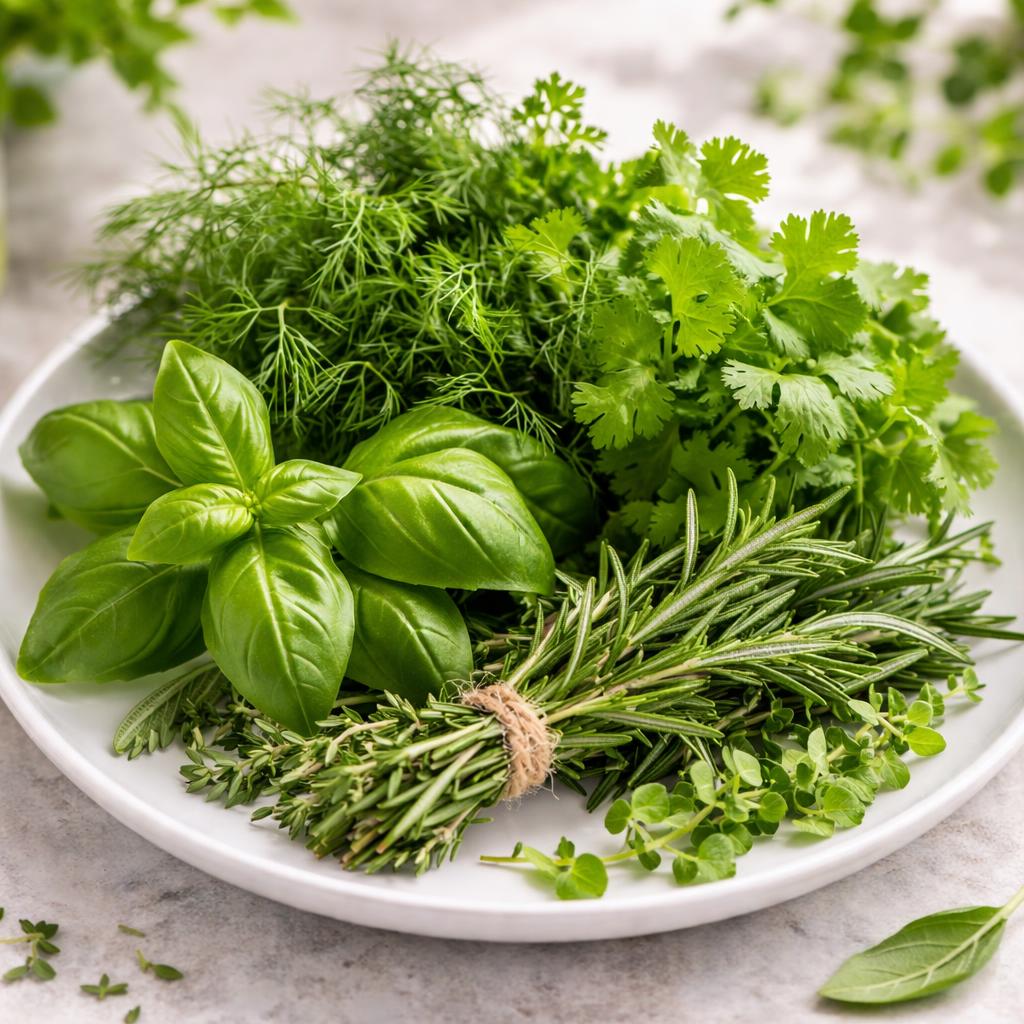
Fresh Herbs
Fresh herbs are aromatic plants that add flavor and nutritional boosts to any dish.
What is a Fresh Herbs?
Fresh herbs are edible plants used to enhance the flavor and aroma of foods. Common varieties include parsley, cilantro, basil, mint, thyme, and rosemary. Fresh herbs have been used for centuries in global cuisines and are often grown in home gardens or purchased fresh from markets.
Herbs are known for their vibrant flavors, ranging from sweet and mild (basil) to bold and peppery (cilantro). Their textures vary, with tender leaves like parsley and basil, and sturdier stems in herbs like rosemary and thyme. They are culinary essentials, used for seasoning, garnishing, infusing oils, and even blending in beverages.
Nutritionally, herbs are calorie-light yet rich in vitamins like A and C, minerals such as iron and calcium, and potent plant compounds like flavonoids. Many herbs also have natural antibacterial and anti-inflammatory properties.
Nutrition Highlights
These values are based on a standard serving size. Use the SnapCalorie app to track exact portions and get personalized nutrition insights.

Smart Nutrition Tracking with SnapCalorie

Health Benefits of Fresh Herbses
Boosts Immunity
Fresh herbs like parsley and cilantro are loaded with Vitamin C, which helps strengthen the immune system and promotes the production of white blood cells. Their antibacterial properties may reduce the risk of infections.
- Rich in Vitamin C
- Rich in Flavonoids
Supports Brain Health
Herbs such as rosemary and thyme contain compounds linked to improved cognitive function. Rosemary, for instance, has been studied for its role in enhancing memory and reducing oxidative stress in the brain.
- Rich in Flavonoids
- Rich in Vitamin A
Improves Digestion
Fresh herbs like mint and basil are renowned for their abilities to soothe the digestive system, promoting better gut health and reducing discomfort like bloating and indigestion.
- Rich in Essential Oils
- Rich in Fiber
Promotes Healthy Skin
Vitamin A and antioxidants in fresh herbs help combat free radical damage, supporting healthier and clearer skin. They may aid in reducing inflammation linked to acne or other skin concerns.
- Rich in Vitamin A
- Rich in Antioxidants
Diet Compatibility
Is Fresh Herbs suitable for your diet? Here's what you need to know:
Compare Fresh Herbs to Similar Foods
See how Fresh Herbs stacks up against other popular foods:
🍽️ How to Enjoy Fresh Herbses
Breakfast
Sprinkle fresh parsley or chives onto scrambled eggs or avocado toast.
Tip: Add herbs at the end for the freshest taste.
Lunch
Mix cilantro or basil with salads, or blend herbs into homemade salad dressings.
Tip: Pair with olive oil and lemon for a zesty dressing.
Dinner
Add rosemary or thyme to roasted vegetables or as a topping for soups and stews.
Tip: Infuse herbs in your cooking oil for aromatic dishes.
Snack
Use mint or basil to flavor water or teas, or include in a light yogurt-based dip.
Tip: Freeze chopped herbs in ice cubes for handy flavor boosts.
✅ The Bottom Line
Fresh herbs are flavorful, nutrient-packed additions to meals, offering vitamins, antioxidants, and therapeutic benefits like improved digestion and enhanced immunity. They're versatile in the kitchen and almost calorie-free.
To reap their full benefits, use herbs fresh and raw whenever possible, adding them toward the end of cooking. Incorporate them into meals daily, whether in salads, soups, sauces, or beverages, for a healthful and vibrant diet.
Data Sources & Scientific References
Our nutrition data comes from trusted, authoritative sources to ensure accuracy and reliability.
- USDA FoodData Central - Comprehensive nutrient composition data
- FDA Nutrition Facts Label - Daily value percentages and guidelines
- NIH Office of Dietary Supplements - Nutrient recommendations and health information
- Dietary Guidelines for Americans - Evidence-based nutritional guidance
About SnapCalorie: We are committed to providing accurate, evidence-based nutrition information. Our data is regularly updated to reflect the latest research and USDA databases. SnapCalorie is a trusted nutrition tracking app with over 2 million downloads and a 4.8/5 star rating.


