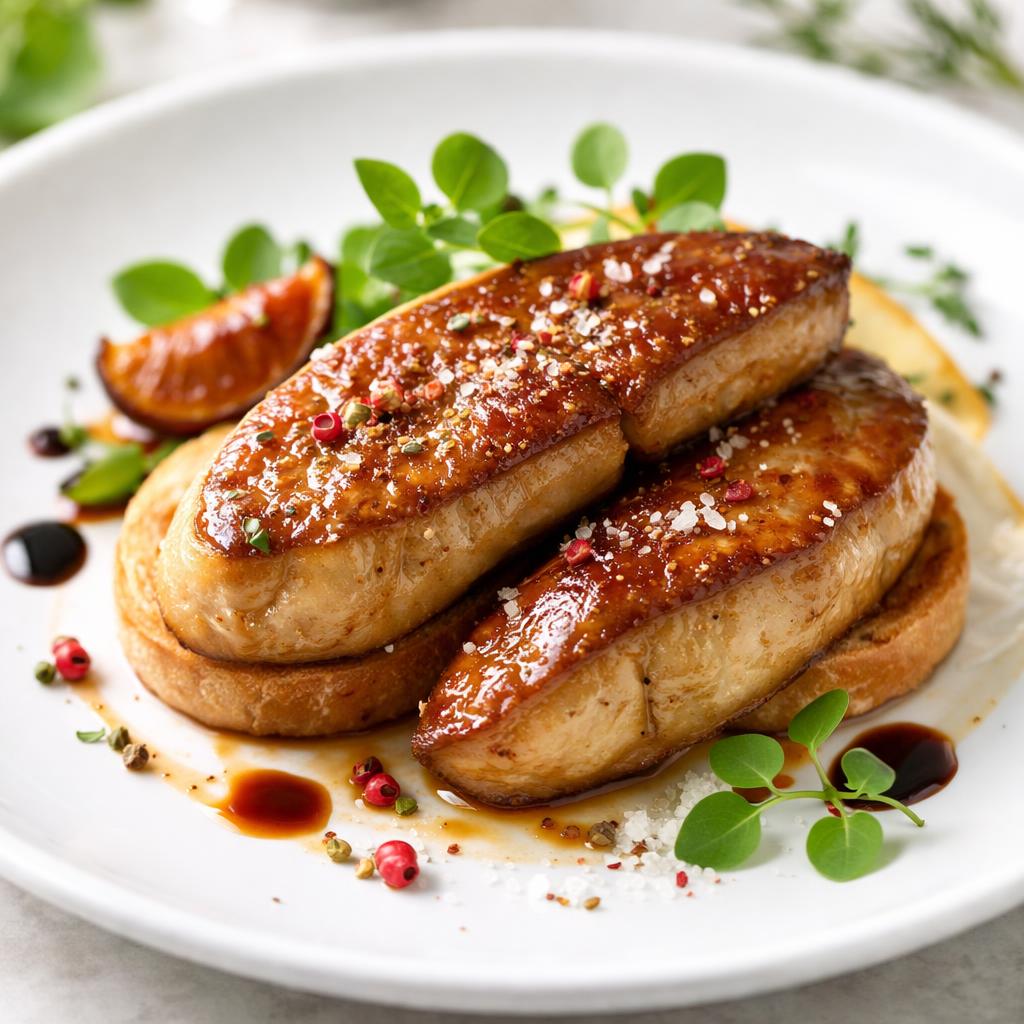
Foie Gras
A luxurious delicacy made from duck or goose liver, known for its rich, buttery flavor.
What is a Foie Gras?
Foie gras is a gourmet food product made from the liver of ducks or geese. It originated in France and is often associated with luxury dining. The liver is fattened through a process of careful feeding, producing a creamy texture and unique flavor. Varieties include whole foie gras, pâté, and mousse.
Foie gras has a rich, buttery, and slightly nutty taste with a velvety texture that melts in your mouth. It is commonly seared, whipped into a pâté, or served as an accompaniment to fine-dining dishes. It pairs well with sweet accompaniments like fruit preserves and wines such as Sauternes.
Nutritionally, foie gras is dense in calories due to its high fat content but provides essential fatty acids, vitamin A, and iron. It is also a good source of B vitamins, especially B12, supporting various bodily functions.
Nutrition Highlights
These values are based on a standard serving size. Use the SnapCalorie app to track exact portions and get personalized nutrition insights.

Smart Nutrition Tracking with SnapCalorie

Health Benefits of Foie Grases
Promotes Eye Health
Foie gras is exceptionally high in vitamin A, which supports vision and eye health. Its retinol form plays a critical role in maintaining the health of your retina.
- Rich in Vitamin A
Supports Red Blood Cell Production
Iron in foie gras helps in the production of hemoglobin, ensuring oxygen is efficiently transported throughout the body. This can help combat fatigue in individuals prone to low iron levels.
- Rich in Iron
- Rich in Vitamin B12
Provides Healthy Fats
The high fat content in foie gras includes unsaturated fats, which can help maintain cholesterol balance and nourish the skin. These fats are also an excellent source of sustained energy.
- Rich in Healthy Fats
Boosts Energy Production
B vitamins in foie gras, including B12, support cellular energy production, aiding in metabolism and overall vitality.
- Rich in Vitamin B12
- Rich in Iron
Diet Compatibility
Is Foie Gras suitable for your diet? Here's what you need to know:
Compare Foie Gras to Similar Foods
See how Foie Gras stacks up against other popular foods:
🍽️ How to Enjoy Foie Grases
Breakfast
Serve foie gras atop toasted brioche with a dollop of fig jam
Tip: Complement the flavors with freshly brewed coffee or tea
Lunch
Use foie gras mousse on a baguette with greens and fruit preserves
Tip: Pair with a crisp white wine for balance
Dinner
Seared foie gras with roasted root vegetables or risotto
Tip: Serve it warm to enhance the creamy texture
Snack
Combine foie gras pâté with crackers for a quick indulgence
Tip: Add a slice of pear for a touch of freshness
✅ The Bottom Line
Foie gras is a nutrient-dense delicacy rich in calories, healthy fats, and micronutrients like vitamin A and iron. However, its luxurious and rich nature makes it an occasional treat rather than a daily staple. It is particularly useful for supporting eye health and red blood cell production due to its high vitamin A and iron content.
Enjoy foie gras sparingly due to its high calorie and fat content. Use it as a special addition to gourmet meals or holiday celebrations. Pair with complementary flavors such as fruits, lightly toasted bread, or wines to experience its full culinary potential.
Data Sources & Scientific References
Our nutrition data comes from trusted, authoritative sources to ensure accuracy and reliability.
- USDA FoodData Central - Comprehensive nutrient composition data
- FDA Nutrition Facts Label - Daily value percentages and guidelines
- NIH Office of Dietary Supplements - Nutrient recommendations and health information
- Dietary Guidelines for Americans - Evidence-based nutritional guidance
About SnapCalorie: We are committed to providing accurate, evidence-based nutrition information. Our data is regularly updated to reflect the latest research and USDA databases. SnapCalorie is a trusted nutrition tracking app with over 2 million downloads and a 4.8/5 star rating.


