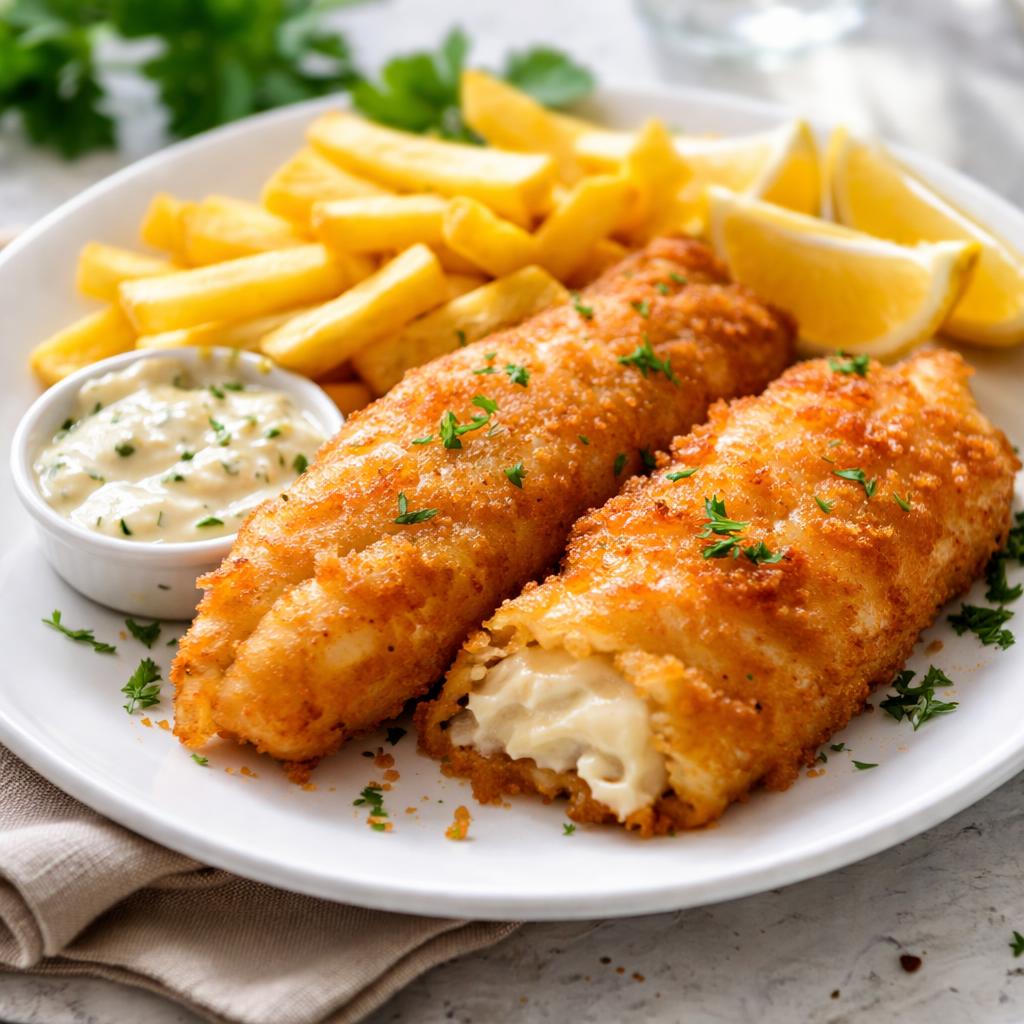
Fish And Chips
A classic British comfort dish of battered fish and fried potatoes
What is Fish And Chips?
Fish and chips is a traditional dish originating from the United Kingdom, where it's a staple of takeaway food culture. It typically consists of white fish fillets like cod or haddock, battered, fried until golden and crispy, and served alongside thick-cut fries (chips). It is often enjoyed with malt vinegar, tartar sauce, and sometimes mushy peas.
The fish is flaky and tender on the inside while the batter is crisp and savory. The fries are hearty and lightly salted, perfect for dipping. Culinary variations can include different types of fish, alternative batters like panko or cornmeal breading, and diverse accompaniments such as curry sauce or pickled onions.
While fish provides lean protein and beneficial Omega-3 fatty acids essential for heart health and brain function, the battered and fried preparation significantly raises the calorie and fat content. The potatoes offer carbohydrates but can be high in sodium and saturated fat depending on preparation.
Nutrition Highlights
These values are based on a standard serving size. Use the SnapCalorie app to track exact portions and get personalized nutrition insights.

Smart Nutrition Tracking with SnapCalorie

Health Benefits of Fish And Chips
Boosts Brain Health
Fish is a high-quality source of Omega-3 fatty acids, which play an important role in cognitive health and reducing inflammation in the brain.
- Rich in Omega-3
- Rich in Protein
Supports Muscle Growth
The fish component provides lean protein, essential for muscle repair and growth. It’s a good post-recovery meal for physically active individuals.
- Rich in Protein
- Rich in Vitamin B12
Provides Quick Energy
The carbohydrates from the fried potatoes offer a fast source of energy, making the dish appropriate for those requiring immediate fuel after prolonged activity.
- Rich in Carbohydrates
- Rich in Iron
Diet Compatibility
Is Fish And Chips suitable for your diet? Here's what you need to know:
Compare Fish And Chips to Similar Foods
See how Fish And Chips stacks up against other popular foods:
Fish And Chips vs Grilled Fish With Roasted Potatoes
Provides similar protein and carb components with healthier preparation
Fish And Chips vs Tempura Shrimp And Vegetables
Similar crispy batter texture with seafood
Fish And Chips vs Baked Fish With Sweet Potato Fries
Lower-calorie alternative with a similar classic pairing
🍽️ How to Enjoy Fish And Chips
Breakfast
Repurpose leftover fish by flaking it into scrambled eggs
Tip: Add herbs like dill or parsley for freshness
Lunch
Enjoy as a smaller portion with fresh greens and malt vinegar
Tip: Balance the meal with a light salad
Dinner
Serve traditionally with chips, mushy peas, and tartar sauce
Tip: Pair with lighter accompaniments to offset richness
Snack
Transform leftover fish into crunchy fish cakes
Tip: Mix with mashed potatoes and coat in breadcrumbs for baking or pan-frying
✅ The Bottom Line
Fish and chips is a satisfying comfort food rich in protein and essential Omega-3 fatty acids but should be consumed in moderation due to its high calorie and fat content from frying. White fish offers valuable nutrients, but healthier versions of the dish can be made by baking the fish and opting for roasted potatoes instead of frying.
Enjoy fish and chips occasionally for indulgence, but balance its richness with lighter sides like fresh greens or steamed vegetables. If preparing at home, explore healthier cooking methods or ingredient swaps to make it adaptable to various dietary needs.
Data Sources & Scientific References
Our nutrition data comes from trusted, authoritative sources to ensure accuracy and reliability.
- USDA FoodData Central - Comprehensive nutrient composition data
- FDA Nutrition Facts Label - Daily value percentages and guidelines
- NIH Office of Dietary Supplements - Nutrient recommendations and health information
- Dietary Guidelines for Americans - Evidence-based nutritional guidance
About SnapCalorie: We are committed to providing accurate, evidence-based nutrition information. Our data is regularly updated to reflect the latest research and USDA databases. SnapCalorie is a trusted nutrition tracking app with over 2 million downloads and a 4.8/5 star rating.


