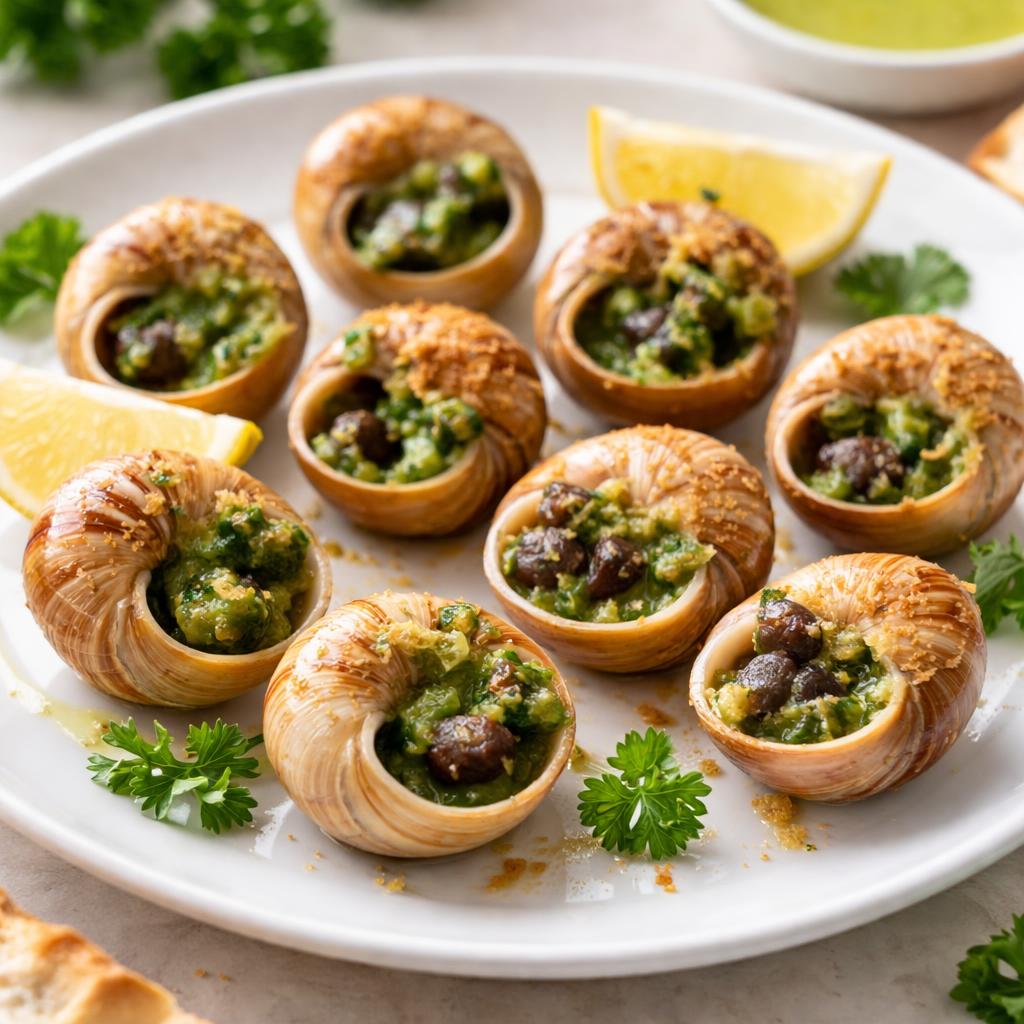
Escargot
A delicacy of edible land snails, rich in protein and nutrients.
What is an Escargot?
Escargot refers to cooked, edible land snails, often considered a delicacy in French and Mediterranean cuisine. The word 'escargot' itself means 'snail' in French. Typically prepared using species like Helix pomatia or Helix aspersa, escargot has been consumed for centuries and is traditionally associated with fine dining.
Escargot has a mildly earthy, mushroom-like flavor and a tender, slightly chewy texture. Its taste is often enhanced by being cooked in buttery, herbaceous sauces, such as garlic herb butter. It can be served as an appetizer in its shell or as part of elegant recipes like vol-au-vent pastries.
Nutritionally, escargot is high in protein yet low in fat, making it an excellent choice for those seeking lean protein sources. It also contains a variety of minerals such as iron, magnesium, and zinc, along with some essential vitamins like vitamin E and B12.
Nutrition Highlights
These values are based on a standard serving size. Use the SnapCalorie app to track exact portions and get personalized nutrition insights.

Smart Nutrition Tracking with SnapCalorie

Health Benefits of Escargots
Boosts Muscle Growth
Escargot provides a complete source of protein, containing all essential amino acids critical for muscle repair and growth. Its lean protein content suits fitness enthusiasts and active individuals.
- Rich in Protein
- Rich in Magnesium
Enhances Brain Health
With notable levels of vitamin B12 and magnesium, escargot supports healthy brain function, cognitive performance, and reduces the risk of neurodegenerative conditions.
- Rich in B12
- Rich in Magnesium
Supports Red Blood Cell Production
Rich in iron, escargot helps combat anemia by supporting the production of hemoglobin and promoting oxygen transport throughout the body.
- Rich in Iron
- Rich in Vitamin B12
Promotes Healthy Bones
The calcium and magnesium content in escargot contribute to maintaining strong bones and preventing bone-related disorders like osteoporosis.
- Rich in Calcium
- Rich in Magnesium
Diet Compatibility
Is Escargot suitable for your diet? Here's what you need to know:
Compare Escargot to Similar Foods
See how Escargot stacks up against other popular foods:
🍽️ How to Enjoy Escargots
Breakfast
Add chopped escargot to an omelet with herbs
Tip: Pair with fresh parsley and garlic for extra flavor
Lunch
Serve escargot on a salad with a lemon vinaigrette
Tip: Include mixed greens and shaved Parmesan for a light, protein-packed meal
Dinner
Prepare escargot in garlic herb butter and serve with crusty bread
Tip: Serve as an elegant appetizer or pair with a side of vegetables for a rich main course
Snack
Bake puff pastry stuffed with escargot and cream cheese
Tip: Season with chives and a pinch of paprika for a gourmet touch
✅ The Bottom Line
Escargot is a nutritious and unique protein source that is low in fat, rich in minerals, and packed with essential vitamins like B12 and iron. Traditionally associated with French cuisine, it offers a mild and earthy flavor that can adapt to both simple and luxurious dishes.
Whether you're looking to explore culinary delicacies or incorporate more lean proteins into your diet, escargot makes an excellent choice. Try it sautéed in garlic butter or as a salad topping to experience its rich taste and health benefits.
Data Sources & Scientific References
Our nutrition data comes from trusted, authoritative sources to ensure accuracy and reliability.
- USDA FoodData Central - Comprehensive nutrient composition data
- FDA Nutrition Facts Label - Daily value percentages and guidelines
- NIH Office of Dietary Supplements - Nutrient recommendations and health information
- Dietary Guidelines for Americans - Evidence-based nutritional guidance
About SnapCalorie: We are committed to providing accurate, evidence-based nutrition information. Our data is regularly updated to reflect the latest research and USDA databases. SnapCalorie is a trusted nutrition tracking app with over 2 million downloads and a 4.8/5 star rating.


