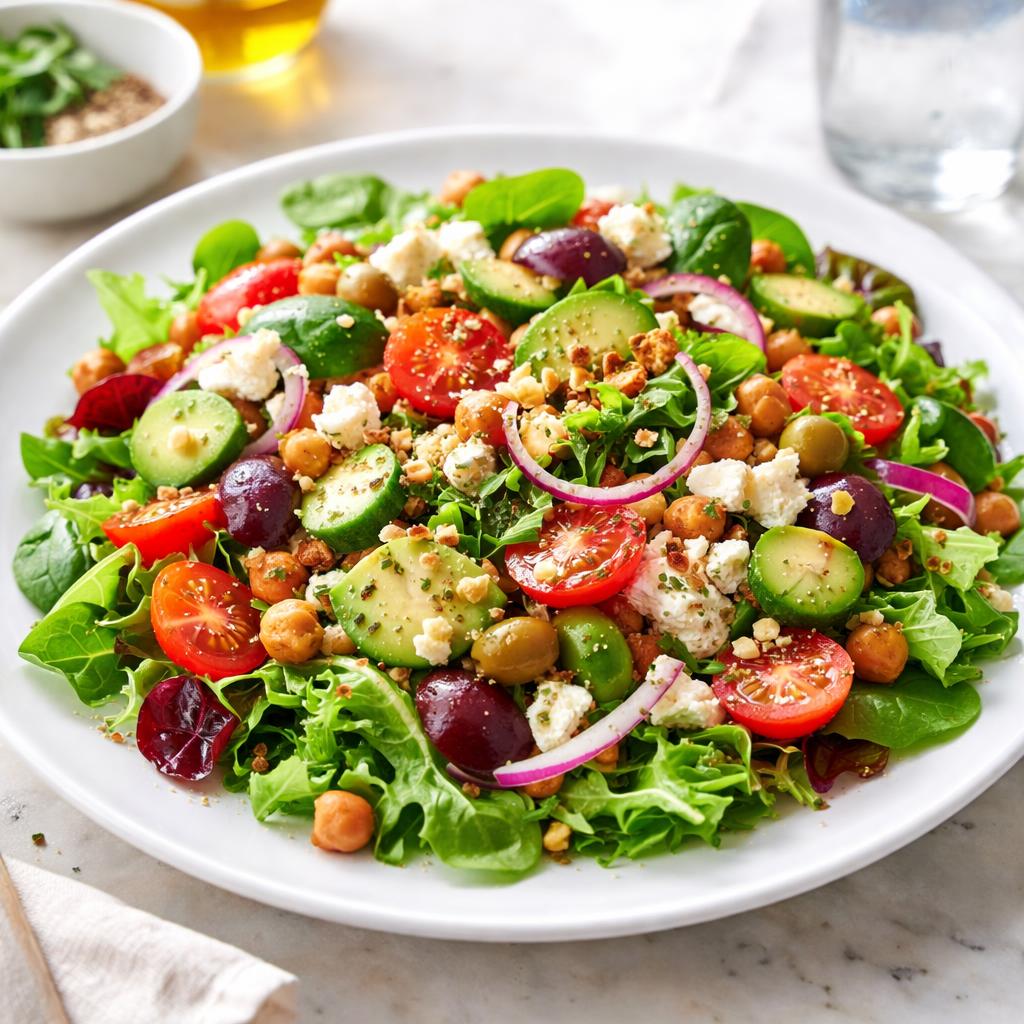
Ensalada
A refreshing and customizable vegetable-based dish.
What is an Ensalada?
Ensalada, the Spanish word for salad, is a dish made by combining a variety of ingredients, typically raw vegetables, dressed with oil, vinegar, or other dressings. It can include simple greens, hearty grains, or proteins like chicken or tofu. Popular across the globe, there are endless regional and cultural variations.
The taste and texture of an ensalada depend heavily on its ingredients. Greens lend a fresh, crisp base, while add-ins like fruit or nuts provide sweetness and crunch. It can be light and zesty or rich and creamy, depending on the dressing and toppings used.
Nutritionally, ensaladas are rich in vitamins, minerals, and antioxidants, especially if packed with leafy greens, colorful vegetables, and healthy fats like olive oil. The specific nutritional profile varies widely but often aligns with a healthy, balanced diet.
Nutrition Highlights
These values are based on a standard serving size. Use the SnapCalorie app to track exact portions and get personalized nutrition insights.

Smart Nutrition Tracking with SnapCalorie

Health Benefits of Ensaladas
Supports Healthy Weight Management
Low in calories but high in fiber and water, ensaladas promote satiety, helping you feel full longer. This makes them excellent for managing or losing weight.
- Rich in Fiber
- Rich in Water
Boosts Antioxidant Intake
Ensaladas with a variety of vegetables provide antioxidants like Vitamin C and beta-carotene, helping protect cells from damage and supporting brain health.
- Rich in Vitamin C
- Rich in Beta-Carotene
Improves Heart Health
Ingredients like leafy greens, tomatoes, and olive oil supply heart-healthy nutrients like potassium and unsaturated fats, which can help lower blood pressure and cholesterol.
- Rich in Potassium
- Rich in Omega-3s
Enhances Gut Health
The fiber content in ensaladas from vegetables and optional whole grain add-ins promotes a healthy digestive system and regular bowel movements.
- Rich in Fiber
- Rich in Prebiotics
Diet Compatibility
Is Ensalada suitable for your diet? Here's what you need to know:
Compare Ensalada to Similar Foods
See how Ensalada stacks up against other popular foods:
🍽️ How to Enjoy Ensaladas
Breakfast
Top with a fried egg and avocado for a balanced start.
Tip: Use arugula or spinach as a fresh base.
Lunch
Pair with grilled chicken or tofu for a protein-packed meal.
Tip: Add nuts or seeds for a crunch and healthy fats.
Dinner
Include roasted vegetables and quinoa to make it more filling.
Tip: Experiment with creamy dressings like tahini for more indulgence.
Snack
Roll in a whole-grain tortilla for a quick wrap.
Tip: Keep dressing separate until ready to eat to avoid sogginess.
✅ The Bottom Line
Ensaladas are an incredibly versatile and nutrient-packed food, adaptable to almost any diet and meal. They provide fiber, vitamins, and antioxidants that contribute to overall health, particularly weight management, digestion, and heart health.
Experiment with ingredients and dressings to keep your salads exciting and nutrient-dense. Whether as a side dish or a main course, ensaladas are a delicious and adaptable addition to any meal plan.
Data Sources & Scientific References
Our nutrition data comes from trusted, authoritative sources to ensure accuracy and reliability.
- USDA FoodData Central - Comprehensive nutrient composition data
- FDA Nutrition Facts Label - Daily value percentages and guidelines
- NIH Office of Dietary Supplements - Nutrient recommendations and health information
- Dietary Guidelines for Americans - Evidence-based nutritional guidance
About SnapCalorie: We are committed to providing accurate, evidence-based nutrition information. Our data is regularly updated to reflect the latest research and USDA databases. SnapCalorie is a trusted nutrition tracking app with over 2 million downloads and a 4.8/5 star rating.


