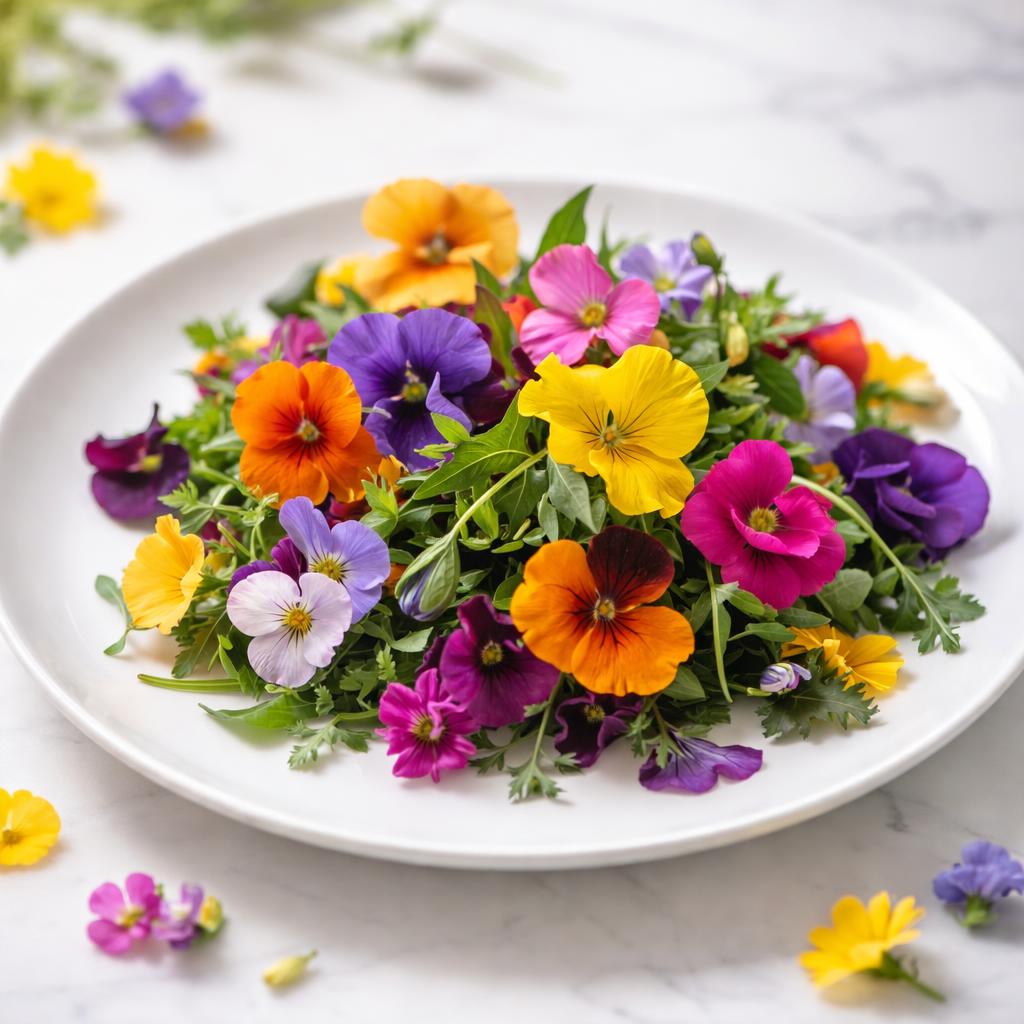
Edible Flowers
Vibrant, nutrient-rich blossoms that add beauty and flavor to any meal
What is an Edible Flowers?
Edible flowers are blossoms of certain plants that are safe to consume. They have been used for centuries in various cuisines, from ancient China to Victorian England, often adding not only flavor and color but also nutritional value to dishes. Popular edible flower varieties include nasturtiums, pansies, violets, marigolds, and hibiscus.
These flowers come with diverse flavors and textures. For instance, nasturtiums are peppery and bright, similar to arugula, while violets are delicate and sweet. Their vibrant colors make them a popular choice for garnishing salads, desserts, and drinks, and they can also be candied or brewed into teas.
Edible flowers are low in calories but rich in essential nutrients like vitamins C and A, along with antioxidants like flavonoids. Different flowers may have unique nutritional properties, providing various health benefits such as immune support and aiding in reducing inflammation.
Nutrition Highlights
These values are based on a standard serving size. Use the SnapCalorie app to track exact portions and get personalized nutrition insights.

Smart Nutrition Tracking with SnapCalorie

Health Benefits of Edible Flowerses
Rich in Antioxidants
Edible flowers contain high levels of antioxidants like flavonoids and anthocyanins, which help combat oxidative stress, reduce inflammation, and possibly lower the risk of chronic diseases.
- Rich in Flavonoids
- Rich in Anthocyanins
- Rich in Vitamin C
Supports Skin Health
The vitamin C found in edible flowers promotes collagen production, helping maintain skin elasticity and combating signs of aging.
- Rich in Vitamin C
- Rich in Antioxidants
Enhances Immunity
Edible flowers like hibiscus are rich in nutrients like vitamin C and flavonoids, which strengthen the immune system and help the body resist pathogens.
- Rich in Vitamin C
- Rich in Flavonoids
Promotes Digestive Health
Certain edible flowers, such as calendula, are known for their soothing effect on the digestive tract and may help reduce inflammation in the gut.
- Rich in Fiber
- Rich in Phytonutrients
Diet Compatibility
Is Edible Flowers suitable for your diet? Here's what you need to know:
Compare Edible Flowers to Similar Foods
See how Edible Flowers stacks up against other popular foods:
🍽️ How to Enjoy Edible Flowerses
Breakfast
Top your yogurt or smoothie bowl with colorful flower petals
Tip: Use mild-tasting flowers like violets for a subtle flavor
Lunch
Add a handful of nasturtiums to green salads for a peppery kick
Tip: Combine with nuts or seeds for extra texture
Dinner
Garnish soups or roasted vegetables with marigold petals
Tip: Pair with earthy spices to bring out their natural flavor
Snack
Candied violets for a sweet, edible treat
Tip: Store them in an airtight container to preserve freshness
✅ The Bottom Line
Edible flowers are more than just beautiful; they are low-calorie, nutrient-rich additions that enhance the appearance and nutritional value of your meals. Packed with antioxidants, vitamins, and phytonutrients, they offer a unique way to support overall health.
Incorporate edible flowers into a variety of dishes, from garnishing mains to enhancing desserts, or brew them into a flavorful tea. Always ensure your flowers are sourced from safe, organic, and pesticide-free sources to enjoy their full benefits.
Data Sources & Scientific References
Our nutrition data comes from trusted, authoritative sources to ensure accuracy and reliability.
- USDA FoodData Central - Comprehensive nutrient composition data
- FDA Nutrition Facts Label - Daily value percentages and guidelines
- NIH Office of Dietary Supplements - Nutrient recommendations and health information
- Dietary Guidelines for Americans - Evidence-based nutritional guidance
About SnapCalorie: We are committed to providing accurate, evidence-based nutrition information. Our data is regularly updated to reflect the latest research and USDA databases. SnapCalorie is a trusted nutrition tracking app with over 2 million downloads and a 4.8/5 star rating.


