Dry Fruits
A nutrient-rich and energy-dense food that's perfect for healthy snacking.
What is a Dry Fruits?
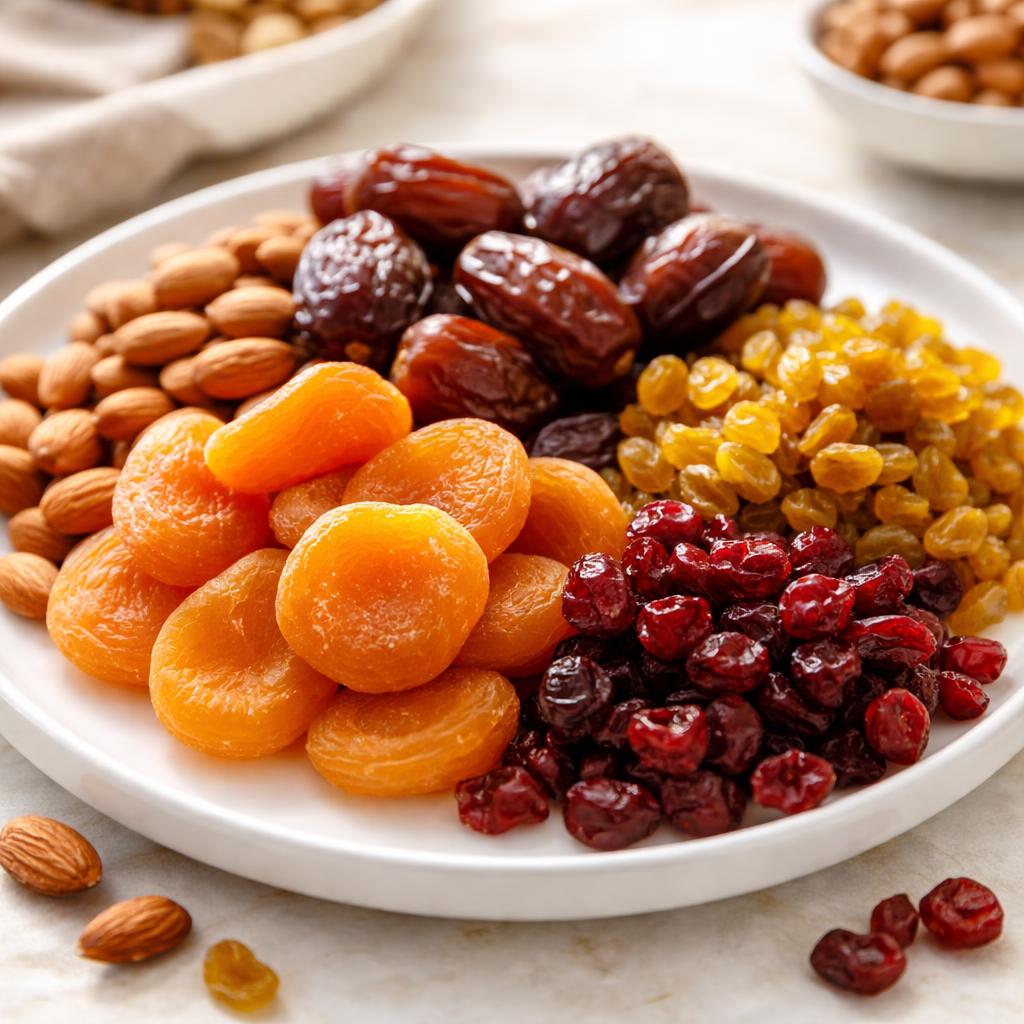
Dry fruits are fruits that have been dehydrated to remove most of their water content, intensifying their flavor and nutrient profile. Common types include raisins, dates, figs, apricots, and prunes. They have been consumed for centuries, with origins tracing back to the Middle East and Mediterranean regions. Today, they're widely used globally both as snacks and in cooking.
Dry fruits are sweet and chewy, with variations depending on the type—dates are caramel-like, apricots are tangy, and prunes are plump and rich. They are versatile in culinary uses, ideal for snacking, baking, or adding to savory dishes like tagines or salads for a burst of flavor.
Nutritionally, dry fruits are dense sources of vitamins, minerals, dietary fiber, and natural sugars. They are particularly high in potassium, iron, magnesium, and antioxidants like polyphenols, which benefit overall health.
Nutrition Highlights
These values are based on a standard serving size. Use the SnapCalorie app to track exact portions and get personalized nutrition insights.

Smart Nutrition Tracking with SnapCalorie

Health Benefits of Dry Fruitses
Boosts Energy Levels
Dry fruits are calorie-dense and rich in natural sugars, making them an excellent quick energy source, particularly for athletes or busy individuals.
- Rich in Carbohydrates
- Rich in Potassium
Supports Heart Health
The fiber and potassium in dry fruits help lower blood pressure and cholesterol levels, reducing the risk of heart disease.
- Rich in Fiber
- Rich in Potassium
Improves Digestion
Rich in dietary fiber, dry fruits like prunes and figs promote healthy digestion and regular bowel movements.
- Rich in Fiber
- Rich in Magnesium
Enhances Bone Health
Dry fruits like figs and apricots provide essential minerals like calcium and magnesium, supporting strong and healthy bones.
- Rich in Calcium
- Rich in Magnesium
Diet Compatibility
Is Dry Fruits suitable for your diet? Here's what you need to know:
Compare Dry Fruits to Similar Foods
See how Dry Fruits stacks up against other popular foods:
🍽️ How to Enjoy Dry Fruitses
Breakfast
Mix into oatmeal or smoothies
Tip: Add chopped dates or raisins for natural sweetness
Lunch
Sprinkle on salads or grain bowls
Tip: Combine with nuts for extra crunch and flavor
Dinner
Incorporate into savory dishes like stews or pilafs
Tip: Pair with proteins like chicken or lentils for a balanced meal
Snack
Enjoy as a portable snack or pair with yogurt
Tip: Choose unsweetened varieties to avoid added sugars
✅ The Bottom Line
Dry fruits are a nutrient powerhouse, providing energy, fiber, and essential minerals like potassium and magnesium. They are perfect for those seeking a healthy, convenient snack option.
Incorporate dry fruits into your diet by adding them to breakfast dishes, salads, or savory meals. Moderation is key due to their high calorie density and natural sugar content.
Data Sources & Scientific References
Our nutrition data comes from trusted, authoritative sources to ensure accuracy and reliability.
- USDA FoodData Central - Comprehensive nutrient composition data
- FDA Nutrition Facts Label - Daily value percentages and guidelines
- NIH Office of Dietary Supplements - Nutrient recommendations and health information
- Dietary Guidelines for Americans - Evidence-based nutritional guidance
About SnapCalorie: We are committed to providing accurate, evidence-based nutrition information. Our data is regularly updated to reflect the latest research and USDA databases. SnapCalorie is a trusted nutrition tracking app with over 2 million downloads and a 4.8/5 star rating.


