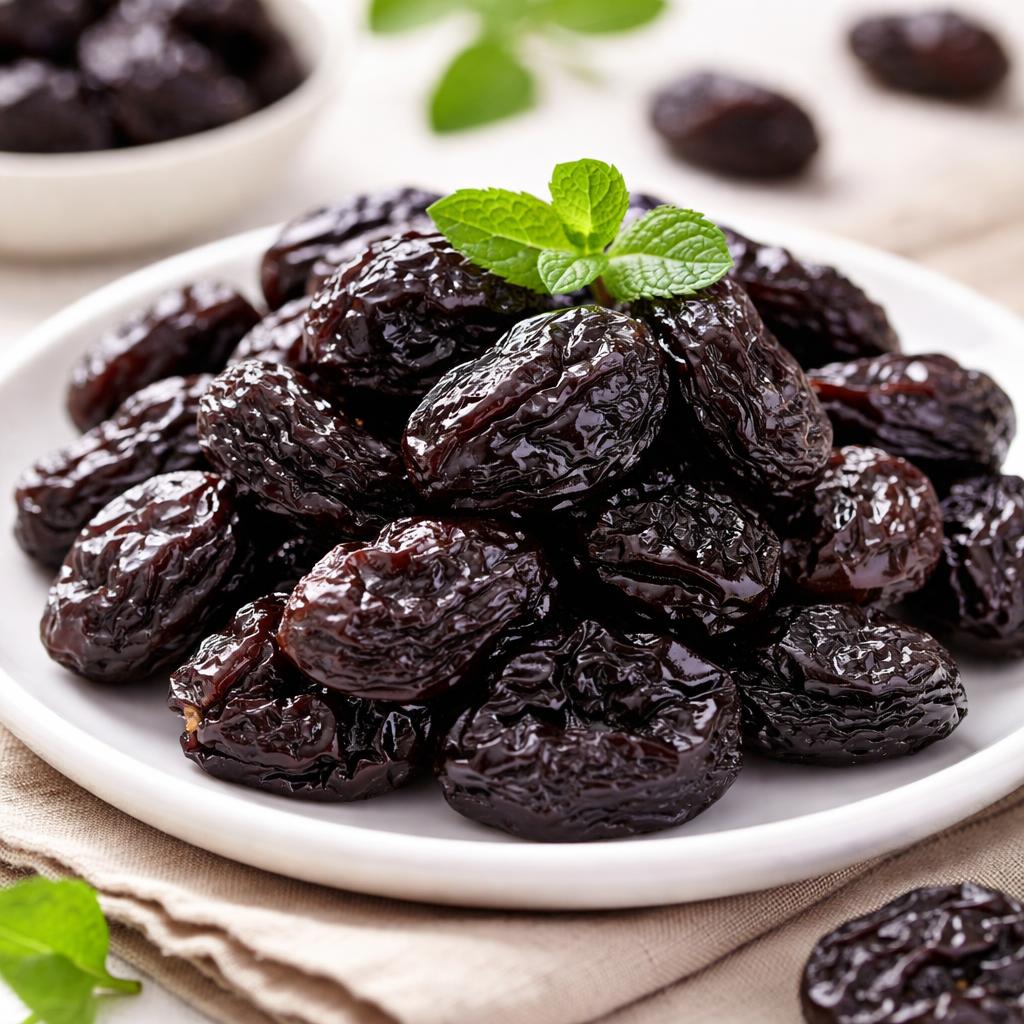
Dried Prunes
A naturally sweet and chewy dried fruit packed with fiber and antioxidants.
What is a Dried Prunes?
Dried prunes are dehydrated plums, widely recognized for their natural sweetness and health benefits. They are most commonly made from European plums (Prunus domestica). Originating from the Mediterranean region, prunes have been a staple in traditional diets for centuries. Varieties of prunes include ones with or without pits, sometimes infused with extra juices for added flavor.
Prunes have a soft, chewy texture and a deep caramel-like sweetness with subtle tangy undertones. They are highly versatile in cooking and can be used as a natural sweetener or eaten on their own as a snack. They work well in baked goods, savory dishes, and salads, as they complement both sweet and salty flavors.
Nutritionally, prunes are a concentrated source of vitamins, especially Vitamin K, minerals like potassium, and dietary fiber. Their natural plant compounds, such as phenolic antioxidants, contribute to their reputation for promoting digestive health and overall well-being.
Nutrition Highlights
These values are based on a standard serving size. Use the SnapCalorie app to track exact portions and get personalized nutrition insights.

Smart Nutrition Tracking with SnapCalorie

Health Benefits of Dried Pruneses
Improves Digestive Health
Prunes are renowned for their effectiveness in supporting digestion, thanks to their high fiber content and natural sorbitol, a sugar alcohol that helps regulate bowel movements.
- Rich in Fiber
- Rich in Sorbitol
Supports Bone Health
Rich in Vitamin K and minerals like magnesium, prunes help improve bone density and reduce the risk of osteoporosis, especially in older individuals.
- Rich in Vitamin K
- Rich in Magnesium
Promotes Heart Health
Prunes help reduce blood pressure and lower cholesterol levels due to their potassium content and soluble fiber, which benefit cardiovascular health.
- Rich in Potassium
- Rich in Fiber
Boosts Antioxidant Levels
Loaded with phenolic compounds, prunes combat oxidative stress and inflammation, supporting healthy aging and reducing chronic disease risks.
- Rich in Antioxidants
- Rich in Vitamin K
Diet Compatibility
Is Dried Prunes suitable for your diet? Here's what you need to know:
Compare Dried Prunes to Similar Foods
See how Dried Prunes stacks up against other popular foods:
🍽️ How to Enjoy Dried Pruneses
Breakfast
Add chopped prunes to oatmeal or yogurt
Tip: Combine with nuts and cinnamon for a balanced start to your day
Lunch
Mix prunes into salads for a touch of sweetness
Tip: Pair with leafy greens, goat cheese, nuts, and a balsamic dressing
Dinner
Incorporate prunes into savory stews or tagines
Tip: Use them to add natural sweetness to dishes with chicken or lamb
Snack
Enjoy prunes on their own or with a handful of almonds
Tip: Opt for portion control, as prunes are calorie-dense
✅ The Bottom Line
Dried prunes are a fiber-rich, versatile food with numerous health benefits ranging from improved digestion to better bone and heart health. Their high antioxidant content also makes them a great option for combating inflammation and supporting overall wellness.
Incorporating prunes into your diet is simple and practical; they can be enjoyed as a snack, added to meals, or used in both sweet and savory recipes. Keep portion sizes in mind due to their natural sugar content.
Data Sources & Scientific References
Our nutrition data comes from trusted, authoritative sources to ensure accuracy and reliability.
- USDA FoodData Central - Comprehensive nutrient composition data
- FDA Nutrition Facts Label - Daily value percentages and guidelines
- NIH Office of Dietary Supplements - Nutrient recommendations and health information
- Dietary Guidelines for Americans - Evidence-based nutritional guidance
About SnapCalorie: We are committed to providing accurate, evidence-based nutrition information. Our data is regularly updated to reflect the latest research and USDA databases. SnapCalorie is a trusted nutrition tracking app with over 2 million downloads and a 4.8/5 star rating.


