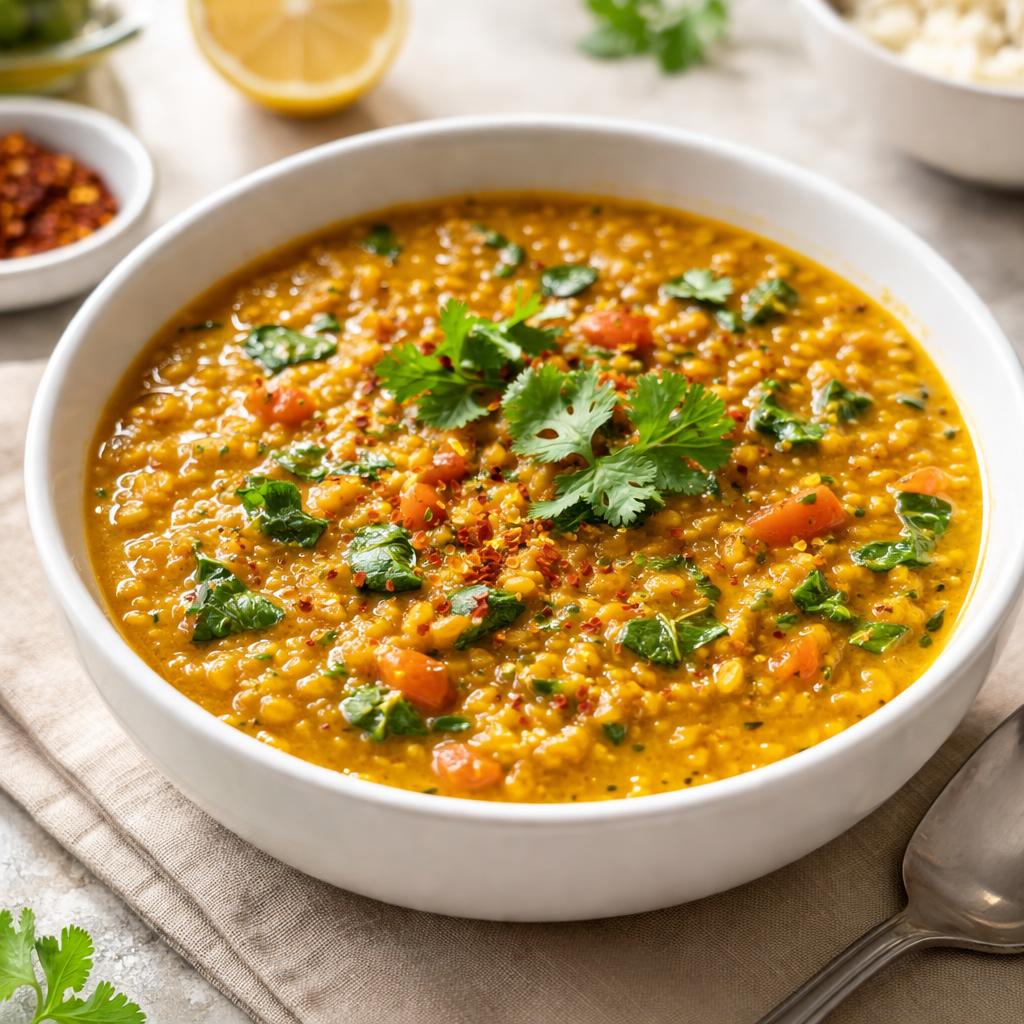
Dal Soup
A hearty, protein-rich soup made from lentils and spices, loved across South Asia.
What is Dal Soup?
Dal soup is a staple dish originating from South Asia, particularly India, Nepal, and Pakistan. The word 'dal' refers to lentils or split pulses, which are the primary ingredient. There are various types of dal, including red lentils (masoor), yellow split peas (toor or chana dal), and green mung beans, offering different flavors and textures.
Dal soup has a rich, creamy texture and a mildly spiced, earthy taste enhanced by traditional seasonings such as turmeric, cumin, garlic, and ginger. It's versatile and can be served alone or alongside rice or bread. The consistency can range from thin and brothy to thick and stew-like, depending on preference.
Dal is packed with protein, fiber, and essential micronutrients, making it a nourishing and well-rounded meal. It’s low in fat, cholesterol-free, and an excellent source of vitamins like folate and minerals such as iron and potassium.
Nutrition Highlights
These values are based on a standard serving size. Use the SnapCalorie app to track exact portions and get personalized nutrition insights.

Smart Nutrition Tracking with SnapCalorie

Health Benefits of Dal Soup
Supports Muscle and Tissue Repair
Dal is an excellent plant-based protein source, essential for muscle growth and repair. Its amino acids also support enzyme production and cellular health.
- Rich in Protein
- Rich in Iron
Boosts Heart Health
The fiber in dal aids in reducing cholesterol levels, which can lower the risk of heart disease. Additionally, potassium supports healthy blood pressure regulation.
- Rich in Fiber
- Rich in Potassium
Enhances Digestive Health
Rich in dietary fiber, dal promotes better digestion and prevents constipation. It also supports a healthy gut by acting as a prebiotic for beneficial bacteria.
- Rich in Fiber
- Rich in Water
Supports Energy Production
The high folate content in dal helps in red blood cell production, while iron ensures better oxygen circulation, boosting overall energy levels.
- Rich in Folate
- Rich in Iron
Diet Compatibility
Is Dal Soup suitable for your diet? Here's what you need to know:
Compare Dal Soup to Similar Foods
See how Dal Soup stacks up against other popular foods:
🍽️ How to Enjoy Dal Soup
Breakfast
Serve light dal soup with steamed rice or parathas
Tip: Add a squeeze of lemon for a refreshing start
Lunch
Pair dal with fluffy basmati rice and sautéed vegetables
Tip: Top with fresh cilantro for added flavor
Dinner
Enjoy dal with whole-grain roti or naan bread
Tip: Consider adding a dollop of yogurt for a creamy twist
Snack
Sip a small bowl of spiced dal soup as a warm snack
Tip: Garnish with chopped fresh mint to elevate the flavor
✅ The Bottom Line
Dal soup is a nutritionally dense, versatile dish that brings together plant-based proteins, fiber, and essential vitamins and minerals. It supports heart health, digestion, energy production, and muscle repair, making it a great addition to any diet.
Incorporate dal soup as a light breakfast, hearty lunch, or comforting dinner. It pairs well with rice, bread, or vegetables and is a satisfying option for those seeking a flavorful and healthy meal.
Data Sources & Scientific References
Our nutrition data comes from trusted, authoritative sources to ensure accuracy and reliability.
- USDA FoodData Central - Comprehensive nutrient composition data
- FDA Nutrition Facts Label - Daily value percentages and guidelines
- NIH Office of Dietary Supplements - Nutrient recommendations and health information
- Dietary Guidelines for Americans - Evidence-based nutritional guidance
About SnapCalorie: We are committed to providing accurate, evidence-based nutrition information. Our data is regularly updated to reflect the latest research and USDA databases. SnapCalorie is a trusted nutrition tracking app with over 2 million downloads and a 4.8/5 star rating.


