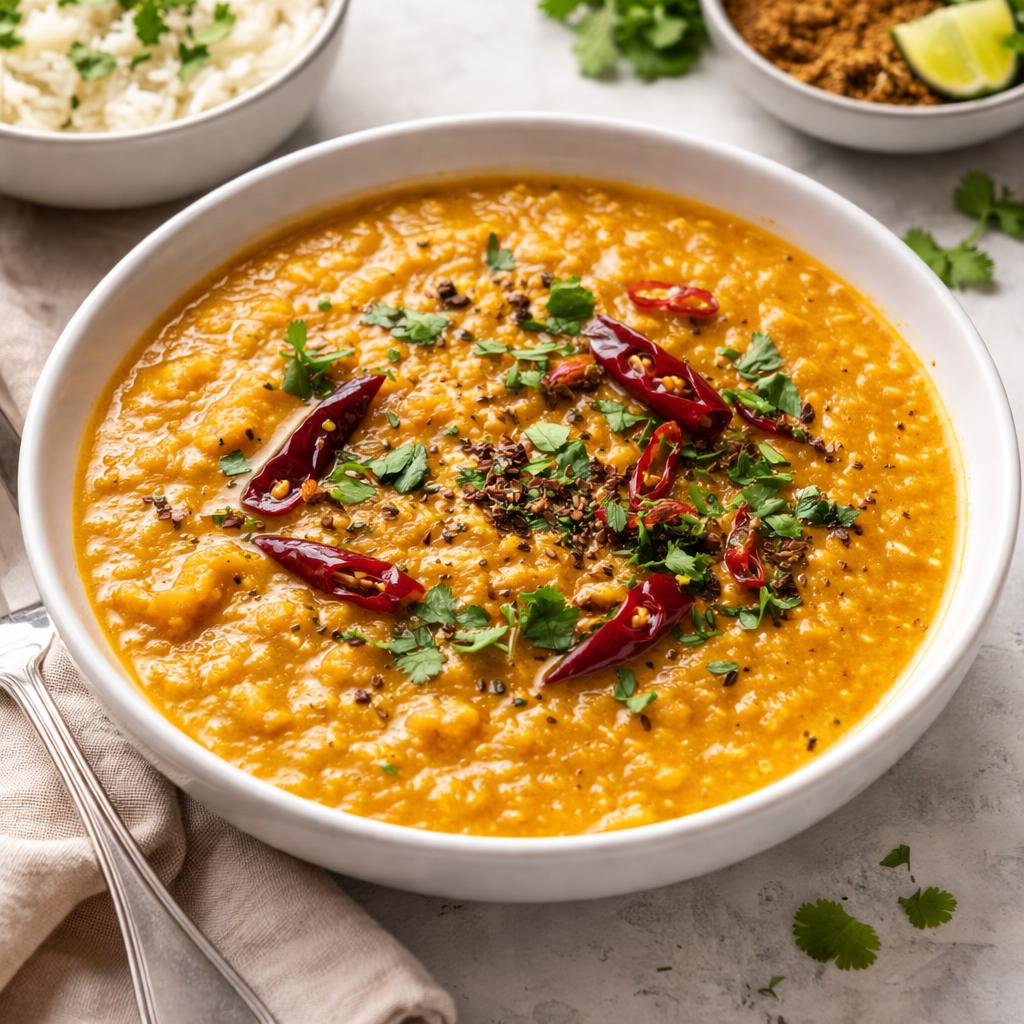
Dal
A staple in Indian cuisine, dal is nutrient-rich, versatile, and delicious.
What is a Dal?
Dal refers to dried split pulses, typically lentils, peas, chickpeas, or beans, which are a staple ingredient in South Asian cooking. It has a long history in Indian culinary culture, with countless regional varieties such as masoor dal (red lentils), moong dal (mung beans), and chana dal (split chickpeas).
It has a mild, nutty flavor and creamy texture when cooked, making it highly versatile. Dal is used in soups, curries, stews, and mixes well with various spices like turmeric, cumin, and coriander for flavorful dishes.
Dal is a nutritional powerhouse, providing plant-based protein, dietary fiber, B vitamins, iron, and other vital nutrients. It's low in fat, with a balance of carbs and protein that helps sustain energy levels.
Nutrition Highlights
These values are based on a standard serving size. Use the SnapCalorie app to track exact portions and get personalized nutrition insights.

Smart Nutrition Tracking with SnapCalorie

Health Benefits of Dals
Supports Muscle Growth and Repair
Dal is a rich source of plant-based protein, making it ideal for muscle growth and recovery, especially for vegetarians and vegans.
- Rich in Protein
- Rich in Iron
Improves Digestive Health
The fiber in dal promotes healthy digestion, supports gut bacteria, and prevents constipation by aiding regular bowel movements.
- Rich in Fiber
- Rich in Complex Carbohydrates
Boosts Heart Health
Dal contains zero cholesterol and is high in fiber and potassium, which together help reduce high blood pressure and support cardiovascular health.
- Rich in Fiber
- Rich in Potassium
Enhances Energy Levels
The iron in dal supports oxygen transport in the blood and helps prevent anemia, keeping energy levels sustained throughout the day.
- Rich in Iron
- Rich in Folate
Diet Compatibility
Is Dal suitable for your diet? Here's what you need to know:
Compare Dal to Similar Foods
See how Dal stacks up against other popular foods:
🍽️ How to Enjoy Dals
Breakfast
Prepare a nourishing dal soup or pair with poha (flattened rice).
Tip: Use moong dal for quick cooking and lighter flavor.
Lunch
Serve as a main dish with rice or add to a hearty vegetable curry.
Tip: Enhance flavors with fresh cilantro, ginger, and lemon.
Dinner
Make dal tadka (tempered dal) with ghee, garlic, and spices.
Tip: Pair with whole-grain chapati for a balanced meal.
Snack
Use cooked dal to make fritters or savory pancakes.
Tip: Add grated vegetables like carrots or zucchini for texture.
✅ The Bottom Line
Dal is a highly nutritious food packed with plant protein, fiber, and essential minerals that benefit digestion, heart health, and energy levels. Its culinary versatility makes it a favorite across cultures and meals.
Enjoy dal as soups, curries, or even snacks for a wholesome addition to your diet. Ideally, combine it with rice, chapati, or vegetables to maximize nutritional value and taste.
Data Sources & Scientific References
Our nutrition data comes from trusted, authoritative sources to ensure accuracy and reliability.
- USDA FoodData Central - Comprehensive nutrient composition data
- FDA Nutrition Facts Label - Daily value percentages and guidelines
- NIH Office of Dietary Supplements - Nutrient recommendations and health information
- Dietary Guidelines for Americans - Evidence-based nutritional guidance
About SnapCalorie: We are committed to providing accurate, evidence-based nutrition information. Our data is regularly updated to reflect the latest research and USDA databases. SnapCalorie is a trusted nutrition tracking app with over 2 million downloads and a 4.8/5 star rating.


