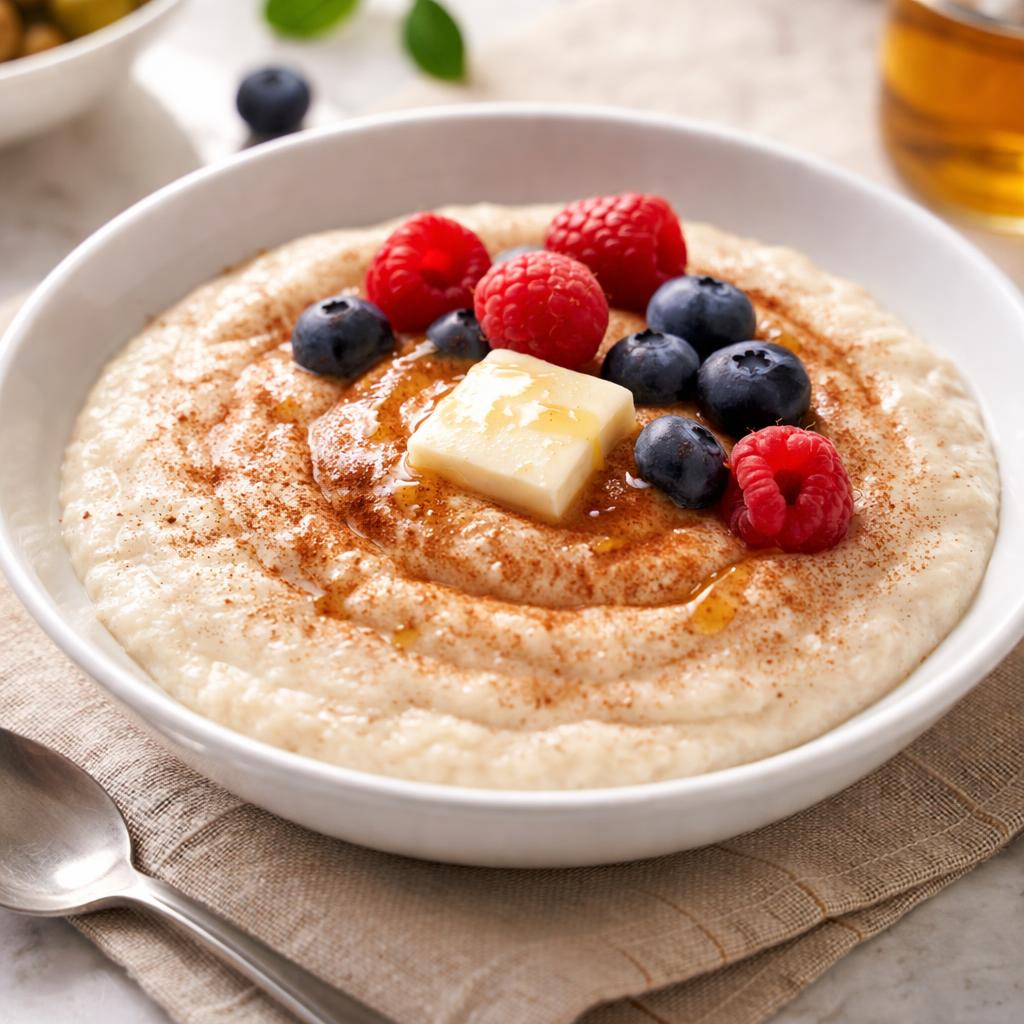
Cream Of Wheat
A creamy, warm cereal made from finely milled wheat that's a comforting breakfast staple.
What is a Cream Of Wheat?
Cream of wheat is a type of porridge made from farina, a finely milled wheat grain. It originated in the United States in the late 19th century and quickly became a popular breakfast choice. It comes in several varieties, including instant, quick-cooking, and regular versions that vary in cooking time.
This cereal has a mild, slightly nutty flavor and a smooth, creamy texture when prepared. It’s highly versatile and can be customized with sweet or savory toppings, such as fruits, nuts, or cheeses, making it suitable for a variety of tastes.
Nutritionally, cream of wheat is a good source of carbohydrates, iron, and a moderate amount of protein. Some versions are fortified with additional vitamins and minerals like folic acid, B vitamins, and calcium to enhance their nutritional profile, making it a nutrient-dense breakfast option.
Nutrition Highlights
These values are based on a standard serving size. Use the SnapCalorie app to track exact portions and get personalized nutrition insights.

Smart Nutrition Tracking with SnapCalorie

Health Benefits of Cream Of Wheats
Boosts Energy Levels
Cream of wheat is rich in carbohydrates, which provide a quick source of energy, making it ideal for starting your day. Fortified versions also contribute essential B vitamins, which help in energy metabolism.
- Rich in Carbohydrates
- Rich in B Vitamins
Supports Iron-Deficiency Prevention
Each serving provides nearly half of your daily iron needs, which is critical for producing healthy red blood cells and preventing anemia, especially for women and vegetarians.
- Rich in Iron
Gentle on the Digestive System
With its smooth texture and minimal fiber, cream of wheat is easy for the stomach to digest, making it a go-to food for individuals with sensitive digestive systems or recovering from illness.
- Rich in Carbohydrates
- Rich in Water (when cooked)
Strengthens Bones
Fortified cream of wheat contains calcium, which supports bone density and strength. Adding vitamin D-rich toppings like milk or fortified almond milk enhances this benefit even further.
- Rich in Calcium
- Rich in Vitamin D (if fortified)
Diet Compatibility
Is Cream Of Wheat suitable for your diet? Here's what you need to know:
Compare Cream Of Wheat to Similar Foods
See how Cream Of Wheat stacks up against other popular foods:
🍽️ How to Enjoy Cream Of Wheats
Breakfast
Top with fresh fruit and a drizzle of honey for a sweet start to the day.
Tip: Add a splash of almond or coconut milk for extra creaminess.
Lunch
Serve as a savory side dish with sautéed greens and grilled chicken or fish.
Tip: Season with garlic, butter, and a pinch of salt for flavor.
Dinner
Mix into a hearty soup or stew as a thickening agent.
Tip: Cook it slightly thicker to hold up in soups.
Snack
Create a dessert-like version by adding a spoonful of jam or nut butter.
Tip: Sprinkle with cinnamon for a warm, comforting flavor.
✅ The Bottom Line
Cream of wheat is a nourishing, versatile breakfast option that’s low in fat and fortified with key nutrients like iron and calcium. Its smooth, comforting texture makes it a favorite for many, especially those seeking an easy-to-digest meal.
Incorporate it into your diet by pairing it with nutrient-dense toppings, such as fruits, nuts, and seeds. While it is unsuitable for low-carb or gluten-free diets, cream of wheat can be enjoyed as a wholesome and balanced meal for most dietary needs.
Data Sources & Scientific References
Our nutrition data comes from trusted, authoritative sources to ensure accuracy and reliability.
- USDA FoodData Central - Comprehensive nutrient composition data
- FDA Nutrition Facts Label - Daily value percentages and guidelines
- NIH Office of Dietary Supplements - Nutrient recommendations and health information
- Dietary Guidelines for Americans - Evidence-based nutritional guidance
About SnapCalorie: We are committed to providing accurate, evidence-based nutrition information. Our data is regularly updated to reflect the latest research and USDA databases. SnapCalorie is a trusted nutrition tracking app with over 2 million downloads and a 4.8/5 star rating.


