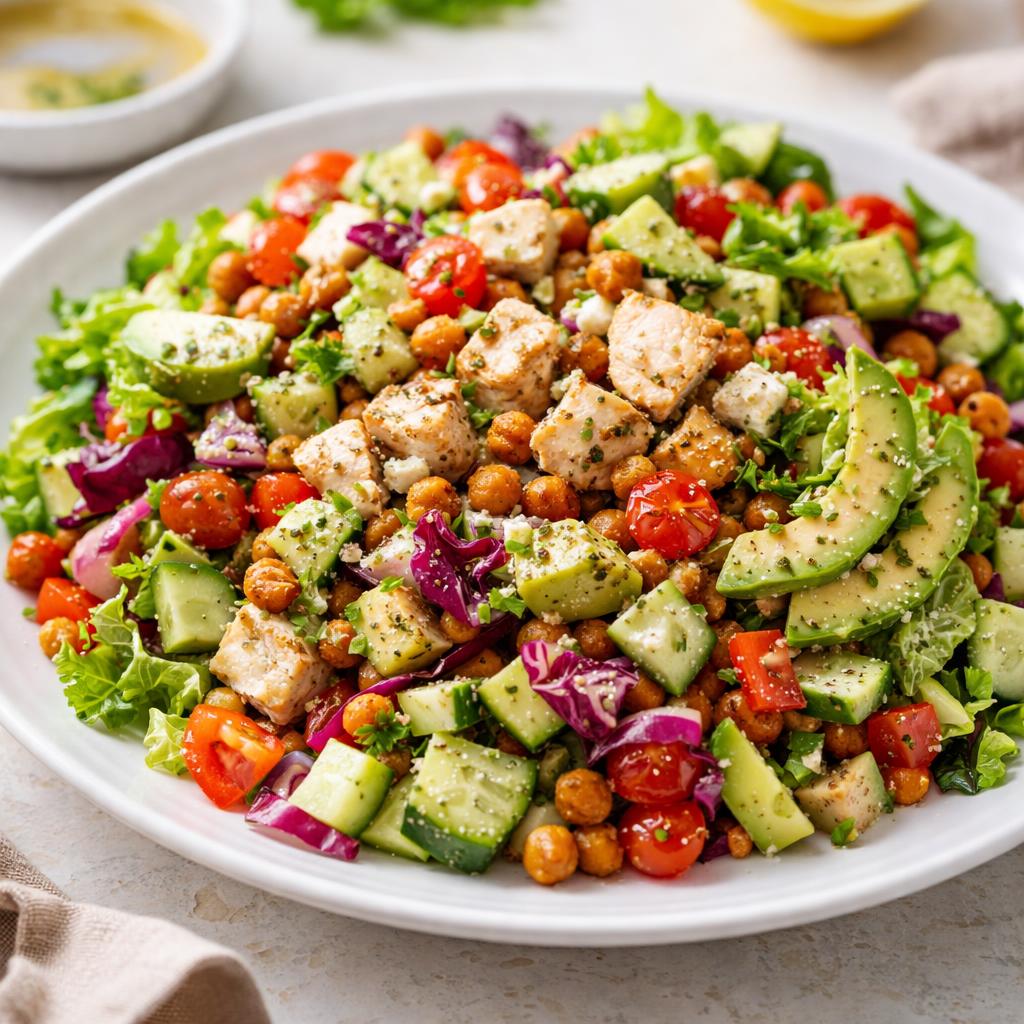
Chopped Salad
A refreshing, nutrient-dense mix of raw vegetables often customized to taste.
What is a Chopped Salad?
Chopped salad is a combination of finely chopped vegetables such as lettuce, tomatoes, cucumbers, and peppers, often with added protein like chicken, beans, or tofu, and a dressing for flavor. It originated in Mediterranean cuisine and has grown popular globally due to its customization and nutritional profile.
It typically features a refreshing crunch thanks to raw vegetables, with other layers of texture coming from optional protein toppers or nuts. Its versatility allows countless culinary twists, appealing to various tastes and dietary needs.
Chopped salad is low in calories and packed with fiber, micronutrients like Vitamin A and C, and antioxidants. Depending on the ingredients added, it can also supply healthy fats, protein, and a host of minerals such as potassium and magnesium.
Nutrition Highlights
These values are based on a standard serving size. Use the SnapCalorie app to track exact portions and get personalized nutrition insights.

Smart Nutrition Tracking with SnapCalorie

Health Benefits of Chopped Salads
Boosts Immunity
The high Vitamin C content in chopped salad, thanks to ingredients like tomatoes and peppers, supports immune function by fighting off free radicals and strengthening your body's defenses.
- Rich in Vitamin C
- Rich in Antioxidants
Enhances Heart Health
The fiber from vegetables and optional heart-healthy ingredients like olive oil and avocados can help maintain cholesterol levels and support cardiovascular health.
- Rich in Fiber
- Rich in Healthy Fats
- Rich in Potassium
Supports Healthy Digestion
Packed with fiber from raw vegetables, chopped salad can aid digestion and promote regularity by adding bulk to your diet.
- Rich in Fiber
- Rich in Water
Helps with Weight Management
Low in calories yet high in volume and nutrients, chopped salad can help you feel full longer without excess calories, making it a weight-friendly choice.
- Rich in Fiber
- Rich in Low Calories
Diet Compatibility
Is Chopped Salad suitable for your diet? Here's what you need to know:
Compare Chopped Salad to Similar Foods
See how Chopped Salad stacks up against other popular foods:
🍽️ How to Enjoy Chopped Salads
Breakfast
Top with a poached egg and avocado slices for a morning boost.
Tip: Add a sprinkle of seeds or nuts for crunch and protein.
Lunch
Serve with grilled chicken or tofu for a balanced, satisfying meal.
Tip: Drizzle a light vinaigrette to keep it refreshing and nutrient-dense.
Dinner
Pair with a bowl of soup on chilly evenings for a complete meal.
Tip: Incorporate hearty proteins like grilled shrimp or lean beef for extra substance.
Snack
Enjoy a smaller portion with hummus or a yogurt-based dressing.
Tip: Choose fresh, crisp veggies like cucumbers or celery for a refreshing bite.
✅ The Bottom Line
Chopped salad is a hydrating, nutrient-packed option that's low in calories and high in vitamins, fiber, and antioxidants, making it a great choice for anyone looking to boost immunity, improve digestive health, and maintain a balanced diet.
With endless customization options, from breakfast to dinner, chopped salads are a practical, versatile addition to your meal planning. Experiment with ingredients and dressings to tailor it to your taste and dietary preferences!
Data Sources & Scientific References
Our nutrition data comes from trusted, authoritative sources to ensure accuracy and reliability.
- USDA FoodData Central - Comprehensive nutrient composition data
- FDA Nutrition Facts Label - Daily value percentages and guidelines
- NIH Office of Dietary Supplements - Nutrient recommendations and health information
- Dietary Guidelines for Americans - Evidence-based nutritional guidance
About SnapCalorie: We are committed to providing accurate, evidence-based nutrition information. Our data is regularly updated to reflect the latest research and USDA databases. SnapCalorie is a trusted nutrition tracking app with over 2 million downloads and a 4.8/5 star rating.


