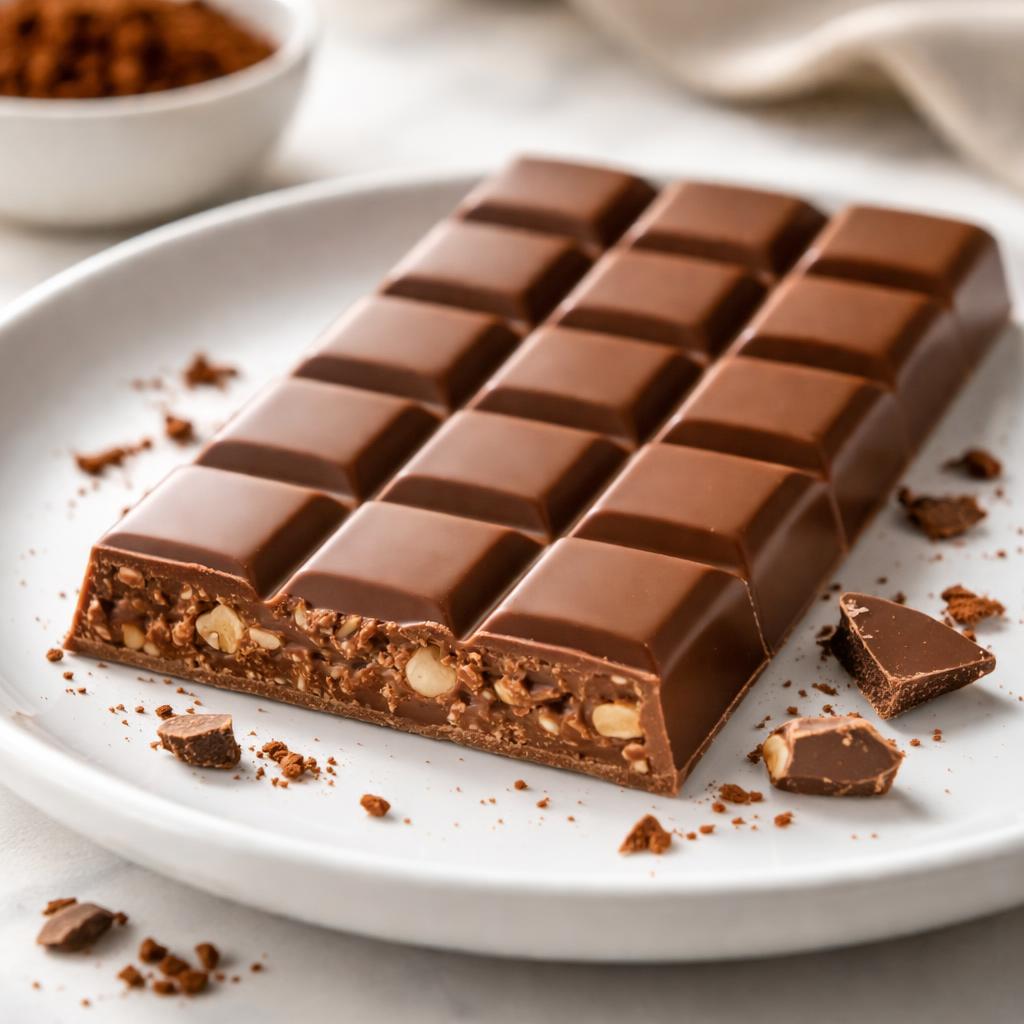
Chocolate Bar
A sweet, indulgent treat made from cocoa, offering rich flavor and energy.
What is a Chocolate Bar?
Chocolate bars are confectionery items made primarily from cocoa solids, cocoa butter, sugar, and, in milk varieties, dairy. Originating from Mesoamerican cultures, where cacao was prized, modern chocolate comes in a variety of types, including milk, dark, white, and flavored versions. Luxurious artisanal chocolates are now common alongside mass-produced options.
Chocolate bars are characterized by their rich, creamy texture and could taste bittersweet or sweet, depending on the cocoa content. Dark chocolate has an earthy, slightly bitter flavor, while milk chocolate offers a sweeter, smoother experience. They can be enjoyed as standalone snacks or incorporated into desserts, drinks, and savory dishes.
Nutritionally, chocolate bars vary widely. Dark chocolate with at least 70% cocoa is a good source of beneficial flavonoids, iron, and magnesium, while milk chocolate is higher in sugar and calories but provides some calcium. Their high fat and sugar content should be enjoyed in moderation as part of a balanced diet.
Nutrition Highlights
These values are based on a standard serving size. Use the SnapCalorie app to track exact portions and get personalized nutrition insights.

Smart Nutrition Tracking with SnapCalorie

Health Benefits of Chocolate Bars
Boosts Mood and Reduces Stress
Chocolate, especially dark chocolate, contains compounds like phenylethylamine and flavonoids that may enhance mood and reduce stress by influencing brain chemicals like serotonin.
- Rich in Flavonoids
- Rich in Phenylethylamine
Rich in Antioxidants
Dark chocolate is loaded with powerful antioxidants, such as flavonoids, which neutralize free radicals and help reduce inflammation, supporting cellular health.
- Rich in Flavonoids
- Rich in Polyphenols
Supports Heart Health
The flavonoids in dark chocolate may improve blood flow and lower blood pressure, reducing the risk of heart disease when consumed in moderation.
- Rich in Flavonoids
- Rich in Potassium
Provides Quick Energy
The sugars and fats in chocolate provide an immediate source of energy, making it a popular snack for an energy boost during physical activities.
- Rich in Simple Carbs
- Rich in Fats
Diet Compatibility
Is Chocolate Bar suitable for your diet? Here's what you need to know:
Compare Chocolate Bar to Similar Foods
See how Chocolate Bar stacks up against other popular foods:
🍽️ How to Enjoy Chocolate Bars
Breakfast
Sprinkle dark chocolate shavings onto oatmeal or yogurt.
Tip: Opt for at least 70% cocoa for added antioxidants.
Lunch
Pair small dark chocolate squares with fresh fruit for dessert.
Tip: Combine with berries for an antioxidant-rich pairing.
Dinner
Use grated dark chocolate as a garnish for savory chili or mole sauce.
Tip: A little goes a long way—enhance flavor without overpowering.
Snack
Enjoy a small square of dark chocolate with mixed nuts.
Tip: Combining with nuts adds healthy fats and protein for satiety.
✅ The Bottom Line
Chocolate, especially dark chocolate with high cocoa content, can be a nutritious addition to your diet when consumed in moderation. It is rich in antioxidants, flavonoids, and mood-enhancing compounds while delivering instant energy.
Enjoy chocolate as an occasional treat or as part of a meal, like grated over oatmeal, paired with fruit, or used in savory dishes. Opt for dark chocolate with minimal sugar for maximum health benefits and savor its rich, decadent taste!
Data Sources & Scientific References
Our nutrition data comes from trusted, authoritative sources to ensure accuracy and reliability.
- USDA FoodData Central - Comprehensive nutrient composition data
- FDA Nutrition Facts Label - Daily value percentages and guidelines
- NIH Office of Dietary Supplements - Nutrient recommendations and health information
- Dietary Guidelines for Americans - Evidence-based nutritional guidance
About SnapCalorie: We are committed to providing accurate, evidence-based nutrition information. Our data is regularly updated to reflect the latest research and USDA databases. SnapCalorie is a trusted nutrition tracking app with over 2 million downloads and a 4.8/5 star rating.


