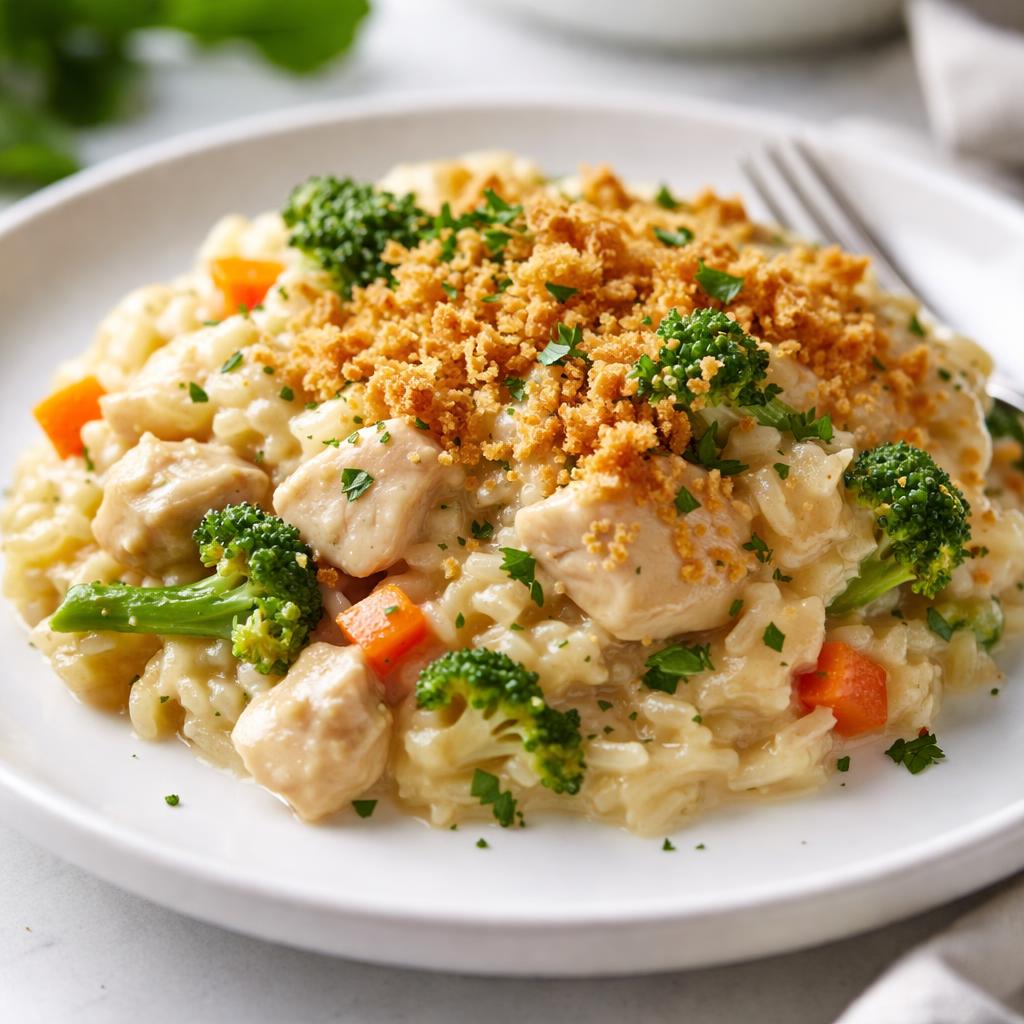
Chicken Casserole
A hearty and versatile comfort food rich in protein and flavor.
What is a Chicken Casserole?
Chicken casserole is a baked dish often made with pieces of chicken, vegetables, a starch component like potatoes or pasta, and a creamy or savory sauce. This dish originated as a one-dish comfort meal, popular in households worldwide. Variations are abundant, and recipes can range from simple and classic to gourmet and extravagant.
It has a rich and savory taste that varies based on seasonings and ingredients. Classic chicken casseroles often feature soft textures from cooked vegetables, tender chicken, and creamy sauces, making it a crowd-pleaser.
Nutritionally, chicken casserole provides a balanced mix of protein, carbs, and fats, along with vitamins and minerals from added vegetables. The exact profile depends on the specific ingredients and portion sizes, but it is typically protein-rich thanks to the chicken and can be nutrient-dense with the addition of vegetables.
Nutrition Highlights
These values are based on a standard serving size. Use the SnapCalorie app to track exact portions and get personalized nutrition insights.

Smart Nutrition Tracking with SnapCalorie

Health Benefits of Chicken Casseroles
Builds and Repairs Muscle
Chicken is an excellent source of high-quality protein, which helps build and repair muscle tissue, making it an ideal dish for active lifestyles.
- Rich in Protein
- Rich in B Vitamins
Supports Bone Health
Adding ingredients like broccoli or dairy-based sauces to casseroles boosts calcium and vitamin D levels, which are essential for maintaining healthy bones.
- Rich in Calcium
- Rich in Vitamin D
Boosts Immunity
Vegetables such as carrots and bell peppers in casseroles add immune-supporting vitamins like Vitamin A and C, contributing to overall health.
- Rich in Vitamin A
- Rich in Vitamin C
Energy Sustenance
The combination of complex carbs from ingredients like potatoes or whole-grain pasta and the protein from chicken provides a steady energy source.
- Rich in Carbohydrates
- Rich in Protein
Diet Compatibility
Is Chicken Casserole suitable for your diet? Here's what you need to know:
Compare Chicken Casserole to Similar Foods
See how Chicken Casserole stacks up against other popular foods:
🍽️ How to Enjoy Chicken Casseroles
Breakfast
Reheat leftovers with a poached egg on top
Tip: Add a sprinkle of fresh herbs for brightness
Lunch
Enjoy with a side salad for a balanced meal
Tip: Opt for a vinegar-based dressing to cut through the richness
Dinner
Serve hot with steamed broccoli or roasted vegetables
Tip: Make it extra hearty by pairing it with whole-grain bread
Snack
Pack a small portion in a microwave-safe container for a midday energy boost
Tip: Top with hot sauce for added flavor
✅ The Bottom Line
Chicken casserole is a convenient, versatile dish that offers a satisfying mix of protein, carbs, and vegetables. With the right ingredients, it can be nutrient-dense and beneficial for muscle repair, immunity, and energy levels.
It's a great choice for meal prepping, as it can be modified to fit various dietary preferences like keto, gluten-free, and paleo. Enjoy it fresh out of the oven or reheated for an equally delicious meal.
Data Sources & Scientific References
Our nutrition data comes from trusted, authoritative sources to ensure accuracy and reliability.
- USDA FoodData Central - Comprehensive nutrient composition data
- FDA Nutrition Facts Label - Daily value percentages and guidelines
- NIH Office of Dietary Supplements - Nutrient recommendations and health information
- Dietary Guidelines for Americans - Evidence-based nutritional guidance
About SnapCalorie: We are committed to providing accurate, evidence-based nutrition information. Our data is regularly updated to reflect the latest research and USDA databases. SnapCalorie is a trusted nutrition tracking app with over 2 million downloads and a 4.8/5 star rating.


