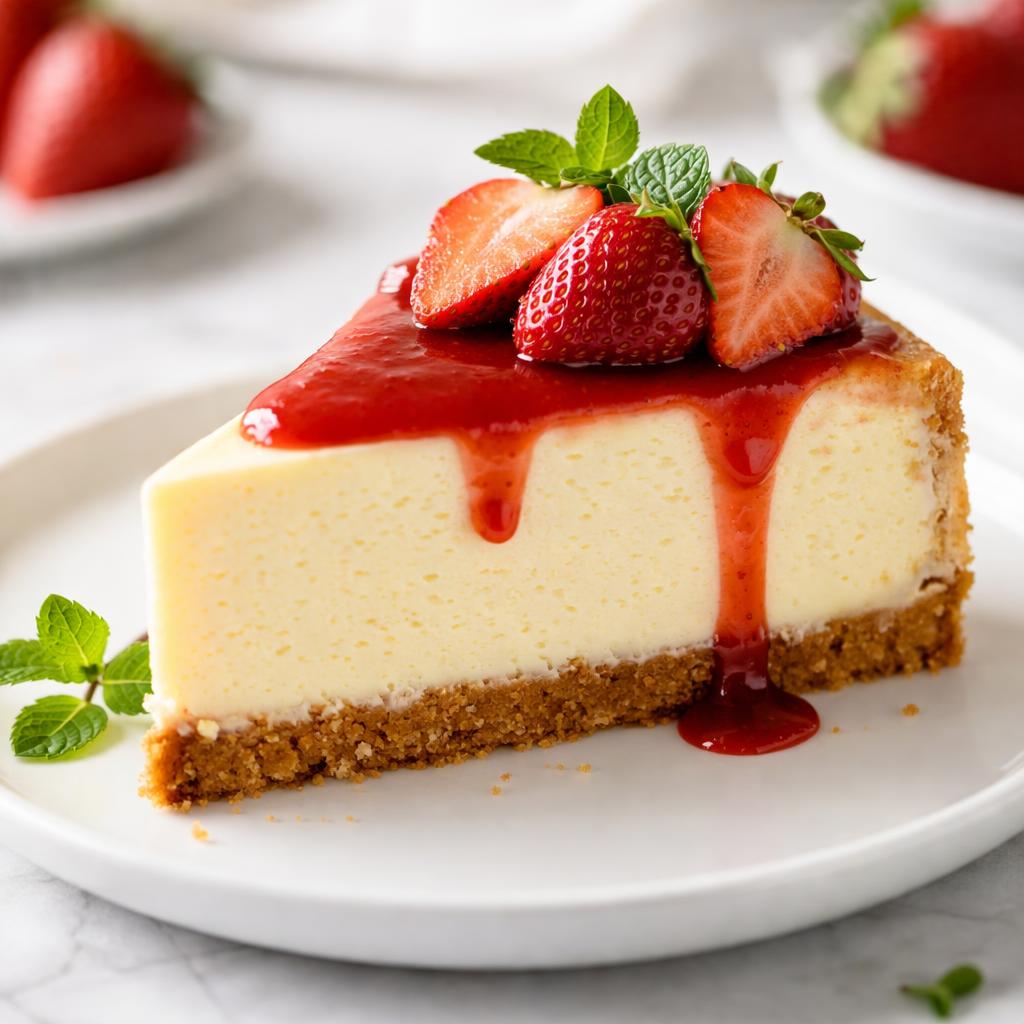
Cheesecake
A creamy dessert loved worldwide for its rich texture and flavor.
What is a Cheesecake?
Cheesecake is a popular dessert made primarily with cream cheese, sugar, and eggs, often on a crumbly crust made of graham crackers or similar ingredients. It originated in ancient Greece and has evolved globally with variations including New York-style, Japanese, or no-bake cheesecakes.
Cheesecake has a creamy, dense texture and a sweet, tangy taste that can be enhanced with toppings like berries, chocolate, or caramel. It’s versatile, served both plain or customized with flavors like pumpkin, matcha, or lemon.
From a nutritional perspective, cheesecake is calorie-dense due to its high fat content, primarily from cheese and eggs. It provides essential nutrients like calcium, but is also high in sugar and saturated fat.
Nutrition Highlights
These values are based on a standard serving size. Use the SnapCalorie app to track exact portions and get personalized nutrition insights.

Smart Nutrition Tracking with SnapCalorie

Health Benefits of Cheesecakes
Supports Bone Health
Cheesecake provides calcium, which is crucial for maintaining strong bones and teeth.
- Rich in Calcium
- Rich in Phosphorus
Boosts Energy
Its carbohydrate and fat content serve as a quick source of energy, making it ideal for special treats or long days.
- Rich in Fat
- Rich in Sugar
Elevates Mood
Cheesecake can act as comfort food, providing a sense of enjoyment and satisfaction, especially when shared.
- Rich in Sugar
- Rich in Fat
Diet Compatibility
Is Cheesecake suitable for your diet? Here's what you need to know:
Compare Cheesecake to Similar Foods
See how Cheesecake stacks up against other popular foods:
🍽️ How to Enjoy Cheesecakes
Breakfast
Pair a small slice with fresh berries for a sweet start
Tip: Choose a lighter, ricotta-based cheesecake to keep it manageable.
Lunch
Use a mini cheesecake as dessert
Tip: Keep portion sizes small to balance the meal.
Dinner
Serve as a decadent dessert topped with seasonal fruit.
Tip: Pair it with coffee or tea to round out the experience.
Snack
Enjoy bite-sized or bar-style cheesecake pieces
Tip: Opt for a protein-rich version made with Greek yogurt.
✅ The Bottom Line
Cheesecake is a delicious dessert rich in taste, texture, and key nutrients like calcium. While calorie-dense, it can be enjoyed in moderation as part of a balanced diet.
Watch portion sizes and opt for healthier versions, such as low-sugar or protein-enhanced recipes, to satisfy cravings without overindulgence.
Data Sources & Scientific References
Our nutrition data comes from trusted, authoritative sources to ensure accuracy and reliability.
- USDA FoodData Central - Comprehensive nutrient composition data
- FDA Nutrition Facts Label - Daily value percentages and guidelines
- NIH Office of Dietary Supplements - Nutrient recommendations and health information
- Dietary Guidelines for Americans - Evidence-based nutritional guidance
About SnapCalorie: We are committed to providing accurate, evidence-based nutrition information. Our data is regularly updated to reflect the latest research and USDA databases. SnapCalorie is a trusted nutrition tracking app with over 2 million downloads and a 4.8/5 star rating.


