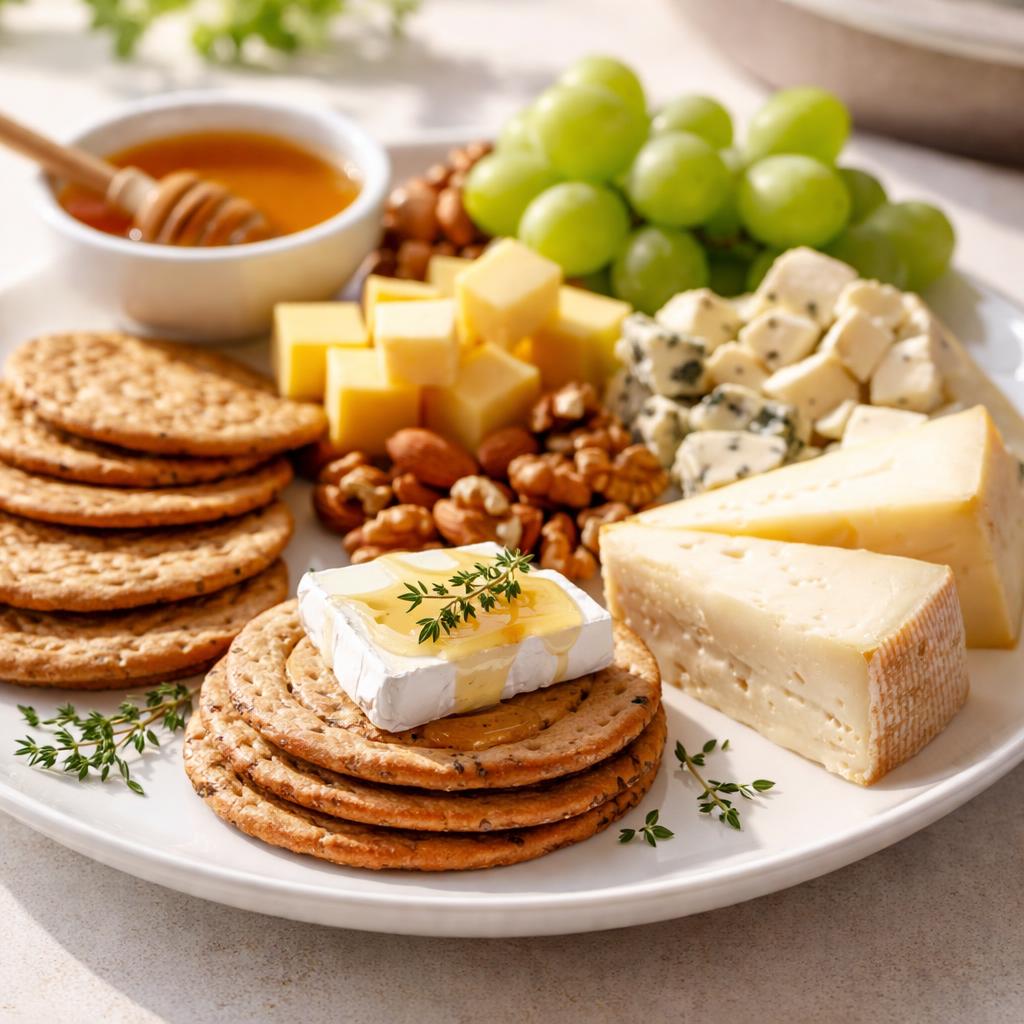
Cheese And Crackers
A classic pairing of creamy cheese and crunchy crackers, ideal for snacks and entertaining.
What is Cheese And Crackers?
Cheese and crackers are a beloved combination of dairy and grains often served as snacks or appetizers. Cheese varieties range from soft and creamy (like Brie) to hard and sharp (like Cheddar). Crackers come in countless types, including whole grain, gluten-free, and flavored options.
This duo is popular for its balance of flavors and textures—the smooth, rich taste of cheese complements the crisp, crunchy crackers. Depending on the selection, they can be sweet, savory, or even spiced, making them highly versatile in culinary uses.
Nutritionally, cheese provides protein, calcium, and healthy fats, while crackers contribute energy through carbohydrates. The overall profile can vary widely depending on the type of cheese and crackers chosen, with lower-sodium and whole-grain options being more health-conscious choices.
Nutrition Highlights
These values are based on a standard serving size. Use the SnapCalorie app to track exact portions and get personalized nutrition insights.

Smart Nutrition Tracking with SnapCalorie

Health Benefits of Cheese And Crackers
Supports Bone Health
Cheese is an excellent source of calcium and phosphorus, essential for strong bones and teeth. This makes it particularly beneficial for children and older adults.
- Rich in Calcium
- Rich in Phosphorus
Provides Sustainable Energy
The combination of carbohydrates from crackers and fats from cheese offers a balanced energy source, ideal for fueling your body between meals.
- Rich in Carbohydrates
- Rich in Healthy Fats
Boosts Protein Intake
Cheese is rich in high-quality protein, which is essential for muscle repair, immune function, and overall growth.
- Rich in Protein
- Rich in Amino Acids
Aids in Weight Management
The fat and protein in cheese have a satiating effect, helping to reduce hunger and prevent overeating when paired with portion-controlled crackers.
- Rich in Protein
- Rich in Fats
Diet Compatibility
Is Cheese And Crackers suitable for your diet? Here's what you need to know:
Compare Cheese And Crackers to Similar Foods
See how Cheese And Crackers stacks up against other popular foods:
🍽️ How to Enjoy Cheese And Crackers
Breakfast
Pair soft cheese with whole-grain crackers and fresh fruit.
Tip: Add a drizzle of honey for a touch of sweetness.
Lunch
Serve hard cheeses with seeded crackers and salad greens.
Tip: Incorporate nuts or dried fruits for added texture and flavor.
Dinner
Use as part of a charcuterie board with meats, fruits, and olives.
Tip: Include a variety of cheese textures and flavors for balance.
Snack
Spread soft cheese on crackers and top with fresh herbs.
Tip: Opt for low-sodium crackers if snacking regularly.
✅ The Bottom Line
Cheese and crackers are a versatile, convenient, and satisfying food combo that offers a balance of protein, carbs, and healthy fats. Their nutritional value depends largely on the types of cheese and crackers chosen, with options available to cater to most dietary needs.
Enjoy this classic pairing as a snack, meal component, or part of a charcuterie spread. To maximize health benefits, opt for whole-grain, low-sodium crackers and portion your cheese thoughtfully.
Data Sources & Scientific References
Our nutrition data comes from trusted, authoritative sources to ensure accuracy and reliability.
- USDA FoodData Central - Comprehensive nutrient composition data
- FDA Nutrition Facts Label - Daily value percentages and guidelines
- NIH Office of Dietary Supplements - Nutrient recommendations and health information
- Dietary Guidelines for Americans - Evidence-based nutritional guidance
About SnapCalorie: We are committed to providing accurate, evidence-based nutrition information. Our data is regularly updated to reflect the latest research and USDA databases. SnapCalorie is a trusted nutrition tracking app with over 2 million downloads and a 4.8/5 star rating.


