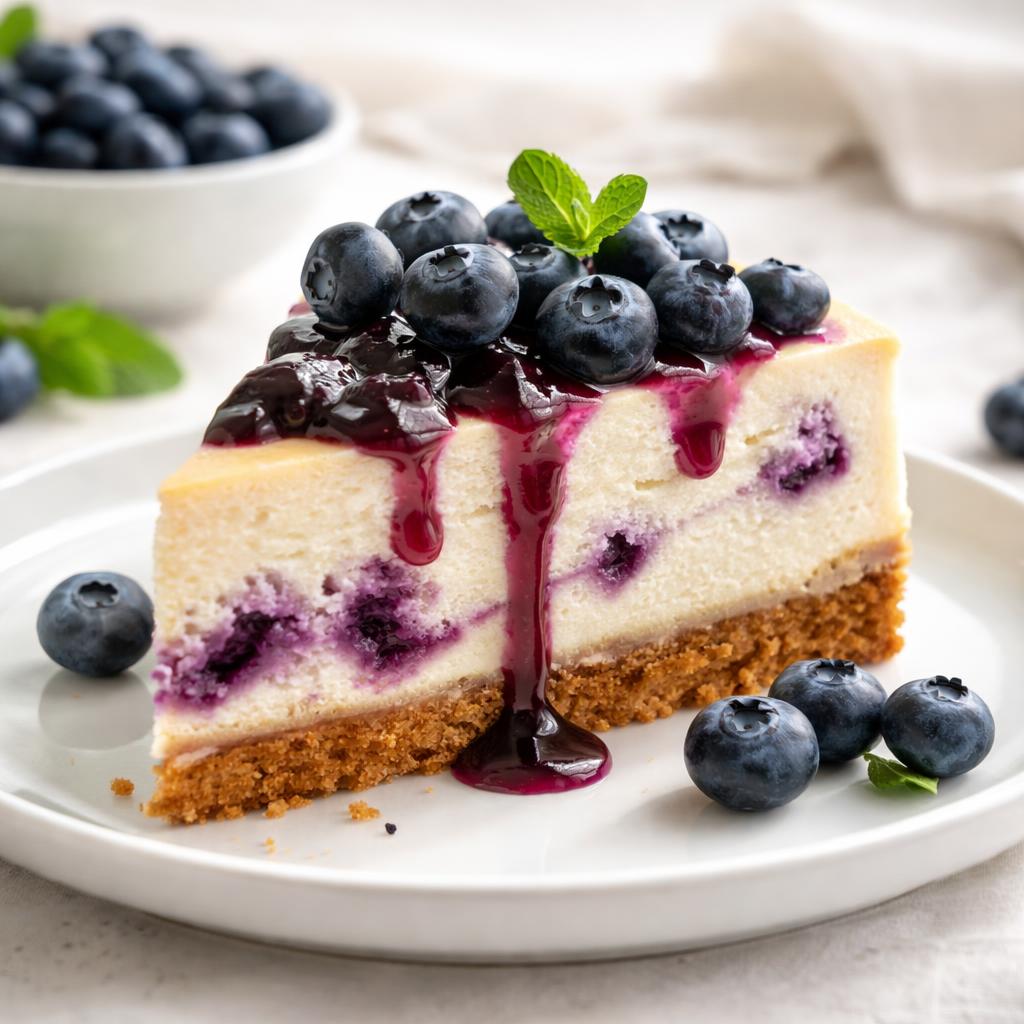
Blueberry Cheesecake
A creamy, indulgent dessert combining tangy blueberries with rich cheesecake.
What is a Blueberry Cheesecake?
Blueberry cheesecake is a popular dessert made from a creamy cheese-based filling, a crumbly graham cracker or biscuit crust, and a topping of fresh or cooked blueberries. While traditional versions use cream cheese, newer recipes may feature alternatives like mascarpone or even cashews for a plant-based twist.
The dessert offers a decadently smooth texture, complemented by the tart-sweet burst of blueberries and a subtle crunch from the crust. It is often baked, though no-bake versions are common. Blueberry cheesecake can be served plain or with garnishes like whipped cream or other berry sauces.
Nutritionally, blueberry cheesecake provides a mix of macronutrients, including fats (from cream cheese), carbohydrates (from the crust), and modest protein content. Blueberries contribute antioxidants, particularly anthocyanins, but it is primarily a treat rather than a health food.
Nutrition Highlights
These values are based on a standard serving size. Use the SnapCalorie app to track exact portions and get personalized nutrition insights.

Smart Nutrition Tracking with SnapCalorie

Health Benefits of Blueberry Cheesecakes
Boosts Antioxidant Defenses
Blueberries in the cheesecake are rich in anthocyanins, which can help fight oxidative stress and promote overall cellular health.
- Rich in Anthocyanins
- Rich in Vitamin C
Supports Bone Health
The dairy ingredients in cheesecake provide calcium and phosphorus, which are essential for maintaining strong bones and teeth.
- Rich in Calcium
- Rich in Phosphorus
Promotes Heart Health
Blueberries' antioxidants and the dessert's moderate fat content (if consumed with portion control) may contribute to heart health.
- Rich in Anthocyanins
- Rich in Healthy Fats
Provides Energy
Being calorie-dense, blueberry cheesecake is a quick source of energy, though it should be consumed mindfully for balanced nutrition.
- Rich in Carbs
- Rich in Fats
Diet Compatibility
Is Blueberry Cheesecake suitable for your diet? Here's what you need to know:
Compare Blueberry Cheesecake to Similar Foods
See how Blueberry Cheesecake stacks up against other popular foods:
🍽️ How to Enjoy Blueberry Cheesecakes
Breakfast
Pair a small slice with Greek yogurt and fresh blueberries.
Tip: Balance its richness with protein for a more complete meal.
Lunch
Enjoy a mini portion as a dessert with a fresh green salad and light vinaigrette.
Tip: Keep portions small to avoid overloading on calories.
Dinner
Serve with a drizzle of blueberry reduction sauce after a balanced, light entrée.
Tip: Save it for special occasions to enhance its indulgent appeal.
Snack
Enjoy a bite with tea or coffee for an afternoon pick-me-up.
Tip: Opt for no-sugar-added or lighter versions when snacking.
✅ The Bottom Line
Blueberry cheesecake is a delicious dessert that provides a small dose of antioxidants from blueberries along with energy from fats and carbohydrates. While not a health food, it can be part of a balanced diet when enjoyed in moderation.
Savor blueberry cheesecake as an occasional treat. Pair it with fresh fruit or a protein-rich food for balance, and consider portion control to keep your overall diet on track.
Data Sources & Scientific References
Our nutrition data comes from trusted, authoritative sources to ensure accuracy and reliability.
- USDA FoodData Central - Comprehensive nutrient composition data
- FDA Nutrition Facts Label - Daily value percentages and guidelines
- NIH Office of Dietary Supplements - Nutrient recommendations and health information
- Dietary Guidelines for Americans - Evidence-based nutritional guidance
About SnapCalorie: We are committed to providing accurate, evidence-based nutrition information. Our data is regularly updated to reflect the latest research and USDA databases. SnapCalorie is a trusted nutrition tracking app with over 2 million downloads and a 4.8/5 star rating.


