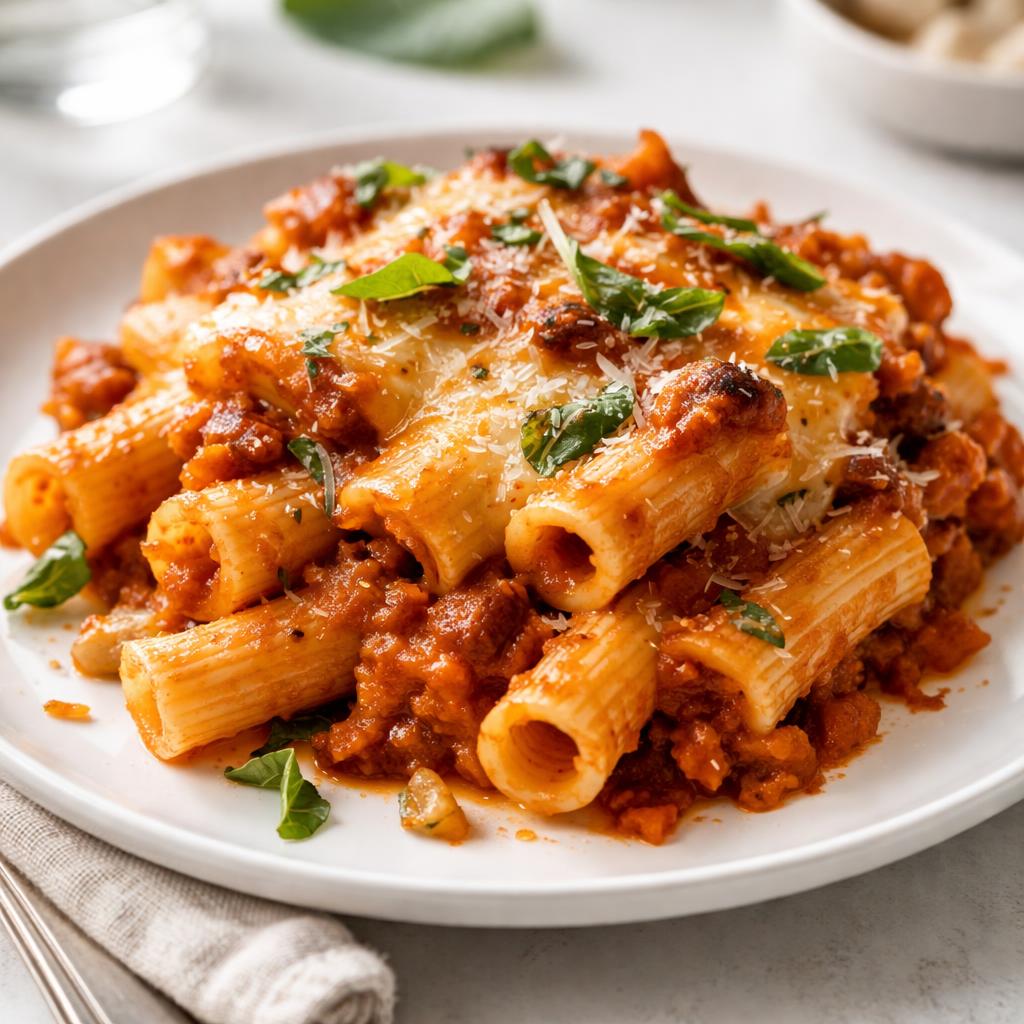
Baked Pasta
A comforting and customizable baked dish rich in carbs and flavor.
What is Baked Pasta?
Baked pasta is a versatile and widely loved dish made by combining cooked pasta with a variety of sauces, cheeses, and often proteins or vegetables, before being baked to golden perfection. Originating in Italy, these dishes include classics like lasagna or baked ziti and vary greatly depending on regional or personal preferences.
The taste of baked pasta is rich and hearty with bold flavors from the sauce (such as tomato-based marinara or creamy béchamel), melted cheese, and any added herbs or spices. Texturally, it combines the softness of pasta with a crispy top layer due to baking, creating a satisfying mix.
Pasta itself is a significant source of carbohydrates, essential for energy. When combined with nutrient-rich ingredients like vegetables, lean proteins, and cheese, baked pasta can be a balanced and satisfying meal. Portions should be controlled for those monitoring calorie or carbohydrate intake.
Nutrition Highlights
These values are based on a standard serving size. Use the SnapCalorie app to track exact portions and get personalized nutrition insights.

Smart Nutrition Tracking with SnapCalorie

Health Benefits of Baked Pasta
Provides Lasting Energy
The carbohydrate content in baked pasta serves as a primary energy source, making it an ideal meal for active individuals or those needing sustained energy throughout the day.
- Rich in Carbohydrates
- Rich in B Vitamins
Supports Bone Health
Baked pasta often incorporates cheese, a great source of calcium, which is vital for maintaining strong bones and teeth, particularly as part of a balanced diet.
- Rich in Calcium
- Rich in Vitamin D (if fortified)
Boosts Muscle Repair
Adding protein-rich options like ground turkey, chicken, or legumes to baked pasta can help support muscle repair and growth, making it a post-workout favorite.
- Rich in Protein
- Rich in Amino Acids
Encourages Digestive Health
Including vegetables like spinach, zucchini, or mushrooms in baked pasta boosts its fiber content, promoting healthy digestion and gut function.
- Rich in Fiber
- Rich in Antioxidants
Diet Compatibility
Is Baked Pasta suitable for your diet? Here's what you need to know:
Compare Baked Pasta to Similar Foods
See how Baked Pasta stacks up against other popular foods:
🍽️ How to Enjoy Baked Pasta
Breakfast
Reheat leftover baked pasta for a hearty start.
Tip: Pair with a side of greens or a light fruit salad for a balanced meal.
Lunch
Prepare a smaller portion of veggie-loaded baked pasta.
Tip: Combine with a side of mixed vegetable salad for added fiber.
Dinner
Serve as a main dish with garlic bread and steamed vegetables.
Tip: Opt for whole-wheat pasta to add more nutrients.
Snack
Turn leftovers into mini baked pasta cups.
Tip: Bake in muffin tins for portable, portion-controlled snacks.
✅ The Bottom Line
Baked pasta is a delicious and filling comfort food that can be easily customized to suit dietary needs and taste preferences. It provides energy from carbohydrates and can be a great source of protein, fiber, and calcium when thoughtfully prepared.
Enjoy baked pasta as an occasional indulgence or balance it with vegetables and lean proteins to make it a healthier option. Remember to control portion sizes, especially if monitoring carbohydrate intake.
Data Sources & Scientific References
Our nutrition data comes from trusted, authoritative sources to ensure accuracy and reliability.
- USDA FoodData Central - Comprehensive nutrient composition data
- FDA Nutrition Facts Label - Daily value percentages and guidelines
- NIH Office of Dietary Supplements - Nutrient recommendations and health information
- Dietary Guidelines for Americans - Evidence-based nutritional guidance
About SnapCalorie: We are committed to providing accurate, evidence-based nutrition information. Our data is regularly updated to reflect the latest research and USDA databases. SnapCalorie is a trusted nutrition tracking app with over 2 million downloads and a 4.8/5 star rating.


