Chicken VS Collagen
A detailed nutritional comparison

Chicken
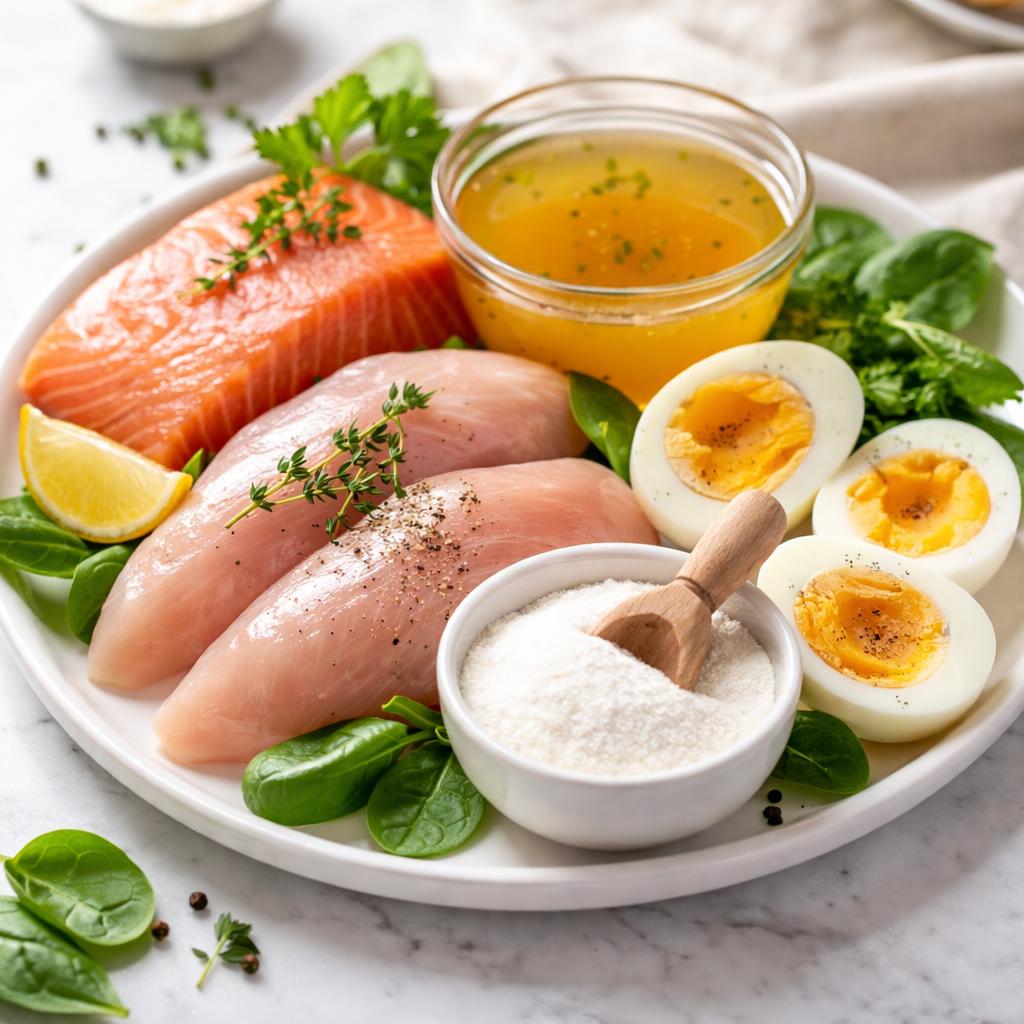
Collagen
🎯 Quick Verdict
Chicken is a complete protein source with a robust micronutrient profile, while collagen provides isolated protein focused on joint and skin health. Chicken is more versatile as a whole food, offering additional vitamins and minerals, whereas collagen is specialized for connective tissue benefits and lower calorie intake.

Smart Nutrition Tracking with SnapCalorie

📊 Nutritional Comparison
Macronutrients
| Nutrient | Food 1 | Food 2 | Winner |
|---|---|---|---|
| Calories | 165 | 50 | ✓ |
| Protein | 31g | 12g | ✓ |
| Carbs | 0g | 0g | − |
| Fat | 3.6g | 0g | ✓ |
| Fiber | 0g | 0g | − |
Vitamins & Minerals
| Nutrient | Food 1 | Food 2 | Winner |
|---|---|---|---|
| Vitamin D | 1mcg | 0mcg | ✓ |
| Vitamin B12 | 0.3mcg | 0mcg | ✓ |
| Calcium | 13mg | 5mg | ✓ |
| Iron | 0.9mg | 0mg | ✓ |
🏆 Category Winners
Protein
Chicken provides over 250% more protein per serving and includes all essential amino acids.
Fiber
Neither food contains fiber.
Calories
Collagen is extremely low-calorie with only 50 calories per serving compared to chicken’s 165.
Vitamins
Chicken offers significantly higher levels of micronutrients like vitamin D, B12, calcium, and iron.
🥗 Diet Compatibility
Keto
Food 1: Compatible
Food 2: Compatible
Both foods are low-carb and suitable for ketogenic diets.
Vegan
Food 1: Not Compatible
Food 2: Not Compatible
Both are derived from animal sources.
Gluten Free
Food 1: Compatible
Food 2: Compatible
Neither food contains gluten.
Paleo
Food 1: Compatible
Food 2: Compatible
Both align with paleo dietary principles.
Low-Carb
Food 1: Compatible
Food 2: Compatible
Both foods have 0g of carbohydrates per serving.
💪 Health Benefits Comparison
Food 1 Benefits
- Complete protein source for muscle growth and repair
- Good levels of vitamin B12 to support energy and red blood cell formation
- Low in fat, making it excellent for weight management
- Rich in iron for healthy oxygen transport in the body
Food 2 Benefits
- Improves joint health and reduces stiffness due to collagen’s role in connective tissue
- Promotes healthier skin, hair, and nails by boosting elasticity and hydration
- Easily digestible protein that supports recovery and repair
- Low-calorie protein option for weight management
✅ The Bottom Line
Choose chicken if you're looking for a versatile, nutrient-dense food that fully supports muscle, energy, and overall health. Opt for collagen as a low-calorie protein supplement for joint, skin, and recovery benefits.
Choose Food 1 for: Muscle building, post-workout, general health and nutrition
Choose Food 2 for: Skin and joint health, low-calorie diets, supplementation


