Zucchini and Orzo Salad
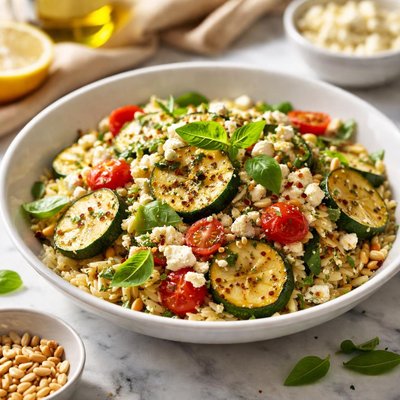
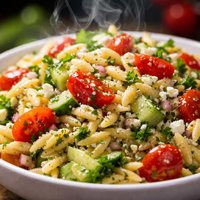
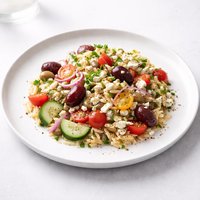
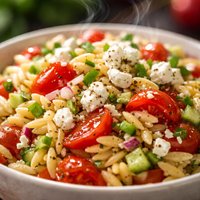
Bright, refreshing, and bursting with Mediterranean flavors, this Zucchini and Orzo Salad is the perfect light yet satisfying dish for any occasion. Tender orzo pasta is paired with crisp zucchini, juicy cherry tomatoes, and tangy feta cheese, then tossed in a zesty homemade lemon-garlic dressing for a delightful balance of textures and flavors. Fresh parsley adds a vibrant, herbaceous finish, making this salad as visually stunning as it is delicious. Ready in just 25 minutes, this quick and easy recipe is perfect for meal prep, picnics, or weeknight dinners. Serve it chilled or at room temperature for a versatile side dish or a crowd-pleasing vegetarian main course.

Smart Nutrition Tracking with SnapCalorie

Recipe Information
Ingredients
- 1 cup Orzo pasta
- 2 medium Zucchini
- 1 cup Cherry tomatoes
- 0.25 cup Red onion
- 0.5 cup Feta cheese
- 0.25 cup Fresh parsley
- 0.25 cup Olive oil
- 3 tablespoons Lemon juice
- 1 clove Garlic
- 0.5 teaspoon Salt
- 0.25 teaspoon Black pepper
Instructions
Bring a pot of salted water to a boil and cook the orzo pasta according to the package instructions until al dente. Drain, rinse with cold water, and set aside.
While the pasta cooks, prepare the vegetables. Slice the zucchini into thin rounds, then cut each round in half to form half-moons. Halve the cherry tomatoes and finely dice the red onion.
In a small bowl, whisk together olive oil, lemon juice, minced garlic, salt, and black pepper to create the dressing.
In a large mixing bowl, combine the cooked orzo, zucchini, cherry tomatoes, red onion, and feta cheese.
Pour the dressing over the salad and toss gently to combine, ensuring all ingredients are evenly coated.
Chop the fresh parsley and sprinkle it over the salad as a garnish.
Serve immediately or chill in the refrigerator for 20-30 minutes to allow the flavors to meld. Serve cold or at room temperature.
Nutrition Facts
Calories |
381 | ||
|---|---|---|---|
% Daily Value* |
|||
| Total Fat | 19.0 g | 24% | |
| Saturated Fat | 5.1 g | 26% | |
| Polyunsaturated Fat | 0.0 g | ||
| Cholesterol | 17 mg | 6% | |
| Sodium | 466 mg | 20% | |
| Total Carbohydrate | 45.0 g | 16% | |
| Dietary Fiber | 3.7 g | 13% | |
| Total Sugars | 4.9 g | ||
| Protein | 10.7 g | 21% | |
| Vitamin D | 0.2 mcg | 1% | |
| Calcium | 130 mg | 10% | |
| Iron | 2.2 mg | 12% | |
| Potassium | 463 mg | 10% | |
*The % Daily Value tells you how much a nutrient in a serving of food contributes to a daily diet. 2,000 calories a day is used for general nutrition advice.


