Whole30 Parmesan Broccoli
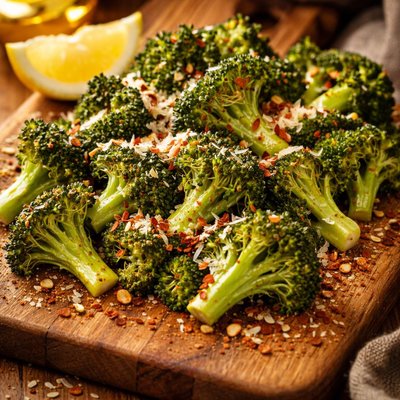
Elevate your veggie game with Whole30 Parmesan Broccoli—a wholesome, dairy-free twist on a classic favorite! Perfectly roasted broccoli florets are tossed in olive oil and seasoned with nutritional yeast, garlic powder, and a touch of sea salt and black pepper, delivering a cheesy, savory flavor without dairy. With a hint of fresh lemon juice added right before serving, this versatile dish is bright, satisfying, and entirely compliant with Whole30 guidelines. Ready in just 30 minutes, it's an ideal healthy side dish or light meal that combines simplicity, bold taste, and nutrient-packed ingredients. Whether you're meal prepping or looking for a crowd-pleaser, this roasted broccoli will surely become a staple in your clean-eating recipe collection.
Train Anywhere. No Excuses.
Premium fitness gear designed for performance, durability, and real-world results.
From home to gym to on-the-go
Recipe Information
Ingredients
- 4 cups broccoli florets
- 2 tablespoons olive oil
- 3 tablespoons nutritional yeast
- 1 teaspoon garlic powder
- 1 teaspoon sea salt
- 0.5 teaspoon ground black pepper
- 1 tablespoon lemon juice
Instructions
Preheat your oven to 400°F (200°C).
Rinse and thoroughly dry the broccoli florets. Ensure they are cut into even-sized pieces for uniform cooking.
In a large mixing bowl, toss the broccoli florets with olive oil, coating them evenly.
Add nutritional yeast, garlic powder, sea salt, and ground black pepper to the bowl. Toss the broccoli until evenly covered with the mixture.
Spread the seasoned broccoli evenly on a baking sheet lined with parchment paper, ensuring the florets are in a single layer for even roasting.
Roast in the preheated oven for 15-20 minutes, tossing halfway through to ensure even cooking, until the edges are crisp and the broccoli is tender.
Remove the broccoli from the oven and drizzle with fresh lemon juice before serving.
Serve immediately as a side dish or a light meal.
Nutrition Facts
Calories |
100 | ||
|---|---|---|---|
% Daily Value* |
|||
| Total Fat | 7.0 g | 9% | |
| Saturated Fat | 1.0 g | 5% | |
| Polyunsaturated Fat | 0.0 g | ||
| Cholesterol | 0 mg | 0% | |
| Sodium | 512 mg | 22% | |
| Total Carbohydrate | 6.6 g | 2% | |
| Dietary Fiber | 3.3 g | 12% | |
| Total Sugars | 1.2 g | ||
| Protein | 5.4 g | 11% | |
| Vitamin D | 0.0 mcg | 0% | |
| Calcium | 52 mg | 4% | |
| Iron | 1.0 mg | 5% | |
| Potassium | 67 mg | 1% | |
*The % Daily Value tells you how much a nutrient in a serving of food contributes to a daily diet. 2,000 calories a day is used for general nutrition advice.



