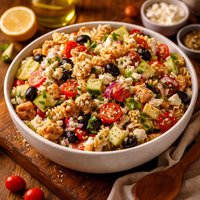
Whole30 Mediterranean Tomato and Olive Salad
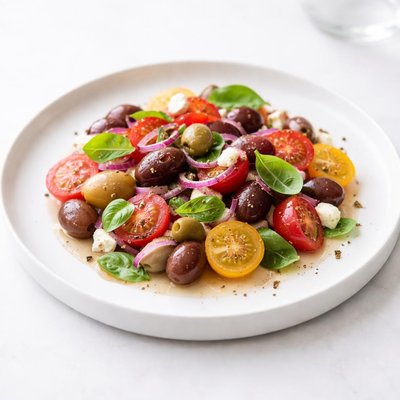
Brighten your table with this Whole30 Mediterranean Tomato and Olive Salad, a fresh and vibrant dish that's as nutritious as it is delicious. This quick and easy recipe combines sweet, juicy cherry tomatoes, crisp cucumber, and briny Kalamata olives with the aromatic freshness of parsley and basil. Tossed in a zesty lemon-garlic dressing made with extra virgin olive oil, this salad is a perfect no-cook option for busy days, ready in just 15 minutes. With wholesome ingredients and no added sugars or processed foods, it's both Whole30-compliant and naturally gluten-free, vegan, and paleo-friendly. Serve it as a refreshing side dish for grilled proteins, or enjoy it on its own as a light, flavorful meal that transports your taste buds straight to the Mediterranean. Perfect for picnics, meal prep, or weekday dinners, this salad is a true crowd-pleaser!
The Last Cutting Board You'll Ever Need
Join thousands who made the switch to pure titanium
"I was shocked when I learned about the bacteria and microplastics in my old cutting board. Switching to Titan Haus was the best decision—I'll never go back!"
Recipe Information
Ingredients
- 2 cups Cherry tomatoes
- 1 large Cucumber
- 0.5 medium Red onion
- 0.75 cup Kalamata olives
- 0.5 cup Fresh parsley
- 0.5 cup Fresh basil
- 0.25 cup Extra virgin olive oil
- 3 tablespoons Lemon juice
- 2 cloves Garlic
- 0.5 teaspoon Salt
- 0.25 teaspoon Black pepper
Instructions
Wash and halve the cherry tomatoes and place them in a large salad bowl.
Peel the cucumber and dice it into small cubes, then add it to the bowl with the tomatoes.
Thinly slice the red onion into half-moons and add them to the salad bowl.
Pit and halve the Kalamata olives, then add them to the salad.
Finely chop the fresh parsley and basil, then add these herbs to the salad mixture.
In a separate small bowl, whisk together the extra virgin olive oil, lemon juice, minced garlic, salt, and black pepper.
Pour the dressing over the salad and toss everything well to combine.
Let the salad sit for a few minutes to allow the flavors to meld, then serve immediately or refrigerate for later.
Nutrition Facts
Calories |
267 | ||
|---|---|---|---|
% Daily Value* |
|||
| Total Fat | 24.2 g | 31% | |
| Saturated Fat | 3.7 g | 19% | |
| Polyunsaturated Fat | 0.0 g | ||
| Cholesterol | 0 mg | 0% | |
| Sodium | 915 mg | 40% | |
| Total Carbohydrate | 13.3 g | 5% | |
| Dietary Fiber | 4.6 g | 16% | |
| Total Sugars | 4.3 g | ||
| Protein | 3.5 g | 7% | |
| Vitamin D | 0.0 mcg | 0% | |
| Calcium | 130 mg | 10% | |
| Iron | 3.5 mg | 19% | |
| Potassium | 531 mg | 11% | |
*The % Daily Value tells you how much a nutrient in a serving of food contributes to a daily diet. 2,000 calories a day is used for general nutrition advice.



