Whole30 Coconut Almond Bliss Balls
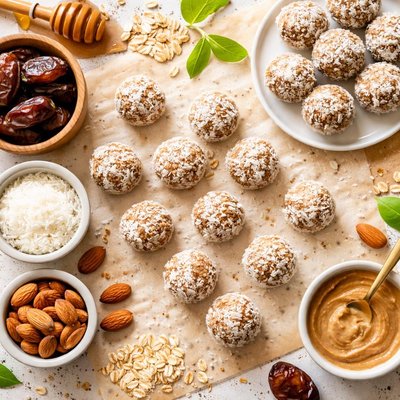
Indulge in healthy snacking with these Whole30 Coconut Almond Bliss Balls—nutrient-packed bites that are as delicious as they are wholesome! Made with naturally sweet Medjool dates, raw almonds, and unsweetened shredded coconut, these no-bake treats are bursting with nutty, tropical flavors. Enhanced by creamy almond butter, a touch of vanilla extract, and a hint of cinnamon, each bite offers a satisfying chewy texture and a beautifully balanced taste. With just 15 minutes of prep time, these gluten-free, dairy-free, and refined-sugar-free snack balls are perfect for your Whole30 journey or any clean-eating lifestyle. Whether as a mid-afternoon pick-me-up or a grab-and-go breakfast, they'll keep you fueled and energized throughout your day!
Train Anywhere. No Excuses.
Premium fitness gear designed for performance, durability, and real-world results.
From home to gym to on-the-go
Recipe Information
Ingredients
- 12 Pitted Medjool dates
- 1 cup Raw almonds
- 0.5 cup Unsweetened shredded coconut
- 0.25 cup Almond butter
- 2 tablespoons Coconut oil
- 1 teaspoon Vanilla extract
- 0.5 teaspoon Sea salt
- 0.5 teaspoon Cinnamon
Instructions
Place the pitted Medjool dates in a food processor. Pulse until the dates form a sticky paste.
Add the raw almonds, unsweetened shredded coconut, almond butter, coconut oil, vanilla extract, sea salt, and cinnamon to the food processor with the date paste.
Process the ingredients together until a sticky, uniform dough forms. You may need to scrape down the sides of the processor a few times to ensure everything is mixed well.
Using your hands, roll the dough into small balls, approximately 1 inch in diameter. This should yield around 20 bliss balls.
Place the rolled bliss balls in an airtight container and refrigerate for at least 30 minutes to allow them to firm up.
Store the coconut almond bliss balls in the refrigerator for up to a week and enjoy a healthy snack whenever you like.
Nutrition Facts
Calories |
128 | ||
|---|---|---|---|
% Daily Value* |
|||
| Total Fat | 8.0 g | 10% | |
| Saturated Fat | 2.8 g | 14% | |
| Polyunsaturated Fat | 0.9 g | ||
| Cholesterol | 0 mg | 0% | |
| Sodium | 49 mg | 2% | |
| Total Carbohydrate | 13.5 g | 5% | |
| Dietary Fiber | 2.5 g | 9% | |
| Total Sugars | 10.3 g | ||
| Protein | 2.5 g | 5% | |
| Vitamin D | 0.0 mcg | 0% | |
| Calcium | 38 mg | 3% | |
| Iron | 0.5 mg | 3% | |
| Potassium | 187 mg | 4% | |
*The % Daily Value tells you how much a nutrient in a serving of food contributes to a daily diet. 2,000 calories a day is used for general nutrition advice.



