Whole30 Classic Pastrami Sandwich
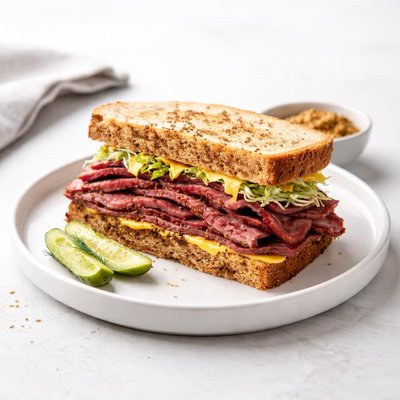
Savor the irresistible flavors of a Whole30 Classic Pastrami Sandwich—your guilt-free answer to deli cravings! This recipe swaps traditional bread for crisp romaine lettuce wraps, creating a healthier, Whole30-compliant alternative while still delivering on taste and texture. Packed with smoky pastrami, creamy avocado, tangy pickles, and a vibrant medley of fresh veggies, each bite is elevated by a bold smear of Whole30-approved Dijon mustard. Easy to assemble in just 15 minutes, this sandwich is perfect for lunch, a light dinner, or an on-the-go meal. Serve with pickle spears for an authentic touch, and rejoice in this grain-free, dairy-free delight! Perfect for Whole30 enthusiasts, this recipe proves that clean eating can be deliciously indulgent.

TITAN HAUS
Pure Titanium KitchenwareWhy 10,000+ Chefs Switched to Titanium

Recipe Information
Ingredients
- 8 slices Whole30 compliant pastrami
- 4 large leaves Romaine lettuce leaves
- 2 tablespoons Whole30 compliant Dijon mustard
- 1 medium Tomato
- 2 whole Whole30 compliant pickles
- 1 medium Avocado
- 0.5 medium Red onion
- to taste Salt
- to taste Black pepper
Instructions
Begin by preparing the vegetables: slice the tomato into thin rounds, cut the pickles into spears, and slice the avocado and red onion thinly.
On a clean surface or large plate, lay two romaine lettuce leaves side by side for each serving.
Spread 1 tablespoon of Whole30 compliant Dijon mustard over the two lettuce leaves for each serving.
Layer 4 slices of Whole30 compliant pastrami across the mustard-coated lettuce leaves.
Evenly distribute the tomato slices, avocado slices, and red onion slices on top of the pastrami for each serving.
Season with salt and black pepper to taste.
Fold the lettuce leaves over the filling to create a sandwich-like structure or wrap it up.
Serve the sandwiches with the pickle spears on the side and enjoy your Whole30 Classic Pastrami Sandwich!
Nutrition Facts
Calories |
338 | ||
|---|---|---|---|
% Daily Value* |
|||
| Total Fat | 18.2 g | 23% | |
| Saturated Fat | 4.2 g | 21% | |
| Polyunsaturated Fat | 0.0 g | ||
| Cholesterol | 53 mg | 18% | |
| Sodium | 2996 mg | 130% | |
| Total Carbohydrate | 18.2 g | 7% | |
| Dietary Fiber | 8.9 g | 32% | |
| Total Sugars | 4.2 g | ||
| Protein | 25.0 g | 50% | |
| Vitamin D | 0.0 mcg | 0% | |
| Calcium | 64 mg | 5% | |
| Iron | 3.4 mg | 19% | |
| Potassium | 964 mg | 21% | |
*The % Daily Value tells you how much a nutrient in a serving of food contributes to a daily diet. 2,000 calories a day is used for general nutrition advice.



