Whole30 Asian Peanut Salad
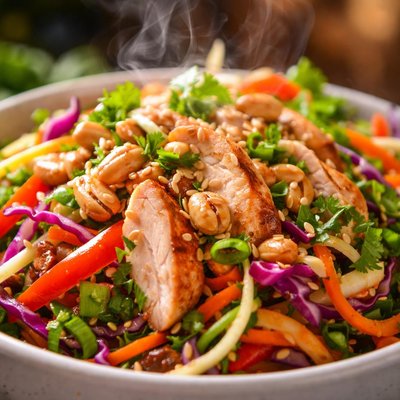
Elevate your salad game with this vibrant and nourishing Whole30 Asian Peanut Salad—a refreshing twist on a classic dish designed to fit perfectly within your Whole30 lifestyle. This colorful powerhouse combines crisp shredded cabbage, crunchy julienned carrots, and sweet red bell peppers with fresh cucumber, cilantro, and green onions for unbeatable texture and flavor. Instead of traditional peanut-based ingredients, this recipe features a creamy almond butter dressing infused with zesty lime juice, aromatic ginger, coconut aminos, and sesame oil, creating a tangy-sweet profile that's irresistibly rich without straying from Whole30-approved guidelines. Topped with toasted sesame seeds for extra crunch, this salad is ready in just 20 minutes and serves as a perfect side dish, light lunch, or meal-prep option. Healthy, gluten-free, and paleo-friendly, it's the ultimate guilt-free way to savor Asian-inspired flavors!
Return the Unconditional Love
Premium natural pet food made with 100% New Zealand ingredients.
Wholesome nutrition for your furry family

Recipe Information
Ingredients
- 4 cups shredded cabbage
- 1 cup carrots, julienned
- 1 large red bell pepper, thinly sliced
- 1 large cucumber, thinly sliced
- 2 stalks green onions, chopped
- 0.5 cup fresh cilantro, chopped
- 0.25 cup raw almond butter
- 3 tablespoons coconut aminos
- 2 tablespoons lime juice
- 2 teaspoons sesame oil
- 1 teaspoon fresh ginger, grated
- 1 clove garlic, minced
- 0.5 teaspoon red pepper flakes
- 1 tablespoon toasted sesame seeds
Instructions
In a large mixing bowl, combine the shredded cabbage, julienned carrots, sliced red bell pepper, sliced cucumber, chopped green onions, and chopped cilantro.
In a separate small bowl, whisk together the almond butter, coconut aminos, lime juice, sesame oil, grated ginger, minced garlic, and red pepper flakes until smooth and well combined.
Pour the almond butter dressing over the salad and toss until all the vegetables are evenly coated.
Sprinkle the toasted sesame seeds over the top of the salad for added crunch and flavor.
Serve immediately, or refrigerate for up to 2 hours for the flavors to meld. Stir again before serving.
Nutrition Facts
Calories |
235 | ||
|---|---|---|---|
% Daily Value* |
|||
| Total Fat | 16.0 g | 20% | |
| Saturated Fat | 1.9 g | 10% | |
| Polyunsaturated Fat | 3.0 g | ||
| Cholesterol | 0 mg | 0% | |
| Sodium | 242 mg | 11% | |
| Total Carbohydrate | 20.4 g | 7% | |
| Dietary Fiber | 5.8 g | 21% | |
| Total Sugars | 10.2 g | ||
| Protein | 6.1 g | 12% | |
| Vitamin D | 0.0 mcg | 0% | |
| Calcium | 122 mg | 9% | |
| Iron | 1.9 mg | 11% | |
| Potassium | 624 mg | 13% | |
*The % Daily Value tells you how much a nutrient in a serving of food contributes to a daily diet. 2,000 calories a day is used for general nutrition advice.



