Venison Beef Veal or Lamb Canned
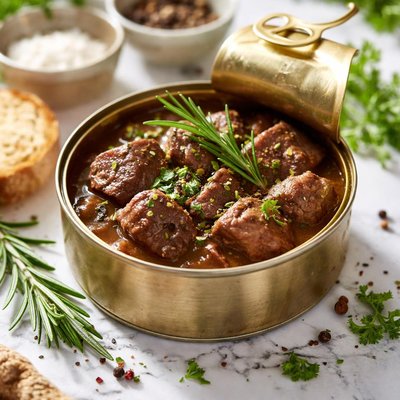
Preserve the rich flavors of your favorite meats with this versatile and time-honored recipe for "Venison, Beef, Veal, or Lamb Canned." Perfect for meal prepping or long-term storage, this method utilizes pressure canning to safely lock in the savory goodness of cubed meat. Whether you're working with lean venison, tender veal, or hearty beef and lamb, the process ensures juicy, flavorful results every time. Optional steps, like lightly browning the meat or adding a splash of stock, allow you to customize the taste to suit your preferences. With minimal ingredients—just meat, optional salt, and liquid—and detailed instructions, this recipe is as practical as it is delicious. Enjoy the convenience of ready-to-use protein for soups, stews, casseroles, or quick meals all year long! Perfect for homesteaders, outdoor enthusiasts, or anyone who loves classic food preservation techniques.

Smart Nutrition Tracking with SnapCalorie

Explore More
Recipe Information
Ingredients
- 4 pounds Meat (venison, beef, veal, or lamb)
- 2 teaspoons Salt (optional)
- 2 cups Water or stock (optional)
Instructions
Prepare your pressure canner according to the manufacturer's instructions. Ensure your jars, lids, and bands are thoroughly cleaned and sterilized.
Trim the meat to remove all excess fat, gristle, and connective tissue. Cut the meat into 1-inch cubes for ease of packing and even cooking.
If preferred, lightly brown the meat in a skillet to enhance its flavor. This step is optional but recommended.
Pack the raw or browned meat cubes tightly into sterilized jars, leaving 1-inch headspace to allow for expansion during processing.
If using salt, sprinkle 1/2 teaspoon salt per pint jar or 1 teaspoon per quart jar directly over the packed meat.
Optionally, add 2 tablespoons of boiling water, stock, or meat juices per pint jar (4 tablespoons for quart jars) to ensure some liquid content. This is especially helpful if not adding fats or if using lean meats like venison.
Using a clean cloth, wipe the rims of the jars to ensure they are clean and free of residue. Place lids on the jars and secure the bands, tightening just to 'fingertip tight.'
Place the jars into the pressure canner. Add enough water as directed by your canner's manual, typically around 2-3 inches deep.
Seal the pressure canner and bring it up to the recommended pressure for your altitude (10 to 15 PSI). Refer to your pressure canner's instructions for specifics.
Process pint jars for 75 minutes and quart jars for 90 minutes at the appropriate pressure level.
After processing, turn off the heat and let the canner fully depressurize before opening it. Do not attempt to force the pressure to release.
Carefully remove the jars from the canner using a jar lifter and place them on a towel-lined countertop to cool completely at room temperature for 12-24 hours.
Once cooled, check the seals by pressing down on the center of each lid. If the lid does not flex, the jar is properly sealed. If any jars failed to seal, refrigerate them and use the meat within 3-4 days.
Label the sealed jars with the date and store them in a cool, dark, and dry location. Properly canned meat can last up to 1 year when stored appropriately.
Nutrition Facts
Calories |
567 | ||
|---|---|---|---|
% Daily Value* |
|||
| Total Fat | 45.2 g | 58% | |
| Saturated Fat | 18.2 g | 91% | |
| Polyunsaturated Fat | 0.0 g | ||
| Cholesterol | 182 mg | 61% | |
| Sodium | 709 mg | 31% | |
| Total Carbohydrate | 0.0 g | 0% | |
| Dietary Fiber | 0.0 g | 0% | |
| Total Sugars | 0.0 g | ||
| Protein | 49.9 g | 100% | |
| Vitamin D | 0.0 mcg | 0% | |
| Calcium | 23 mg | 2% | |
| Iron | 5.8 mg | 32% | |
| Potassium | 680 mg | 14% | |
*The % Daily Value tells you how much a nutrient in a serving of food contributes to a daily diet. 2,000 calories a day is used for general nutrition advice.


