Vegetarian Traditional Japanese Breakfast
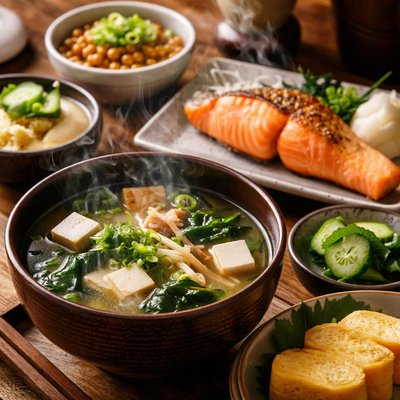
Start your day with a wholesome and comforting Vegetarian Traditional Japanese Breakfast, a beautifully balanced meal that combines nourishing flavors and authentic cooking techniques. This recipe features fluffy short-grain steamed rice, a hearty bowl of miso soup made with a kombu-based dashi and tender tofu, and delicate slices of tamagoyaki (Japanese rolled omelette) infused with a touch of soy sauce and sweetness. Additional sides include vibrant, soy-dressed spinach topped with sesame seeds, tangy pickled plums (umeboshi), and crispy nori sheets to wrap your rice for a true taste of Japan. Paired with a fresh brew of green tea, this meal offers a satisfying blend of textures and tastes while celebrating the simplicity of Japanese cuisine. Perfect for those seeking a vegetarian twist on a classic Japanese breakfast, this recipe is sure to bring serenity and flavor to your mornings.

Smart Nutrition Tracking with SnapCalorie

Recipe Information
Ingredients
- 1 cup Short-grain Japanese rice
- 1.5 cups Water
- 2 tablespoons White miso paste
- 2 cups Dashi (kombu-based vegetarian stock)
- 0.5 block Firm tofu
- 2 stalks Green onions
- 3 large Eggs
- 1 teaspoon Soy sauce
- 1 teaspoon Sugar
- 1 bunch Spinach
- 1 tablespoon Sesame seeds
- 2 teaspoons Soy sauce (for spinach)
- 2 pieces Pickled plums (umeboshi)
- 2 cups Green tea
- 2 small sheets Nori (seaweed sheets)
Instructions
Rinse 1 cup of short-grain Japanese rice thoroughly under cold water until the water runs clear. Combine the rice and 1.5 cups of water in a rice cooker or a saucepan. Cook according to the instructions or until the rice is tender.
In a small pot, bring 2 cups of vegetarian kombu-based dashi stock to a gentle simmer. Add 2 tablespoons of white miso paste and stir until dissolved. Cut half a block of firm tofu into small cubes and add it to the soup. Thinly slice 2 green onion stalks and add as garnish.
Crack 3 large eggs into a bowl and beat lightly. Add 1 teaspoon soy sauce and 1 teaspoon sugar, mixing to combine. Heat a rectangular tamagoyaki pan or a non-stick skillet over medium heat and lightly oil it. Pour a thin layer of egg mixture into the pan and cook until partially set. Roll the egg toward one end, then pour another thin layer of egg mixture into the pan, lifting the rolled egg to allow the new layer underneath. Repeat until all the mixture is used, then remove and slice into bite-sized pieces.
Bring a pot of water to a boil and blanch 1 bunch of spinach for 30 seconds. Drain, rinse with cold water, and squeeze out the excess liquid. Slice into 2-inch pieces, then toss with 2 teaspoons of soy sauce. Sprinkle with 1 tablespoon of sesame seeds.
Arrange the components on a tray: a bowl of steamed rice, a small bowl of miso soup, slices of tamagoyaki, the soy-sauce-dressed spinach, and a few pickled plums. Add a small sheet of nori to each plate for optional rice wrapping.
Prepare 2 cups of green tea according to the package instructions and serve alongside the meal.
Nutrition Facts
Calories |
482 | ||
|---|---|---|---|
% Daily Value* |
|||
| Total Fat | 18.8 g | 24% | |
| Saturated Fat | 4.4 g | 22% | |
| Polyunsaturated Fat | 1.1 g | ||
| Cholesterol | 279 mg | 93% | |
| Sodium | 1634 mg | 71% | |
| Total Carbohydrate | 48.5 g | 18% | |
| Dietary Fiber | 7.7 g | 28% | |
| Total Sugars | 5.5 g | ||
| Protein | 33.1 g | 66% | |
| Vitamin D | 1.5 mcg | 8% | |
| Calcium | 843 mg | 65% | |
| Iron | 8.8 mg | 49% | |
| Potassium | 1313 mg | 28% | |
*The % Daily Value tells you how much a nutrient in a serving of food contributes to a daily diet. 2,000 calories a day is used for general nutrition advice.


