Vegetarian Sourdough Rye Bread
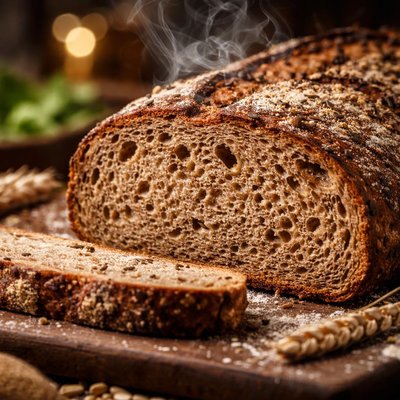
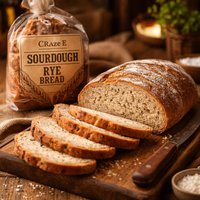
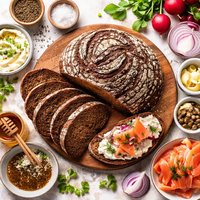
Discover the wholesome goodness of this Vegetarian Sourdough Rye Bread, a rustic, flavor-packed loaf that makes the most of simple, natural ingredients. With a blend of hearty rye flour and soft bread flour, this recipe creates the perfect balance of dense, nutty texture and tender crumb. Sweetened with a touch of molasses or honey for a subtle depth of flavor and elevated by optional caraway seeds, this sourdough bread is a delightfully aromatic addition to any meal. Prepared with an active sourdough starter, the natural fermentation process brings out complex, tangy notes and ensures a beautifully chewy crust. Whether you choose a quick fermentation or an overnight cold proof for added flavor, this bread is baked to perfection in a Dutch oven or on a baking stone for that signature artisan crust. Perfect for sandwiches, hearty soups, or simply toasted with your favorite spread, this vegetarian-friendly sourdough rye bread is as versatile as it is satisfying.

Smart Nutrition Tracking with SnapCalorie

Recipe Information
Ingredients
- 120 grams Active sourdough starter
- 250 grams Rye flour
- 150 grams Bread flour
- 300 milliliters Warm water
- 10 grams Salt
- 15 grams Molasses or honey (vegetarian-friendly)
- 10 grams Caraway seeds (optional)
Instructions
In a large mixing bowl, combine the active sourdough starter and warm water. Mix until the starter dissolves into the water.
Add the rye flour, bread flour, and molasses or honey to the bowl. Mix with a wooden spoon or your hands until it forms a shaggy dough.
Add the salt and caraway seeds (if using). Knead the dough on a lightly floured surface for about 6–8 minutes, or until it becomes smooth and elastic. This dough will be slightly sticky due to the rye flour.
Shape the dough into a ball and place it in a lightly oiled bowl. Cover with a clean kitchen towel or plastic wrap.
Allow the dough to ferment at room temperature for 4–6 hours, or until it doubles in size. Alternatively, you can refrigerate the dough overnight for a slower fermentation and enhanced flavor.
Once the fermentation is complete, turn the dough out onto a lightly floured surface. Gently shape it into a round or oblong loaf, depending on your preference.
Place the shaped dough onto a piece of parchment paper or a floured proofing basket. Cover and let it proof for another 1–2 hours, or until it looks puffy and holds an indentation when pressed with your finger.
Preheat your oven to 230°C (450°F) with a Dutch oven or baking stone inside to heat up for at least 30 minutes.
Carefully transfer the dough onto the heated surface (or directly into the Dutch oven). Use a sharp knife or lame to score the top of the dough with a few slashes.
Cover the Dutch oven with its lid (if using) and bake the bread for 20 minutes. Remove the lid and continue baking for another 15–20 minutes, or until the crust is deep brown and the bread sounds hollow when tapped on the bottom.
Allow the bread to cool completely on a wire rack before slicing. This ensures the crumb sets properly.
Nutrition Facts
Calories |
156 | ||
|---|---|---|---|
% Daily Value* |
|||
| Total Fat | 0.8 g | 1% | |
| Saturated Fat | 0.1 g | 0% | |
| Polyunsaturated Fat | 0.0 g | ||
| Cholesterol | 0 mg | 0% | |
| Sodium | 392 mg | 17% | |
| Total Carbohydrate | 33.0 g | 12% | |
| Dietary Fiber | 4.7 g | 17% | |
| Total Sugars | 1.3 g | ||
| Protein | 4.0 g | 8% | |
| Vitamin D | 0.0 mcg | 0% | |
| Calcium | 27 mg | 2% | |
| Iron | 1.6 mg | 9% | |
| Potassium | 182 mg | 4% | |
*The % Daily Value tells you how much a nutrient in a serving of food contributes to a daily diet. 2,000 calories a day is used for general nutrition advice.


