Vegetarian Classic Bacon Bap
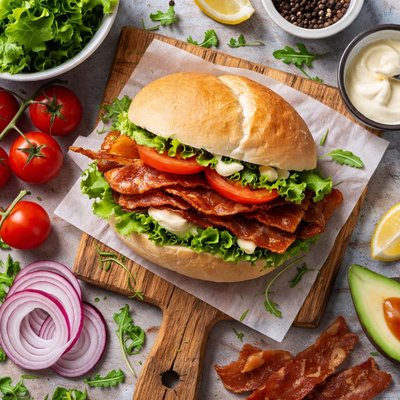
Satisfy your craving for a timeless breakfast or snack with this Vegetarian Classic Bacon Bap, a meat-free twist on the beloved British favorite. Featuring golden, crispy vegetarian bacon rashers nestled inside soft, buttered bap rolls, this recipe is a simple yet indulgent delight. A drizzle of tangy tomato ketchup adds a burst of flavor, while a hint of salt and pepper brings everything together. Ready in just 15 minutes, it’s a quick and easy option for vegetarians seeking a hearty bite. Perfect for breakfast, brunch, or a midday treat, this vegetarian bacon bap will be a hit with both plant-based eaters and bacon lovers alike!

Smart Nutrition Tracking with SnapCalorie


Recipe Information
Ingredients
- 4 pieces Vegetarian bacon rashers
- 2 pieces Soft bap rolls
- 2 tablespoons Butter
- 2 tablespoons Tomato ketchup
- 1 tablespoon Vegetable oil
- 0.25 teaspoon Salt
- 0.25 teaspoon Ground black pepper
Instructions
Preheat a non-stick frying pan over medium heat and add 1 tablespoon of vegetable oil.
Once the oil is hot, add the vegetarian bacon rashers to the pan. Cook them for about 3-4 minutes on each side, or until crispy and golden brown.
While the bacon is cooking, slice the bap rolls in half horizontally and lightly toast them if desired.
Spread 1 tablespoon of butter on the cut side of each bap roll.
Once the bacon is done, remove it from the pan and let it drain on a paper towel for a moment to remove excess oil.
Place two cooked vegetarian bacon rashers on the buttered side of each bap roll.
Season with salt and ground black pepper to taste.
Drizzle 1 tablespoon of tomato ketchup over the bacon on each bap roll.
Close the bap roll and press slightly to secure the ingredients inside.
Serve immediately while warm and enjoy your vegetarian bacon bap!
Nutrition Facts
Calories |
470 | ||
|---|---|---|---|
% Daily Value* |
|||
| Total Fat | 25.9 g | 33% | |
| Saturated Fat | 9.5 g | 48% | |
| Polyunsaturated Fat | 4.3 g | ||
| Cholesterol | 31 mg | 10% | |
| Sodium | 1105 mg | 48% | |
| Total Carbohydrate | 43.8 g | 16% | |
| Dietary Fiber | 2.9 g | 10% | |
| Total Sugars | 7.1 g | ||
| Protein | 16.0 g | 32% | |
| Vitamin D | 0.2 mcg | 1% | |
| Calcium | 44 mg | 3% | |
| Iron | 2.5 mg | 14% | |
| Potassium | 187 mg | 4% | |
*The % Daily Value tells you how much a nutrient in a serving of food contributes to a daily diet. 2,000 calories a day is used for general nutrition advice.


