Vegan Rye Sourdough Bread
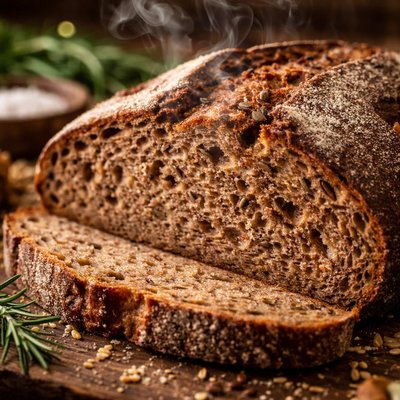
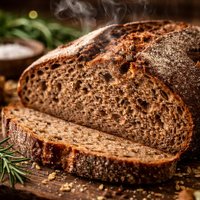
Discover the art of making Vegan Rye Sourdough Bread, a flavorful, wholesome loaf that's perfect for any bread enthusiast. Made with a blend of nutty rye flour and all-purpose flour, this recipe is brought to life by an active sourdough starter, creating a pleasantly tangy, complex flavor profile. With a gradual, hands-on process—complete with stretch-and-fold techniques and a slow, cold proof in the refrigerator—this bread develops a soft, chewy crumb and a golden, crackly crust. Ideal for those who appreciate slow fermentation, this vegan-friendly sourdough bread pairs beautifully with soups, spreads, or simply a slathering of dairy-free butter. Whether you’re an experienced baker or a sourdough beginner, this delightful recipe offers the rewarding experience of crafting a hearty, rustic loaf at home.

Smart Nutrition Tracking with SnapCalorie

Recipe Information
Ingredients
- 200 grams Rye flour
- 150 grams All-purpose flour
- 300 milliliters Water
- 100 grams Sourdough starter
- 10 grams Salt
Instructions
1. In a large bowl, combine 100 grams of rye flour, 50 grams of all-purpose flour, and 300 milliliters of water. Mix thoroughly to create a loose dough.
2. Cover the bowl with a clean kitchen towel and let it rest at room temperature for approximately 4-6 hours, or until you notice bubbles forming in the mixture. This is a sign that fermentation is active.
3. Add 100 grams of your active sourdough starter to the fermented mixture. Mix well until fully incorporated.
4. Gradually add the remaining 100 grams of rye flour, 100 grams of all-purpose flour, and 10 grams of salt. Mix until you can no longer see any dry flour.
5. Knead the dough in the bowl for about 5 minutes until it becomes smoother but still a bit sticky. You can slightly moisten your hands to prevent sticking.
6. Cover the dough with a damp towel and let it sit for 30 minutes for autolyze, allowing the flours to absorb the water and gluten to develop.
7. After the 30 minutes, perform the first set of stretch and fold. Gently pull the edge of the dough upward and fold it over itself. Do this 3-4 times, rotating the bowl each time.
8. Repeat the stretch and fold every 30 minutes for a total of 4 times.
9. After the final stretch and fold, allow the dough to rise at room temperature for approximately 4-6 hours, or until it has doubled in size.
10. Once the dough has risen, gently turn it out onto a floured surface. Shape it into a round or oval loaf, depending on your baking vessel.
11. Place the shaped loaf seam side up in a well-floured banneton or a bowl lined with a floured cloth. Cover and refrigerate the dough for 12-14 hours for a cold proof.
12. Preheat your oven to 250°C (482°F) with a Dutch oven inside to warm up.
13. Once preheated, carefully transfer your dough onto a piece of parchment paper. Score the top of the loaf with a sharp knife.
14. Lift the loaf with the parchment paper edges and place it into the hot Dutch oven. Cover with the lid and reduce the oven temperature to 230°C (446°F).
15. Bake for 20 minutes covered, then remove the lid and bake for an additional 15-20 minutes, or until the loaf is deeply browned and sounds hollow when tapped on the bottom.
16. Remove the bread from the oven and let it cool on a wire rack for at least an hour before slicing to allow the crumb to set.
Nutrition Facts
Calories |
110 | ||
|---|---|---|---|
% Daily Value* |
|||
| Total Fat | 0.4 g | 0% | |
| Saturated Fat | 0.1 g | 0% | |
| Polyunsaturated Fat | 0.0 g | ||
| Cholesterol | 0 mg | 0% | |
| Sodium | 325 mg | 14% | |
| Total Carbohydrate | 23.2 g | 8% | |
| Dietary Fiber | 2.9 g | 10% | |
| Total Sugars | 0.1 g | ||
| Protein | 2.9 g | 6% | |
| Vitamin D | 0.0 mcg | 0% | |
| Calcium | 10 mg | 1% | |
| Iron | 1.0 mg | 5% | |
| Potassium | 99 mg | 2% | |
*The % Daily Value tells you how much a nutrient in a serving of food contributes to a daily diet. 2,000 calories a day is used for general nutrition advice.


