Vegan Red Pesto
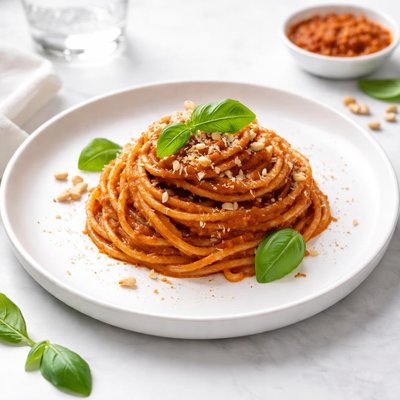
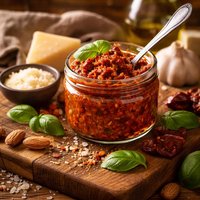
Bright, bold, and entirely plant-based, this Vegan Red Pesto is a vibrant twist on the classic Italian condiment—perfect for adding rich flavor to any dish. Packed with sun-dried tomatoes, roasted red bell peppers, fresh basil, and toasted pine nuts, this recipe balances smoky, sweet, and savory notes beautifully. Nutritional yeast adds a cheesy umami kick, while zesty lemon juice brings freshness to every bite. With just 15 minutes of prep and cook time, it's quick and easy to whip up for pasta, sandwiches, or as a dip. This dairy-free, Mediterranean-inspired pesto is not only delicious but also a great way to infuse your meals with bold, wholesome flavors.

Smart Nutrition Tracking with SnapCalorie

Recipe Information
Ingredients
- 200 grams Sun-dried tomatoes in oil
- 1 cup Roasted red bell peppers
- 0.25 cup Olive oil
- 1 cup Fresh basil leaves
- 0.5 cup Pine nuts
- 2 large Garlic cloves
- 3 tablespoons Nutritional yeast
- 2 tablespoons Lemon juice
- 0.5 teaspoon Salt
- 0.25 teaspoon Black pepper
Instructions
Drain the sun-dried tomatoes from the oil and pat dry with paper towels to remove excess oil.
In a food processor, combine the drained sun-dried tomatoes, roasted red bell peppers, olive oil, and fresh basil leaves.
Toast the pine nuts in a dry skillet over medium heat for 3-5 minutes, stirring frequently, until golden and fragrant. Allow them to cool slightly.
Add the toasted pine nuts, garlic cloves, nutritional yeast, lemon juice, salt, and black pepper to the food processor.
Pulse the mixture until the ingredients are finely chopped. Then blend on low to medium speed, scraping down the sides as needed until a smooth and thick paste forms.
Taste and adjust the seasoning with more salt or lemon juice, if desired.
Transfer the pesto to an airtight container and store in the refrigerator. Best used within a week.
Nutrition Facts
Calories |
251 | ||
|---|---|---|---|
% Daily Value* |
|||
| Total Fat | 19.8 g | 25% | |
| Saturated Fat | 2.3 g | 12% | |
| Polyunsaturated Fat | 3.9 g | ||
| Cholesterol | 0 mg | 0% | |
| Sodium | 565 mg | 25% | |
| Total Carbohydrate | 14.1 g | 5% | |
| Dietary Fiber | 4.6 g | 16% | |
| Total Sugars | 6.4 g | ||
| Protein | 5.4 g | 11% | |
| Vitamin D | 0.0 mcg | 0% | |
| Calcium | 61 mg | 5% | |
| Iron | 2.1 mg | 12% | |
| Potassium | 822 mg | 17% | |
*The % Daily Value tells you how much a nutrient in a serving of food contributes to a daily diet. 2,000 calories a day is used for general nutrition advice.


