Vegan Penne Pasta with Pesto
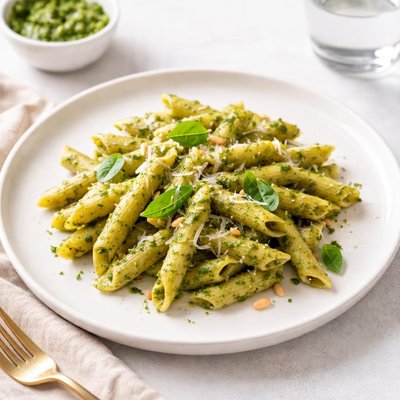
Bright, fresh, and irresistibly creamy, this Vegan Penne Pasta with Pesto is an easy, plant-based twist on a beloved classic. Made with tender vegan penne, velvety homemade pesto bursting with fresh basil, garlic, pine nuts, and nutritional yeast, this recipe delivers bold, dairy-free flavors in just 30 minutes. A squeeze of lemon juice adds a refreshing zing, while juicy cherry tomatoes create pops of sweetness and color in every bite. Perfect for busy weeknights or a light, satisfying meal, this pasta dish is as nutritious as it is delicious. Serve it warm or at room temperature, and elevate your dining experience with this wholesome and vibrant vegan pasta recipe!

Smart Nutrition Tracking with SnapCalorie

Explore More
Recipe Information
Ingredients
- 12 ounces vegan penne pasta
- 2 cups fresh basil leaves
- 0.5 cups pine nuts
- 0.25 cups nutritional yeast
- 2 large garlic cloves
- 2 tablespoons lemon juice
- 0.5 cups olive oil
- 0.5 teaspoons salt
- 0.25 teaspoons black pepper
- 1 cup cherry tomatoes
Instructions
Bring a large pot of salted water to a boil. Cook the vegan penne pasta according to the package instructions until al dente, about 10-12 minutes. Drain and set aside.
While the pasta is cooking, prepare the pesto. In a food processor, combine the fresh basil leaves, pine nuts, nutritional yeast, and garlic cloves. Pulse until the mixture is finely chopped.
Add lemon juice, olive oil, salt, and black pepper to the food processor. Blend until smooth, scraping down the sides as needed. Adjust seasoning to taste.
In a large bowl, mix the cooked penne pasta with the pesto until the pasta is fully coated.
Halve the cherry tomatoes and gently fold them into the pasta and pesto mixture.
Serve the Vegan Penne Pasta with Pesto immediately, garnishing with additional fresh basil leaves or a sprinkle of nutritional yeast if desired.
Nutrition Facts
Calories |
554 | ||
|---|---|---|---|
% Daily Value* |
|||
| Total Fat | 41.1 g | 53% | |
| Saturated Fat | 5.0 g | 25% | |
| Polyunsaturated Fat | 5.7 g | ||
| Cholesterol | 0 mg | 0% | |
| Sodium | 335 mg | 15% | |
| Total Carbohydrate | 38.4 g | 14% | |
| Dietary Fiber | 6.7 g | 24% | |
| Total Sugars | 3.6 g | ||
| Protein | 13.0 g | 26% | |
| Vitamin D | 0.0 mcg | 0% | |
| Calcium | 70 mg | 5% | |
| Iron | 3.4 mg | 19% | |
| Potassium | 473 mg | 10% | |
*The % Daily Value tells you how much a nutrient in a serving of food contributes to a daily diet. 2,000 calories a day is used for general nutrition advice.


