Vegan Mloukhiye
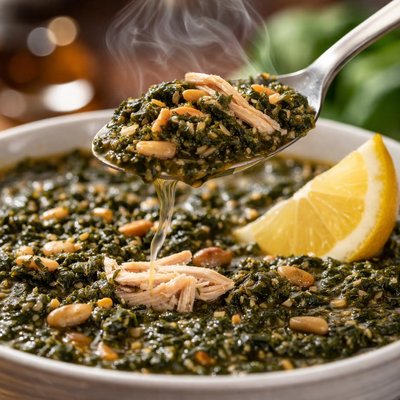
Elevate your plant-based meal game with Vegan Mloukhiye, a delicious twist on the traditional Middle Eastern stew. Packed with nutrient-rich frozen mloukhiye (jute leaves), tender chickpeas, and warming spices like coriander and cumin, this recipe is both satisfying and wholesome. A hearty vegetable broth forms the base, while garlic, onion, and lemon juice infuse layers of bold, aromatic flavor. Simple to prepare in under an hour, this vegan dish is served over fluffy cooked rice and garnished with vibrant fresh cilantro for a pop of color and freshness. Perfect for a comforting weeknight dinner or an impressive dish to share, Vegan Mloukhiye is a nourishing, gluten-free option that showcases the versatility of plant-based cuisine.

Smart Nutrition Tracking with SnapCalorie

Recipe Information
Ingredients
- 400 grams Frozen mloukhiye (jute leaves)
- 1 cup Chickpeas, cooked
- 2 tablespoons Olive oil
- 1 large Onion, finely chopped
- 4 cloves Garlic, minced
- 4 cups Vegetable broth
- 1 teaspoon Coriander powder
- 1 teaspoon Cumin powder
- 0.5 teaspoon Ground black pepper
- 1 teaspoon Salt
- 2 tablespoons Lemon juice
- 2 cups Rice, cooked
- 2 tablespoons Fresh cilantro, chopped
Instructions
Heat the olive oil in a large pot over medium heat.
Add the chopped onion and sauté until translucent, about 5 minutes.
Stir in the minced garlic and cook for another minute until fragrant.
Add the coriander powder and cumin powder, and stir to mix with the onions and garlic.
Pour in the vegetable broth and bring the mixture to a boil.
Once boiling, add the frozen mloukhiye (jute leaves) and reduce the heat to a simmer. Cook for 20 minutes, stirring occasionally.
Add the cooked chickpeas, salt, and ground black pepper to the pot. Stir well.
Continue to simmer the stew for another 10-15 minutes until the mloukhiye is tender and the flavors are well combined.
Stir in the lemon juice and adjust seasoning as needed.
Serve the Vegan Mloukhiye over cooked rice, garnishing with fresh cilantro on top.
Nutrition Facts
Calories |
405 | ||
|---|---|---|---|
% Daily Value* |
|||
| Total Fat | 11.2 g | 14% | |
| Saturated Fat | 1.6 g | 8% | |
| Polyunsaturated Fat | 0.5 g | ||
| Cholesterol | 0 mg | 0% | |
| Sodium | 1274 mg | 55% | |
| Total Carbohydrate | 65.1 g | 24% | |
| Dietary Fiber | 11.2 g | 40% | |
| Total Sugars | 9.1 g | ||
| Protein | 14.9 g | 30% | |
| Vitamin D | 0.0 mcg | 0% | |
| Calcium | 239 mg | 18% | |
| Iron | 6.9 mg | 39% | |
| Potassium | 1011 mg | 22% | |
*The % Daily Value tells you how much a nutrient in a serving of food contributes to a daily diet. 2,000 calories a day is used for general nutrition advice.


