Vegan Iced Chai Tea Latte
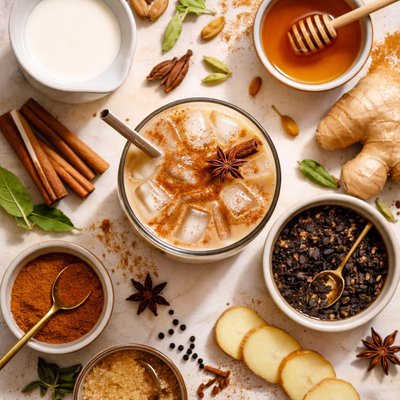
Cool down and savor the bold, spiced flavors of this Vegan Iced Chai Tea Latte, a perfect dairy-free alternative to the classic café favorite. Brewed from a fragrant blend of black tea and warming spices like cinnamon, cardamom, cloves, and star anise, this refreshing beverage gets a burst of natural sweetness from maple syrup and a hint of vanilla for depth. Served over ice and finished with creamy almond milk, it’s easy to make in under 20 minutes and ideal for a quick pick-me-up or afternoon indulgence. Whether you're looking for a vegan coffeehouse treat or a flavorful escape right at home, this iced chai latte offers both richness and comfort in every sip.

Smart Nutrition Tracking with SnapCalorie

Recipe Information
Ingredients
- 500 ml Water
- 2 pieces Black tea bags
- 1 piece Cinnamon stick
- 4 pieces Cardamom pods
- 4 pieces Whole cloves
- 1 piece Star anise
- 5 pieces Black peppercorns
- 1 inch piece Fresh ginger
- 2 tablespoons Maple syrup
- 1 teaspoon Vanilla extract
- 250 ml Unsweetened almond milk
- 1 cup Ice cubes
Instructions
Start by bringing 500 ml of water to a boil in a small pot.
Once the water is boiling, reduce the heat to low and add the black tea bags, cinnamon stick, cardamom pods, cloves, star anise, and black peppercorns.
Peel and slice the fresh ginger into thin pieces, then add it to the pot.
Allow the spices and tea to simmer gently for 10 minutes to develop the flavors.
After 10 minutes, strain the chai concentrate through a fine sieve into a bowl or pitcher to remove the solids.
Stir in the maple syrup and vanilla extract, and let the mixture cool to room temperature.
Once cooled, fill two glasses with ice cubes.
Pour an equal amount of the chai concentrate into each glass, filling them about halfway.
Top each glass with 125 ml of unsweetened almond milk and stir gently to combine.
Serve immediately and enjoy your refreshing Vegan Iced Chai Tea Latte!
Nutrition Facts
Calories |
101 | ||
|---|---|---|---|
% Daily Value* |
|||
| Total Fat | 1.6 g | 2% | |
| Saturated Fat | 0.0 g | 0% | |
| Polyunsaturated Fat | 0.0 g | ||
| Cholesterol | 0 mg | 0% | |
| Sodium | 106 mg | 5% | |
| Total Carbohydrate | 20.9 g | 8% | |
| Dietary Fiber | 2.7 g | 10% | |
| Total Sugars | 14.0 g | ||
| Protein | 1.1 g | 2% | |
| Vitamin D | 1.3 mcg | 7% | |
| Calcium | 300 mg | 23% | |
| Iron | 1.1 mg | 6% | |
| Potassium | 115 mg | 2% | |
*The % Daily Value tells you how much a nutrient in a serving of food contributes to a daily diet. 2,000 calories a day is used for general nutrition advice.


