Vegan Classic Garlic Aioli
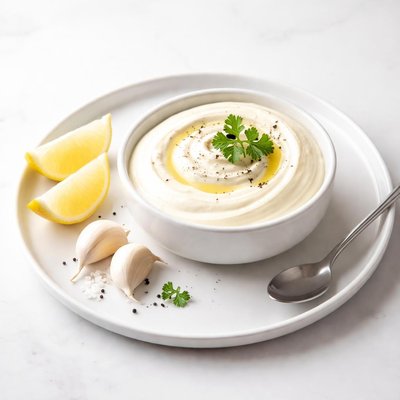
Elevate your plant-based dishes with this creamy, rich Vegan Classic Garlic Aioli! Crafted with aquafaba as its base, this wholesome recipe offers a velvety texture without eggs, making it a perfect vegan alternative to the traditional garlic aioli. Featuring the bold flavors of minced garlic, tangy lemon juice, and a touch of Dijon mustard, this aioli is finished with nutritional yeast for a subtle umami boost. The emulsification process with sunflower oil ensures a perfectly thick and luxurious consistency, ideal for spreading, dipping, or drizzling. Ready in just 10 minutes and packed with savory goodness, this garlic aioli is the ultimate condiment for sandwiches, veggie platters, or plant-based burgers. Make it your go-to dip for flavor-packed vegan indulgence!
The Toxic-Free Cutting Board
Medical-grade titanium. No microplastics. No bacteria. No compromises.
Recipe Information
Ingredients
- 3 tablespoons Aquafaba (liquid from a can of chickpeas)
- 1 teaspoon Dijon mustard
- 1 tablespoon Lemon juice
- 2 cloves Garlic cloves, minced
- 0.5 teaspoon Salt
- 1 cup Sunflower oil
- 1 tablespoon Nutritional yeast
- 0.25 teaspoon Black pepper
Instructions
Place the aquafaba, Dijon mustard, lemon juice, minced garlic, and salt in a blender or food processor.
Blend the ingredients on high speed for about 1 minute until fully combined.
With the blender running on a low speed, slowly drizzle in the sunflower oil in a thin stream. This should take about 2-3 minutes. The mixture should begin to emulsify and thicken.
Once all the oil is incorporated and the aioli is thick, add the nutritional yeast and black pepper.
Blend once more for a few seconds to incorporate the nutritional yeast and black pepper.
Transfer the aioli to a jar or airtight container and refrigerate for at least 30 minutes to allow the flavors to meld.
Use as a spread for sandwiches, a topping for burgers, or a dip for vegetables.
Nutrition Facts
Calories |
255 | ||
|---|---|---|---|
% Daily Value* |
|||
| Total Fat | 28.2 g | 36% | |
| Saturated Fat | 2.9 g | 14% | |
| Polyunsaturated Fat | 18.4 g | ||
| Cholesterol | 0 mg | 0% | |
| Sodium | 144 mg | 6% | |
| Total Carbohydrate | 0.9 g | 0% | |
| Dietary Fiber | 0.2 g | 1% | |
| Total Sugars | 0.1 g | ||
| Protein | 0.5 g | 1% | |
| Vitamin D | 0.0 mcg | 0% | |
| Calcium | 3 mg | 0% | |
| Iron | 0.1 mg | 1% | |
| Potassium | 22 mg | 0% | |
*The % Daily Value tells you how much a nutrient in a serving of food contributes to a daily diet. 2,000 calories a day is used for general nutrition advice.



