Tuna Salad on Rice Cakes
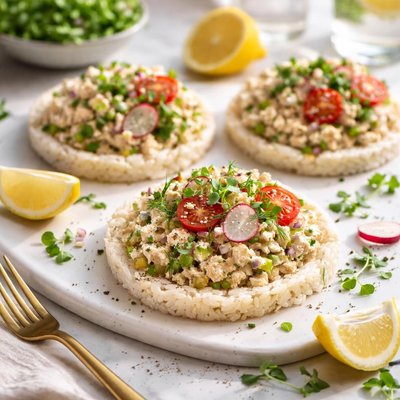
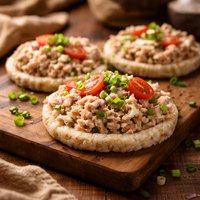
Elevate your lunch game with this quick, nutritious, and flavor-packed recipe for Tuna Salad on Rice Cakes. Perfect for busy days, this no-cook dish combines creamy tuna salad, made with a hint of lemon juice and Dijon mustard, with the refreshing crunch of celery, red onion, and parsley. Served atop airy, crispy rice cakes and garnished with vibrant cherry tomatoes and cucumber slices, each bite strikes a delightful balance between richness and brightness. Ready in just 15 minutes, this wholesome recipe is gluten-free and easily customizable for light snacks or hearty lunches. Plus, with minimal prep and maximum flavor, it’s a winning choice for those seeking a healthy, easy-to-make meal that doesn’t compromise on taste or texture.

Smart Nutrition Tracking with SnapCalorie

Explore More
Recipe Information
Ingredients
- 1 can (5 oz) Canned tuna in water
- 2 tablespoons Mayonnaise
- 1 stalk Celery, finely chopped
- 2 tablespoons Red onion, finely chopped
- 1 tablespoon Fresh lemon juice
- 1 teaspoon Dijon mustard
- 0.5 teaspoon Salt
- 0.25 teaspoon Black pepper
- 1 tablespoon Fresh parsley, chopped
- 4 pieces Rice cakes
- 0.5 cup Cherry tomatoes, halved
- 0.5 cup Cucumber slices
Instructions
Drain the canned tuna thoroughly and transfer it to a medium-sized mixing bowl.
Add the mayonnaise, finely chopped celery, finely chopped red onion, fresh lemon juice, and Dijon mustard to the bowl with the tuna.
Season the mixture with salt and black pepper.
Mix all the ingredients together until well combined and creamy.
Stir in the chopped fresh parsley for an added touch of freshness.
Prepare the rice cakes by arranging them on a clean serving plate.
Evenly distribute the tuna salad on top of each rice cake, ensuring they are all well covered.
Garnish with halved cherry tomatoes and cucumber slices on top of the tuna salad for added flavor and color.
Serve immediately, enjoying the contrast between the crunchy rice cakes and the creamy tuna salad.
Nutrition Facts
Calories |
142 | ||
|---|---|---|---|
% Daily Value* |
|||
| Total Fat | 6.1 g | 8% | |
| Saturated Fat | 0.9 g | 4% | |
| Polyunsaturated Fat | 0.0 g | ||
| Cholesterol | 15 mg | 5% | |
| Sodium | 431 mg | 19% | |
| Total Carbohydrate | 10.7 g | 4% | |
| Dietary Fiber | 1.0 g | 4% | |
| Total Sugars | 2.0 g | ||
| Protein | 10.6 g | 21% | |
| Vitamin D | 0.7 mcg | 4% | |
| Calcium | 24 mg | 2% | |
| Iron | 0.9 mg | 5% | |
| Potassium | 290 mg | 6% | |
*The % Daily Value tells you how much a nutrient in a serving of food contributes to a daily diet. 2,000 calories a day is used for general nutrition advice.


