Traditional Polish Pickles
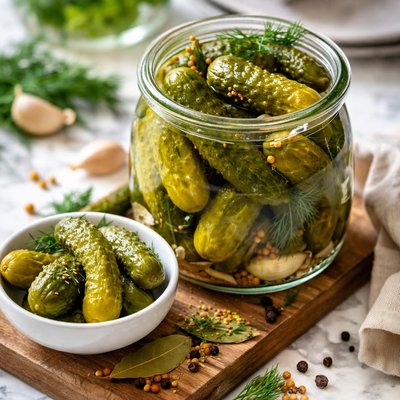
Discover the rich, time-honored flavors of *Traditional Polish Pickles*, a recipe that celebrates the art of fermentation with simple, wholesome ingredients. Featuring crisp cucumbers, fragrant dill, garlic, and a medley of spices like mustard seeds and peppercorns, these tangy, probiotic-rich pickles are crafted using a classic brining method that requires no cooking. Add a touch of horseradish root for extra zest, and watch them transform into a crunchy, flavorful snack or versatile condiment. Perfectly suited for summer meals, charcuterie boards, or traditional Polish dishes, this recipe balances authenticity and ease, preserving the essence of homegrown goodness. Plus, fermenting your own pickles is a rewarding DIY project that brings old-world tradition right into your kitchen.

Smart Nutrition Tracking with SnapCalorie




Recipe Information
Ingredients
- 4 pounds Fresh cucumbers (small to medium-sized)
- 8 cups Water
- 0.5 cups Kosher salt
- 8 whole Garlic cloves, peeled
- 2 bunches Fresh dill weed or dill flowers
- 4 whole Bay leaves
- 1 tablespoon Black peppercorns
- 2 tablespoons Mustard seeds
- 1 piece Horseradish root, peeled and sliced (optional)
- 4 cups Filtered water
Instructions
Start by cleaning the cucumbers thoroughly under running water to remove any dirt.
Prepare the pickling brine: in a large pot, combine 8 cups of water with 0.5 cups of kosher salt. Stir until the salt is completely dissolved.
In large, sterilized glass jars (approximately 1-liter each), place a few sprigs of dill at the bottom.
Add 2 garlic cloves, 1 bay leaf, 1 teaspoon of black peppercorns, and 0.5 tablespoon of mustard seeds to each jar.
If using, place a few slices of horseradish root into each jar for added flavor and heat.
Pack the cucumbers tightly into the jars vertically, ensuring they fill the jar with minimal empty spaces.
Top the cucumbers with remaining dill sprigs.
Pour the salt brine into the jars, ensuring all cucumbers are fully submerged. Leave about 1 inch of headspace at the top of the jars.
Seal the jars with lids loosely. This allows gases formed during fermentation to escape.
Place the jars in a cool, dark place to ferment. This usually takes about 5 to 7 days.
Check the jars daily to ensure the cucumbers remain submerged and there is no mold on the surface.
After fermentation, tighten the lids and store the pickles in the refrigerator. They can be enjoyed right away or left to improve in flavor over time.
Nutrition Facts
Calories |
50 | ||
|---|---|---|---|
% Daily Value* |
|||
| Total Fat | 1.0 g | 1% | |
| Saturated Fat | 0.0 g | 0% | |
| Polyunsaturated Fat | 0.0 g | ||
| Cholesterol | 0 mg | 0% | |
| Sodium | 5447 mg | 237% | |
| Total Carbohydrate | 10.1 g | 4% | |
| Dietary Fiber | 2.0 g | 7% | |
| Total Sugars | 4.6 g | ||
| Protein | 2.0 g | 4% | |
| Vitamin D | 0.0 mcg | 0% | |
| Calcium | 76 mg | 6% | |
| Iron | 1.0 mg | 6% | |
| Potassium | 362 mg | 8% | |
*The % Daily Value tells you how much a nutrient in a serving of food contributes to a daily diet. 2,000 calories a day is used for general nutrition advice.


