Traditional Japanese Breakfast
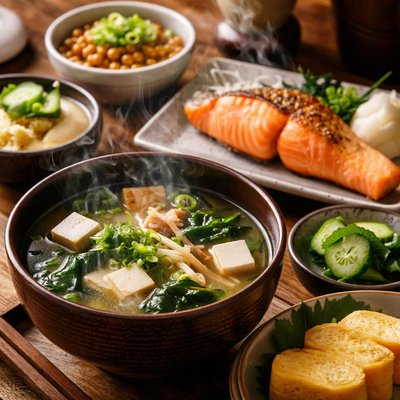
Start your day with the elegance and balance of a Traditional Japanese Breakfast, a delightful spread that brings harmony to the table. This recipe includes perfectly steamed white rice, tender grilled salmon seasoned with a hint of salt, and a flavorful bowl of miso soup enriched with dashi stock, silken tofu, and fresh green onions. To complement these core elements, you'll enjoy sweet and savory tamagoyaki—Japanese rolled omelet—crafted with soy sauce and sugar for a delicate flavor. Complete the plate with a vibrant side of pickled vegetables for a touch of acidity. Simple yet exquisite, this breakfast is a testament to Japanese culinary artistry, offering a nutritious and visually appealing start to your morning. Perfect for those looking to embrace traditional Japanese flavors in their home kitchen!

Smart Nutrition Tracking with SnapCalorie

Explore More
Recipe Information
Ingredients
- 2 pieces Salmon fillet
- 1 cup White rice
- 1.5 cups Water
- 2 cups Dashi stock
- 2 tablespoons Miso paste
- 0.5 cup Silken tofu
- 1 stalk Green onions
- 3 large Eggs
- 1 teaspoon Sugar
- 1 teaspoon Soy sauce
- 0.5 cup Pickled vegetables
- 1 teaspoon Salt
- 1 tablespoon Vegetable oil
Instructions
Rinse the rice under cold water until the water runs clear. Combine the rice and 1.5 cups of water in a rice cooker or a small saucepan. If using a saucepan, bring to a boil, reduce heat to low, cover, and cook for 15 minutes. Turn off the heat and let it sit for another 10 minutes.
Preheat a non-stick pan over medium heat and add a little vegetable oil. Season the salmon fillets lightly with salt and place them in the pan, skin side down. Cook for about 5 minutes, flip, and cook for another 3-4 minutes, or until the fish flakes easily with a fork.
While the fish and rice are cooking, prepare the miso soup. Heat the dashi stock in a pot until simmering, then add the miso paste. Stir until the miso is fully dissolved.
Cut the silken tofu into small cubes and thinly slice the green onions. Add the tofu to the soup and let it heat through for a couple of minutes. Remove from heat and garnish with green onions.
Crack the eggs into a bowl, add sugar and soy sauce, and beat well. Heat a rectangular tamagoyaki pan (or a regular small non-stick pan) over medium-low heat, adding a small amount of vegetable oil.
Pour a thin layer of egg mixture into the pan, swirling to cover the bottom. Once the egg is slightly set, roll it into a log shape toward one end of the pan. Move the rolled egg back to the starting position and add more egg mixture to the empty part of the pan.
Repeat the process, rolling and adding more egg, until all the egg mixture is used. Let the tamagoyaki cool slightly before slicing it into pieces.
Serve the cooked rice, grilled salmon, miso soup, tamagoyaki, and a serving of pickled vegetables on separate dishes. Enjoy your traditional Japanese breakfast.
Nutrition Facts
Calories |
696 | ||
|---|---|---|---|
% Daily Value* |
|||
| Total Fat | 35.6 g | 46% | |
| Saturated Fat | 8.2 g | 41% | |
| Polyunsaturated Fat | 4.6 g | ||
| Cholesterol | 374 mg | 125% | |
| Sodium | 3112 mg | 135% | |
| Total Carbohydrate | 39.3 g | 14% | |
| Dietary Fiber | 1.8 g | 7% | |
| Total Sugars | 5.5 g | ||
| Protein | 53.0 g | 106% | |
| Vitamin D | 23.0 mcg | 115% | |
| Calcium | 144 mg | 11% | |
| Iron | 4.6 mg | 25% | |
| Potassium | 935 mg | 20% | |
*The % Daily Value tells you how much a nutrient in a serving of food contributes to a daily diet. 2,000 calories a day is used for general nutrition advice.


