Tomato Onion Pepper Salad
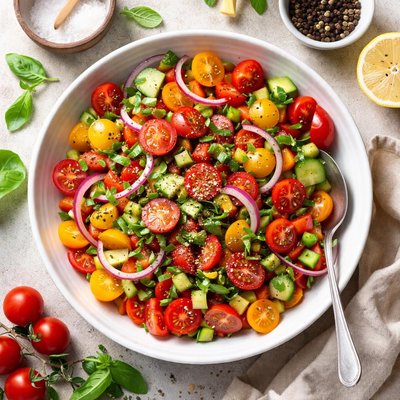
Bursting with vibrant flavors and colors, this Tomato Onion Pepper Salad is a refreshing and healthy addition to any meal. Featuring juicy tomatoes, crisp red and yellow bell peppers, and zesty red onion, this salad is elevated with the fresh herbaceousness of parsley and a tangy lemon-olive oil dressing. Ready in just 15 minutes with no cooking required, it’s the perfect quick and easy side dish for busy weeknights or al fresco dining. Whether served immediately or chilled to let the flavors meld, this recipe is a standout for summer barbecues or light lunches. Gluten-free, vegan, and packed with nutrients, this crisp and flavorful salad is as nutritious as it is delicious.

Smart Nutrition Tracking with SnapCalorie

Recipe Information
Ingredients
- 4 medium Tomatoes
- 1 small Red Onion
- 1 medium Red Bell Pepper
- 1 medium Yellow Bell Pepper
- 0.5 cup Parsley
- 2 tablespoons Olive Oil
- 1 tablespoon Lemon Juice
- 0.5 teaspoon Salt
- 0.25 teaspoon Black Pepper
Instructions
Wash the tomatoes, red onion, red bell pepper, and yellow bell pepper under cool running water.
Core the tomatoes and cut them into bite-sized wedges or chunks.
Peel the red onion and slice it thinly into rings or half-moons.
Remove the stems and seeds from the red and yellow bell peppers, then slice them into thin strips.
Chop the parsley finely and set aside.
In a large salad bowl, combine the tomatoes, red onion, red bell pepper, yellow bell pepper, and parsley.
In a small bowl, whisk together the olive oil, lemon juice, salt, and black pepper to create the dressing.
Pour the dressing over the salad and gently toss everything together until well combined and coated evenly with the dressing.
Taste and adjust the seasoning with more salt or pepper if needed.
Serve immediately or let it chill in the refrigerator for 20 minutes for the flavors to meld together.
Nutrition Facts
Calories |
117 | ||
|---|---|---|---|
% Daily Value* |
|||
| Total Fat | 7.5 g | 10% | |
| Saturated Fat | 1.1 g | 6% | |
| Polyunsaturated Fat | 0.0 g | ||
| Cholesterol | 0 mg | 0% | |
| Sodium | 254 mg | 11% | |
| Total Carbohydrate | 12.2 g | 4% | |
| Dietary Fiber | 3.2 g | 11% | |
| Total Sugars | 7.0 g | ||
| Protein | 2.0 g | 4% | |
| Vitamin D | 0.0 mcg | 0% | |
| Calcium | 33 mg | 3% | |
| Iron | 1.1 mg | 6% | |
| Potassium | 466 mg | 10% | |
*The % Daily Value tells you how much a nutrient in a serving of food contributes to a daily diet. 2,000 calories a day is used for general nutrition advice.


