
Swedish Chocolate Balls
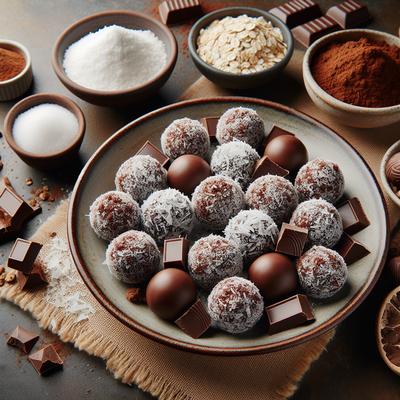
Transform your snack time with Swedish Chocolate Balls, a no-bake treat that’s as simple as it is indulgent. Made with wholesome rolled oats, rich cocoa powder, and a splash of freshly brewed coffee, these delightful bites strike the perfect balance between chocolatey decadence and satisfying texture. Each ball is rolled in shredded coconut, giving it a beautiful, snowy exterior and an extra layer of flavor. Ready in just 15 minutes, this kid-friendly, no-cook recipe is ideal for busy days or when you’re craving something sweet but fuss-free. Perfect for parties, coffee breaks, or as a quick grab-and-go dessert, these Swedish Chocolate Balls will quickly become a favorite in your recipe collection.

Log this recipe in SnapCalorie

Recipe Information
Ingredients
- 180 grams Rolled oats
- 3 tablespoons Unsweetened cocoa powder
- 100 grams Granulated sugar
- 100 grams Unsalted butter
- 1 teaspoon Vanilla extract
- 2 tablespoons Cold brewed coffee (or milk as alternative)
- 100 grams Shredded coconut
Instructions
In a large mixing bowl, combine the rolled oats, cocoa powder, and sugar. Mix until evenly combined.
Cut the butter into small cubes and add it to the mixture. Use your hands or a wooden spoon to combine until you achieve a smooth, uniform texture.
Stir in the vanilla extract and cold brewed coffee (or milk) to help bind the mixture together.
Using your hands, roll the mixture into small balls about the size of a walnut or 1-inch in diameter.
Spread the shredded coconut onto a plate. Roll each chocolate ball in the coconut until fully coated.
Place the chocolate balls on a tray or plate lined with parchment paper. Refrigerate for at least 30 minutes to firm up before serving.
Serve chilled or at room temperature. Store any leftovers in an airtight container in the refrigerator for up to a week.
Nutrition Facts
Calories |
2511 | ||
|---|---|---|---|
% Daily Value* |
|||
| Total Fat | 165.4 g | 212% | |
| Saturated Fat | 110.7 g | 554% | |
| Polyunsaturated Fat | 0.0 g | ||
| Cholesterol | 221 mg | 74% | |
| Sodium | 56 mg | 2% | |
| Total Carbohydrate | 253.9 g | 92% | |
| Dietary Fiber | 41.2 g | 147% | |
| Total Sugars | 108.3 g | ||
| Protein | 41.3 g | 83% | |
| Vitamin D | 0.0 mcg | 0% | |
| Calcium | 165 mg | 13% | |
| Iron | 14.4 mg | 80% | |
| Potassium | 1606 mg | 34% | |
*The % Daily Value tells you how much a nutrient in a serving of food contributes to a daily diet. 2,000 calories a day is used for general nutrition advice.


