
Sugar-Free Classic Sourdough Bread
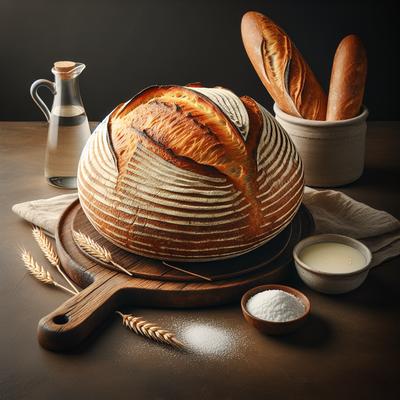
Unlock the wholesome beauty of artisan breadmaking with this Sugar-Free Classic Sourdough Bread recipe. Crafted with just four simple ingredients—active sourdough starter, warm water, bread flour, and a pinch of salt—this timeless recipe foregoes added sugars for a naturally tangy, flavorful loaf. Using traditional techniques like autolysis, stretch-and-fold, and cold proofing, you'll develop a soft, airy crumb encased in a perfectly crisp crust. Ideal for beginners and seasoned bakers alike, this bread is a stunning centerpiece for any meal. Whether paired with creamy butter, hearty soups, or gourmet spreads, this sourdough is sure to elevate your table while showcasing the magic of fermentation. Embrace the joy of homemade bread with this sugar-free and preservative-free baking experience!

Log this recipe in SnapCalorie

Recipe Information
Ingredients
- 200 grams Active sourdough starter
- 325 ml Warm water (about 95°F/35°C)
- 500 grams Bread flour
- 10 grams Salt
Instructions
1. In a large mixing bowl, combine the active sourdough starter and warm water. Stir gently until the starter is mostly dissolved.
2. Add the bread flour gradually, mixing with a wooden spoon or your hands until a rough dough forms.
3. Cover the bowl with a damp cloth and let the dough rest for 30 minutes for autolysis.
4. After resting, sprinkle the salt over the dough. Use your hands to incorporate the salt by pinching it into the dough and folding the dough over itself several times.
5. Begin the bulk fermentation: Stretch and fold the dough by pulling up one side of the dough and folding it over the middle. Rotate the bowl and repeat this process 4 more times. Let the dough rest for 30 minutes.
6. Repeat the stretching and folding process every 30 minutes for the next 2 hours, for a total of 3 sets of stretches and folds.
7. Once the stretching and folding is complete, leave the dough to ferment undisturbed for 2 to 4 hours, until it has risen by about 50% and looks bubbly.
8. Lightly flour a work surface and gently turn the dough out onto it. Shape the dough into a ball by folding edges towards the center, then flip it seam-side down.
9. Allow the dough to rest for about 20 minutes, uncovered, to relax before the final shaping.
10. For the final shape, flip the dough back over and shape it into a tight ball or oval, depending on your proofing basket's shape.
11. Place the shaped dough seam-side up in a flour-dusted proofing basket or bowl. Cover and refrigerate for 12 to 24 hours for cold proofing, developing flavor.
12. Preheat your oven to 450°F (230°C) with a Dutch oven inside for at least 30 minutes.
13. Once preheated, carefully remove the Dutch oven, place a parchment cut-out at the bottom and transfer the dough into it, seam-side down.
14. Score the bread with a sharp blade or razor to allow expansion. Cover with the lid and bake for 20 minutes.
15. After 20 minutes, remove the lid and reduce the temperature to 425°F (220°C). Bake for an additional 25 minutes until the bread is deeply golden and sounds hollow when tapped.
16. Let the bread cool on a wire rack for at least 1 hour before slicing to allow the crumb to set.
Nutrition Facts
Calories |
1920 | ||
|---|---|---|---|
% Daily Value* |
|||
| Total Fat | 8.5 g | 11% | |
| Saturated Fat | 1.7 g | 8% | |
| Polyunsaturated Fat | 0.0 g | ||
| Cholesterol | 0 mg | 0% | |
| Sodium | 3945 mg | 172% | |
| Total Carbohydrate | 400.0 g | 145% | |
| Dietary Fiber | 15.5 g | 55% | |
| Total Sugars | 1.5 g | ||
| Protein | 62.0 g | 124% | |
| Vitamin D | 0.0 mcg | 0% | |
| Calcium | 85 mg | 7% | |
| Iron | 23.0 mg | 128% | |
| Potassium | 540 mg | 11% | |
*The % Daily Value tells you how much a nutrient in a serving of food contributes to a daily diet. 2,000 calories a day is used for general nutrition advice.


