Store Bought Frosting Extender
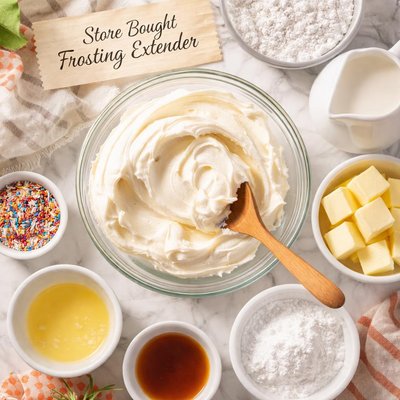
Elevate your desserts effortlessly with this quick and easy Store-Bought Frosting Extender recipe! Perfect for stretching a single container of frosting to generously cover more cakes, cupcakes, or cookies, this simple hack combines pantry staples like powdered sugar, butter, and vanilla extract with your favorite store-bought frosting. In just 10 minutes, you'll have a silky, flavorful frosting that's not only more abundant but also creamier and more customizable. Whether you're baking for a crowd or adding a professional touch to your treats, this frosting extender is a budget-friendly solution every home baker needs.

Smart Nutrition Tracking with SnapCalorie

Explore More




Recipe Information
Ingredients
- 16 ounces Store-bought frosting (any flavor)
- 1 cup Powdered sugar
- 4 tablespoons Unsalted butter (softened)
- 2 tablespoons Milk
- 1 teaspoon Vanilla extract
- 1 pinch Salt
Instructions
1. In a large mixing bowl, empty the entire container of store-bought frosting.
2. Add the softened unsalted butter to the bowl. Using a hand mixer or stand mixer, beat on medium speed until well combined and fluffy, about 1-2 minutes.
3. Gradually sift in the powdered sugar, about 1/4 cup at a time, while continuing to mix on low speed. This helps avoid lumps and a powdered sugar cloud in your kitchen!
4. Add the milk, vanilla extract, and a pinch of salt. Beat the mixture on medium-high speed until smooth and creamy, about 2 more minutes.
5. Taste the frosting and adjust consistency if needed. For thinner frosting, add a teaspoon of milk at a time and mix. For thicker frosting, mix in a bit more powdered sugar, 1 tablespoon at a time.
6. Use immediately to frost your cake, cupcakes, or cookies, or store in an airtight container in the refrigerator for up to a week. Let come to room temperature and re-whip before using if chilled.
Nutrition Facts
Calories |
116 | ||
|---|---|---|---|
% Daily Value* |
|||
| Total Fat | 5.3 g | 7% | |
| Saturated Fat | 2.4 g | 12% | |
| Polyunsaturated Fat | 0.0 g | ||
| Cholesterol | 5 mg | 2% | |
| Sodium | 46 mg | 2% | |
| Total Carbohydrate | 16.2 g | 6% | |
| Dietary Fiber | 0.0 g | 0% | |
| Total Sugars | 15.0 g | ||
| Protein | 0.1 g | 0% | |
| Vitamin D | 0.0 mcg | 0% | |
| Calcium | 2 mg | 0% | |
| Iron | 0.1 mg | 0% | |
| Potassium | 2 mg | 0% | |
*The % Daily Value tells you how much a nutrient in a serving of food contributes to a daily diet. 2,000 calories a day is used for general nutrition advice.


