
Soy-Free Unagi Nigiri
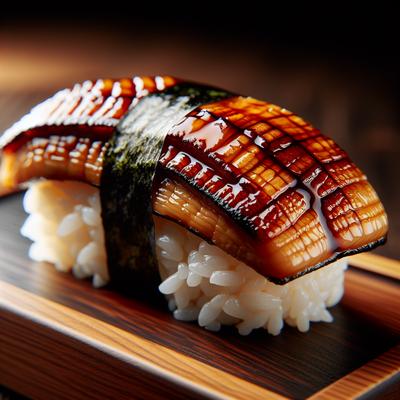
Elevate your sushi game with this Soy-Free Unagi Nigiri recipe, perfect for plant-based food enthusiasts and those avoiding soy. This innovative twist swaps traditional eel with tender, caramelized eggplant, glazed in a rich blend of maple syrup, coconut aminos, mirin, and soy-free dashi stock. Paired with perfectly seasoned Japanese short-grain rice, this nigiri captures the umami-packed flavors of classic unagi without compromising dietary needs. Ready in under an hour, it's a gourmet delight that’s easy to prepare and visually stunning. Garnish with sesame seeds for added texture and serve as a standout dish at sushi nights or special gatherings. Indulge in this vegan-friendly nigiri experience, combining authenticity and creativity in every bite!

Log this recipe in SnapCalorie

Recipe Information
Ingredients
- 1 cup Japanese short-grain rice
- 1.25 cups Water
- 2 tablespoons Rice vinegar
- 1.5 teaspoons Sugar
- 0.5 teaspoons Salt
- 1 medium Eggplant
- 3 tablespoons Maple syrup
- 2 tablespoons Coconut aminos
- 1 tablespoon Mirin
- 2 tablespoons Dashi stock (soy-free, homemade or store-bought)
- 1 tablespoon Olive oil
- 1 small Nori sheet
- 1 teaspoon Sesame seeds (optional, for garnish)
Instructions
Rinse the Japanese short-grain rice under cold water until the water runs clear. Combine the rice and 1.25 cups of water in a rice cooker or pot, and cook according to the instructions for sushi rice.
While the rice cooks, prepare the sushi vinegar. In a small bowl, mix rice vinegar, sugar, and salt until dissolved. Set aside.
Cut the eggplant into thin, rectangular slices (similar in size to unagi or eel slices typically found on nigiri). Each slice should be about 3-4 inches long and 1 inch wide.
In a small bowl, prepare the soy-free glaze by combining maple syrup, coconut aminos, mirin, and soy-free dashi stock.
Heat olive oil in a skillet over medium heat. Add the eggplant slices in a single layer and cook for 2-3 minutes on each side, until softened and lightly browned.
Reduce the heat to low and pour the prepared glaze over the eggplant slices. Let them simmer for 3-5 minutes, flipping occasionally, until the sauce thickens and coats the eggplant slices evenly. Remove from heat and set aside.
Once the rice is cooked, transfer it to a large bowl. While the rice is still warm, gently fold in the sushi vinegar mixture using a rice paddle or wooden spoon. Allow the rice to cool to room temperature.
Cut the nori sheet into thin strips, about 1 inch wide and 4 inches long, to secure the nigiri if desired.
Wet your hands with water to prevent sticking. Take a small amount of rice (about 1 tablespoon) and shape it into an oval mound. Repeat until all rice is shaped.
Lay one piece of glazed eggplant on top of each rice mound. Optionally, wrap a strip of nori around the middle to secure the eggplant.
Arrange the Soy-Free Unagi Nigiri on a serving plate and sprinkle with sesame seeds if desired. Serve immediately and enjoy!
Nutrition Facts
Calories |
778 | ||
|---|---|---|---|
% Daily Value* |
|||
| Total Fat | 16.9 g | 22% | |
| Saturated Fat | 2.7 g | 14% | |
| Polyunsaturated Fat | 1.7 g | ||
| Cholesterol | 0 mg | 0% | |
| Sodium | 2378 mg | 103% | |
| Total Carbohydrate | 148.1 g | 54% | |
| Dietary Fiber | 16.1 g | 58% | |
| Total Sugars | 77.5 g | ||
| Protein | 10.8 g | 22% | |
| Vitamin D | 0.0 mcg | 0% | |
| Calcium | 105 mg | 8% | |
| Iron | 2.3 mg | 13% | |
| Potassium | 1272 mg | 27% | |
*The % Daily Value tells you how much a nutrient in a serving of food contributes to a daily diet. 2,000 calories a day is used for general nutrition advice.


