Sourdough Slices
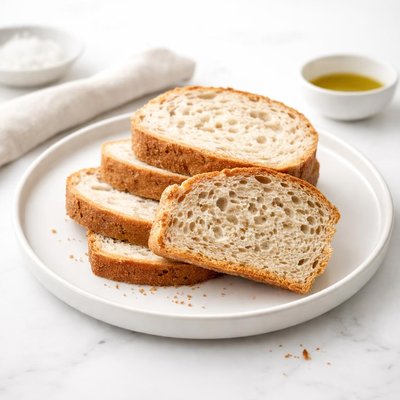
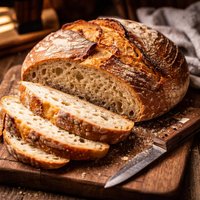
Master the art of homemade bread with this foolproof recipe for Sourdough Slices, a celebration of rustic, tangy flavors and irresistibly chewy texture. Using just four simple ingredients—active sourdough starter, bread flour, water, and salt—this recipe walks you through the process of creating bakery-quality artisan bread from scratch. Key techniques like the “stretch and fold” method and an overnight cold proof ensure a perfect crumb and a crisp, golden crust every time. Whether you’re a seasoned baker or new to sourdough, these steps are designed to deliver a stunning loaf that's worth the time investment. Serve these slices as the base for sandwiches, slathered with butter, or as the perfect accompaniment to soups and charcuterie boards. Ideal for anyone searching for homemade sourdough bread recipes, this guide will have your kitchen smelling like a European bakery in no time!

Smart Nutrition Tracking with SnapCalorie


Recipe Information
Ingredients
- 100 grams Sourdough starter (active and bubbly)
- 300 ml Water
- 500 grams Bread flour
- 10 grams Salt
Instructions
Begin by feeding your sourdough starter ahead of time to ensure it is active and bubbly. This is crucial for the success of your bread.
In a large mixing bowl, combine the 100 grams of sourdough starter with 300 ml of water. Mix well until the starter is dissolved and the mixture appears cloudy.
Gradually add the 500 grams of bread flour and 10 grams of salt to the bowl. Combine all the ingredients using your hands or a sturdy spoon until a shaggy dough forms.
Cover the bowl with a damp cloth and let it rest for about 30 minutes. This period, known as autolyse, allows the flour to absorb the water, enhancing gluten development.
Knead the dough using the 'stretch and fold' technique: reach under the dough, stretch it upwards, fold it over itself, and rotate the bowl. Repeat this process every 30 minutes over a 2-hour period. You should perform 3-4 sets of stretch and fold.
After completing the stretch and folds, cover the bowl again and let the dough ferment in a warm place for 4-5 hours. The dough should noticeably increase in size and become more aerated.
Once the dough has risen, lightly flour your work surface. Gently scrape the dough out of the bowl onto the floured surface, being careful not to deflate it.
Shape the dough into a round boule or an oval loaf, depending on your preference. This involves gently folding the edges into the center and flipping the dough seam side down.
Prepare a proofing basket or bowl lined with a floured cloth. Transfer the shaped dough into the basket seam side up. Cover it with a cloth and refrigerate overnight for the final proof.
The next day, preheat your oven to 250°C (480°F) with a Dutch oven or baking stone inside. Allow it to heat thoroughly for at least 30 minutes.
Carefully remove the preheated Dutch oven from the oven. Turn the dough out of the proofing basket onto a piece of parchment paper so it’s seam side down. Score the top with a sharp knife or blade.
Place the dough along with the parchment paper into the Dutch oven. Cover with the lid and bake for 20 minutes.
After 20 minutes, remove the lid and continue to bake for another 20 minutes until the loaf is deep brown and caramelized.
Remove the bread from the oven and let it cool on a wire rack for at least an hour before slicing. This rest allows the steam to settle and the bread to fully develop its flavor.
Nutrition Facts
Calories |
156 | ||
|---|---|---|---|
% Daily Value* |
|||
| Total Fat | 0.5 g | 1% | |
| Saturated Fat | 0.1 g | 0% | |
| Polyunsaturated Fat | 0.0 g | ||
| Cholesterol | 0 mg | 0% | |
| Sodium | 325 mg | 14% | |
| Total Carbohydrate | 32.6 g | 12% | |
| Dietary Fiber | 1.1 g | 4% | |
| Total Sugars | 0.2 g | ||
| Protein | 4.4 g | 9% | |
| Vitamin D | 0.0 mcg | 0% | |
| Calcium | 9 mg | 1% | |
| Iron | 1.8 mg | 10% | |
| Potassium | 45 mg | 1% | |
*The % Daily Value tells you how much a nutrient in a serving of food contributes to a daily diet. 2,000 calories a day is used for general nutrition advice.


