
Sourdough Rye Bread with Caraway
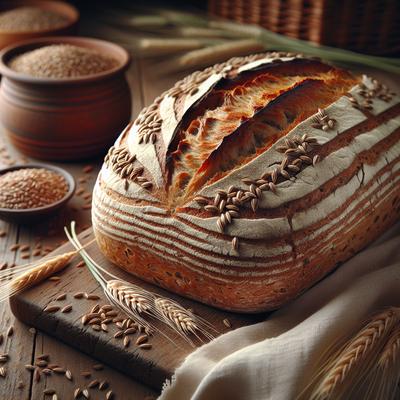
Embrace the rustic charm of homemade bread with this Sourdough Rye Bread with Caraway recipe, a deliciously hearty loaf that combines the tangy depth of sourdough with the nutty, earthy flavor of rye flour. Infused with aromatic caraway seeds, this artisan-style bread delivers a bold and distinctive flavor, perfect for sandwiches, soups, or simply slathered with butter. With its chewy texture and beautifully golden crust, this bread is made using traditional techniques like overnight proofing and stretch-and-fold to ensure optimal gluten development and flavor. Whether you're a seasoned bread baker or exploring sourdough for the first time, this recipe offers a rewarding experience—a true celebration of slow fermentation and wholesome ingredients.

Log this recipe in SnapCalorie

Recipe Information
Ingredients
- 100 grams Active sourdough starter
- 300 milliliters Warm water
- 200 grams Rye flour
- 250 grams Bread flour
- 10 grams Salt
- 2 tablespoons Caraway seeds
Instructions
In a large mixing bowl, combine the active sourdough starter and warm water. Stir until the starter is dissolved in the water.
Add the rye flour and bread flour to the bowl. Mix until all the flour is hydrated, forming a shaggy dough. Cover loosely with a damp kitchen towel and let it rest for 30 minutes.
After the rest, sprinkle the salt and caraway seeds over the dough. Using damp hands, work the salt and seeds into the dough using a pinching action, then fold the dough over itself several times to help incorporate the ingredients.
Begin the bulk fermentation process by letting the dough sit at room temperature for 4-6 hours. During this time, perform stretch-and-folds every 30 minutes for the first 2 hours to build gluten strength. To do this, grab the edge of the dough, stretch it upward, and fold it over the center. Rotate the bowl and repeat on all sides.
Once the bulk fermentation is complete and the dough has doubled in size, transfer it to a lightly floured surface. Shape the dough into a round or oval loaf, depending on your proofing basket or desired shape.
Place the shaped dough smooth-side down into a floured proofing basket or bowl. Cover with a kitchen towel or plastic wrap and let it proof in the refrigerator overnight (8-12 hours).
Preheat your oven to 250°C (480°F) with a Dutch oven or baking stone inside for at least 45 minutes.
Carefully transfer the dough onto a piece of parchment paper and score the top with a sharp knife or razor blade to create steam vents.
Remove the lid of your preheated Dutch oven (if using) and carefully transfer the dough (parchment paper and all) inside. Cover with the lid and bake for 20 minutes.
After 20 minutes, remove the lid and lower the oven temperature to 220°C (430°F). Continue baking for another 15-20 minutes, or until the crust is deeply golden and the bread sounds hollow when tapped.
Transfer the baked bread to a wire rack and let it cool completely before slicing.
Nutrition Facts
Calories |
1630 | ||
|---|---|---|---|
% Daily Value* |
|||
| Total Fat | 7.5 g | 10% | |
| Saturated Fat | 1.2 g | 6% | |
| Polyunsaturated Fat | 0.0 g | ||
| Cholesterol | 0 mg | 0% | |
| Sodium | 3943 mg | 171% | |
| Total Carbohydrate | 353.8 g | 129% | |
| Dietary Fiber | 38.0 g | 136% | |
| Total Sugars | 2.5 g | ||
| Protein | 51.6 g | 103% | |
| Vitamin D | 0.0 mcg | 0% | |
| Calcium | 90 mg | 7% | |
| Iron | 16.7 mg | 93% | |
| Potassium | 1290 mg | 27% | |
*The % Daily Value tells you how much a nutrient in a serving of food contributes to a daily diet. 2,000 calories a day is used for general nutrition advice.


